
Maharashtra port boost set to strengthen India–Thailand links
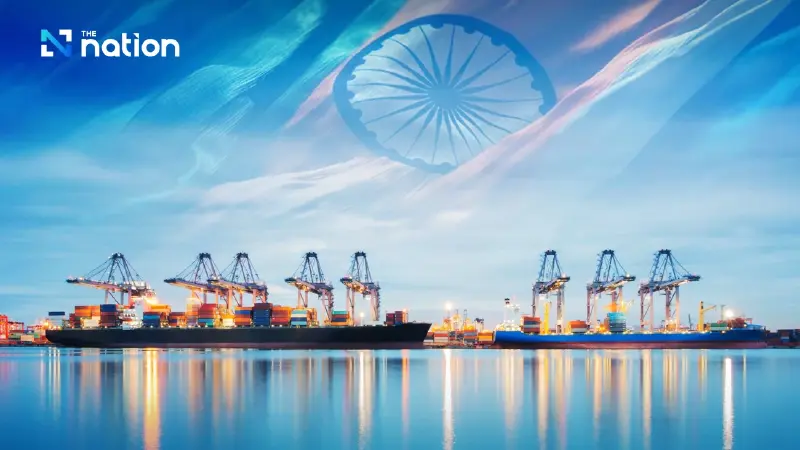


India’s US$6.7 billion maritime investment, led by Adani Ports, will expand western port capacity and strengthen direct shipping routes with Thailand and ASEAN.
- India has announced a US$6.7 billion investment, led by Adani Ports, to upgrade maritime infrastructure in the state of Maharashtra, aiming to boost port capacity and reduce ship turnaround times by 25-30%.
- The port enhancements will establish direct shipping routes between western India and Thailand, reducing transit times and lowering costs for Thai exporters by decreasing reliance on third-country transhipment hubs.
- This development creates new opportunities for Thai businesses, including joint investments in cold-storage, logistics, and shipping services, particularly benefiting exports like processed foods, seafood, and industrial components.
- By improving port efficiency and connectivity, the project is expected to handle greater shipping volumes, strengthening Maharashtra's role as a key maritime gateway and facilitating increased trade with Thailand.
According to the Department of International Trade Promotion (DITP) office in Mumbai, India announced a US$6.7 billion maritime investment package for the state of Maharashtra during India Maritime Week 2025 on October 27, 2025.
The investment package is spearheaded by Adani Ports and Special Economic Zone (APSEZ), which alone accounts for US$5.1 billion of the total. The initiative aims to boost port capacity, particularly at Dighi Port, and reduce ship turnaround times by 25–30% (one day faster), while cutting operational costs by 8–12% and enhancing overall competitiveness by 10–15%.
The plan also focuses on improving hinterland connectivity and developing related logistics infrastructure, strengthening the position of Mumbai and Maharashtra as India’s leading western maritime hub in the medium term.
Addressing capacity constraints
Before this announcement, Maharashtra’s main ports, JNPT, Mumbai, and Dighi, with linkages to Kandla, faced capacity bottlenecks, congestion, and lengthy cargo handling times. Private operators such as APSEZ have gradually expanded their presence, handling a total 450 million metric tonnes (MMT) of cargo in fiscal 2025.
Following the new investment, authorities project a significant increase in berth capacity, deeper navigation channels to accommodate larger vessels, and enhanced multimodal connections by road, rail, and warehousing. These upgrades are expected to reduce cargo handling times and increase throughput of both container and bulk cargo, reinforcing Maharashtra’s role as India’s western maritime gateway.
Economic and trade impacts
At the national level, the investment is expected to lower logistics and transport costs, strengthen export competitiveness, and support export-led manufacturing.
At the regional level, the Mumbai–JNPT–Dighi corridor will be able to handle greater shipping volumes, improve transhipment and distribution capacity, and serve as a hub for both domestic and international cargo flows.
At the global trade level, the project is likely to attract more direct liner services, reducing dependence on third-country transhipment hubs. This will shorten shipping times and lower per-container costs on several trade routes. The expanded capacity of India’s western ports will also make the country a more attractive global trading partner, easing logistics barriers and creating new opportunities for joint ventures in logistics and cold-chain systems with partners in ASEAN and beyond.
Opportunities for Thailand
The DITP office in Mumbai highlighted that the US$6.7 billion investment led by APSEZ will open new opportunities for Thailand. Direct maritime connections with India’s west coast will reduce reliance on transhipment ports, shorten transit times, and cut shipping costs, supporting Thai exporters seeking to expand into India and the wider Indian Ocean markets.
Thai exporters could also explore joint investments in cold-storage facilities, integrated logistics, and feeder or direct shipping services between Mumbai, Dighi, and JNPT — especially benefiting processed agricultural goods, seafood, frozen foods, and industrial components.
Thailand currently relies mainly on Laem Chabang Port (handling 9.46 million TEU in FY 2024), as well as Bangkok and Map Ta Phut ports. Establishing a robust logistics hub and direct shipping routes with western India will enable Thai exporters to ship more frequently, cut warehousing time, and expand their regional market reach more efficiently.
