
US-Thai Trade Deal Falters Amid Geopolitical Dispute
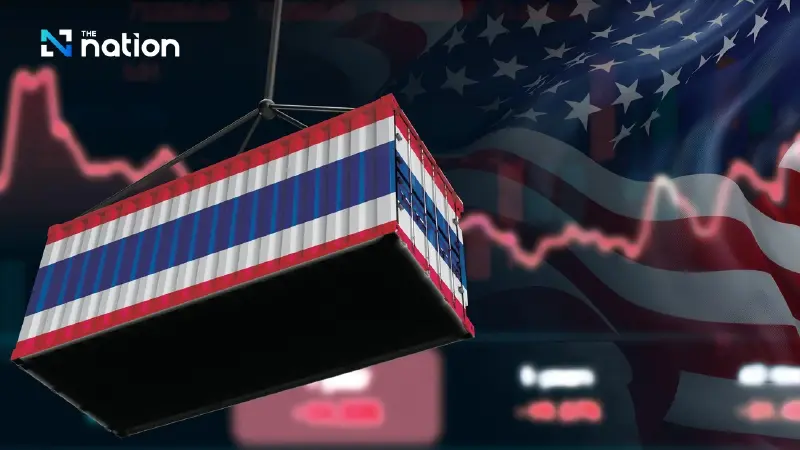


Private sector warns of inflated export figures due to circumvention fraud; fears strict US enforcement of "rules of origin" could cause a catastrophic decline
- US-Thai trade negotiations have stalled after the U.S. linked the deal to a geopolitical dispute involving the Thai-Cambodia Peace Declaration.
- The proposed agreement was intended to lower U.S. tariffs on over 1,000 Thai goods in exchange for Thailand increasing its imports of American agricultural and aviation products.
- Thai exporters are concerned that current high export figures are artificially inflated by trade circumvention and fear a sharp decline if the U.S. strictly enforces its "rules of origin" policies.
Private sector warns of inflated export figures due to circumvention fraud; fears strict US enforcement of "rules of origin" could cause a catastrophic decline.
Bilateral trade talks between Thailand and the United States have stalled after Washington reportedly introduced an unrelated geopolitical issue into the negotiations, creating uncertainty over access to the lucrative US market.
The talks, which aimed to cut US tariffs to as low as 0-5 per cent on over 1,000 Thai goods in exchange for Thailand boosting imports of US agricultural goods and aviation equipment, have been suspended by the US side.
Thanakorn Kasetsuwan, chairman of the Thai National Shippers' Council (TNSC), revealed the talks were halted because the Office of the United States Trade Representative (USTR) linked the trade agreement to pressure on Thailand regarding the Thai-Cambodia Peace Declaration.
Thanakorn called this a separate issue and stated that Thailand is now waiting for confirmation from the USTR on when negotiations can proceed.
While official figures show Thai exports to the US grew strongly by 28 per cent during the first nine months of 2025, the private sector warns that this growth is misleading.
According to the TNSC, the high export numbers do not reflect genuine domestic production but are inflated by circumvention (or transshipment)—the practice of routing goods from other countries through Thailand and ASEAN to avoid US tariffs.
Thanakorn stressed that this growth is not indicative of Thailand’s true industrial capacity or productivity, warning that state agencies must urgently address the fraudulent trade mechanism.
Exporters are increasingly concerned that the US will soon begin strict enforcement of its rules of origin.
Should the US mandate specific local content requirements (e.g., 40, 50, or 60 per cent of materials must be sourced domestically), the TNSC fears that Thailand's reported export value could fall dramatically.
Furthermore, Thai exporters face growing risks in 2026 due to escalating geopolitical tensions and conflict, which are expected to dampen global consumption.
Although trade blocs like RCEP offer some tariff relief, competition among member nations remains high, forcing Thai firms to focus heavily on price, fast delivery, and commercial terms to stay competitive.
