
Thai Aromatic Coconut Industry on Brink of Collapse as Prices Plummet to 1 Baht
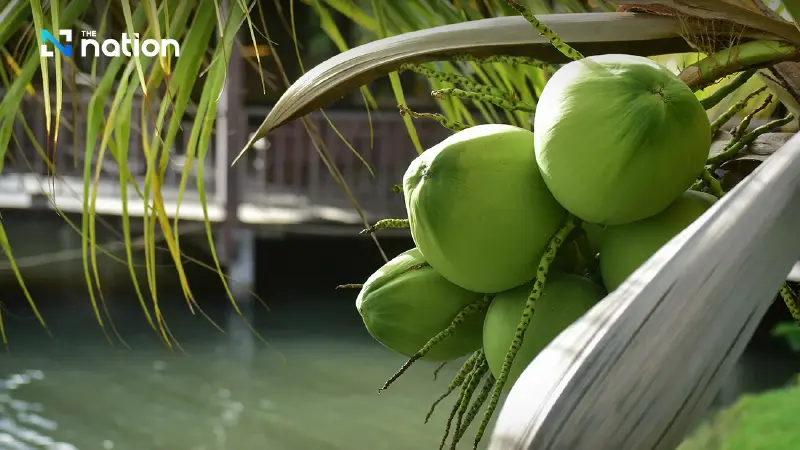


Farmers face ruin as ‘aromatic’ coconut prices crash to 1–2 baht, with experts warning of a total supply chain takeover by foreign-backed nominee firms
- Prices for Thai aromatic coconuts have plummeted to as low as 1-2 baht per fruit, pushing the industry to the brink of collapse and threatening farmers' livelihoods.
- The price crash is attributed to foreign investors, primarily from China, using local nominee companies to take over the entire supply chain and manipulate prices.
- By building their own infrastructure and bypassing Thai middlemen, these foreign-backed firms dictate unsustainably low prices to farmers despite high global demand for the product.
- The low prices prevent farmers from affording resources to maintain crop quality, which risks damaging the global reputation of the Thai aromatic coconut industry.
Farmers face ruin as ‘aromatic’ coconut prices crash to 1–2 baht, with experts warning of a total supply chain takeover by foreign-backed nominee firms.
Thailand’s world-renowned aromatic coconut industry has been plunged into crisis as farm-gate prices have crashed to as low as 1 to 2 baht (approximately $0.032 USD) per fruit.
Industry leaders are now sounding the alarm over a "predatory" takeover of the local supply chain by foreign investors, leaving domestic farmers unable to sustain their livelihoods.
Despite the global surge in demand for Thai coconut water, the primary producers are seeing almost none of the profit.
Natthasak Manusrungsri, managing director of K-Fresh and owner of the prominent All Coco brand, recently went public with the plight of the industry. He warned that the ecosystem is being hollowed out by foreign capital using nominee companies to manipulate prices.
"The most heart-breaking reality is that farmers are being squeezed to the point of no return," Natthasak stated. "When prices are forced down this low, growers can no longer afford the fertilisers or irrigation necessary to maintain quality. This leads to stunted fruit and inferior flavour, which eventually harms the reputation of the entire Thai industry."

The crisis is attributed to a strategic shift by international investors—predominantly from China—who have moved from being mere buyers to controlling the entire "end-to-end" infrastructure.
In key provinces such as Ratchaburi, where the best aromatic varieties are grown, foreign-funded factories have proliferated.
These entities leverage massive capital to rent vast plantations, build high-speed processing plants, and manage their own logistics. By operating through local nominees, they are able to bypass traditional Thai middle-men and dictate prices to the farmers.
An industry source in Ratchaburi told Post Today that these foreign firms operate with extreme agility, often setting up temporary "container offices" and launching full-scale operations within weeks.
"If no protective measures are introduced, Thai operators will be completely displaced," the source warned.

Natthasak has proposed a "premium brand" strategy to rescue the industry, urging the development of Thai-owned, high-margin products that can afford to pay farmers a living wage.
He also called on domestic consumers and digital creators to champion 100% authentic Thai brands to boost their visibility on the global stage.
"Domestic demand alone is not enough," he noted. "We must establish a premium niche in international markets to ensure that Thai wealth stays in Thai hands, providing a sustainable future for our growers."
