
Thai Hospital Introduces Revolutionary Sleep Apnea Treatment to Southeast Asia
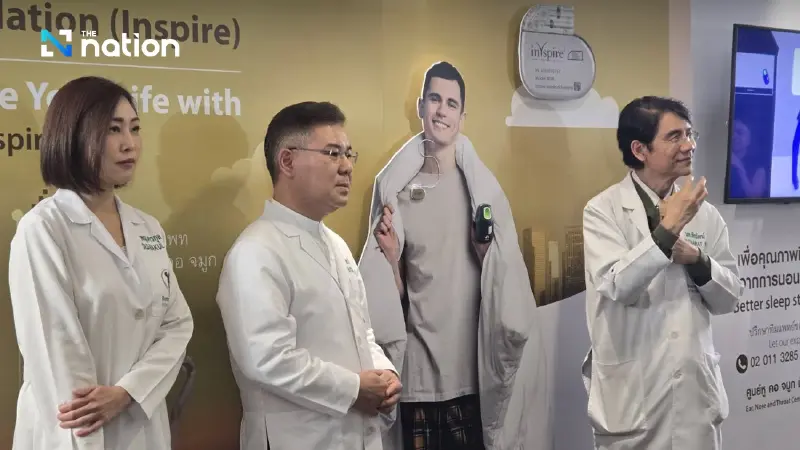


Bumrungrad now offers hypoglossal nerve stimulation technology, providing new hope for patients who cannot tolerate CPAP machines
- Bumrungrad International Hospital in Thailand is pioneering a new treatment for obstructive sleep apnea in Southeast Asia called hypoglossal nerve stimulation (HNS).
- The treatment involves a minimally invasive implant, the "Inspire" device, which stimulates a nerve to keep the airway open and is designed for patients who cannot tolerate traditional CPAP machines.
- Clinical data shows the HNS treatment is highly effective, reducing sleep apnea episodes by over 70% and snoring by more than 90%, thereby preventing serious long-term health complications.
Bumrungrad International Hospital has introduced hypoglossal nerve stimulation (HNS), a groundbreaking treatment for obstructive sleep apnea that could transform care for millions of sufferers across the region.
The innovative "Inspire" device, approved by the US Food and Drug Administration in 2014, has already treated over 100,000 patients in America, Europe, and leading Asian countries including Japan and Singapore.
Thailand's Food and Drug Administration certified the technology in 2024, with the first procedures performed at Bumrungrad in July 2025.

Silent epidemic affects millions
Obstructive sleep apnea (OSA) represents a significant global health crisis, with The Lancet Respiratory Medicine reporting 936 million cases worldwide in 2019. In Thailand, an estimated 20-30% of middle-aged men and 10-15% of women may have the condition without realising it.
"Sleep apnea is caused by upper airway muscles relaxing during sleep, depriving the body of oxygen and forcing the brain to wake periodically," explained Dr Darakul Pornsriniyom, a neurology and sleep medicine specialist at Bumrungrad. "This creates poor sleep quality and impacts life in numerous ways—from daytime fatigue and reduced work efficiency to mood swings and increased accident risk."

The condition's long-term consequences are severe, increasing risks of diabetes, hypertension, heart diseases including arrhythmias and heart failure, stroke, Alzheimer's disease, certain cancers, and sexual dysfunction.

Breakthrough for CPAP-intolerant patients
Whilst continuous positive airway pressure (CPAP) machines remain the most effective treatment, many patients struggle with mask discomfort and other limitations. The HNS system fills this critical gap in care.
"HNS represents a treatment option that addresses the needs of patients who cannot tolerate CPAP therapy," said Professor Chairat Neruntarat, an otolaryngology and sleep surgery specialist at Bumrungrad.
The landmark STAR Trial (Stimulation Therapy for Apnoea Reduction), published in The New England Journal of Medicine, demonstrated remarkable results.
The treatment reduced apnoea episodes from an average of 29.3 to just 9 per hour, with severe complications occurring in fewer than 2% of cases and a 2% device removal rate within two years. More than 90% of patients' partners reported significant snoring reduction.

Minimally invasive procedure
The HNS procedure takes approximately 2-3 hours and involves implanting three components under the skin: a pulse generator in the upper right chest, a sensing lead in the rib cage, and a stimulation lead beneath the tongue nerves. Incisions measure just 2-5 centimetres, and most patients return home within a day.
"The success of this innovative treatment relies on a highly skilled, experienced multidisciplinary team," explained Dr Vitchaphan Hemrungrojn, an otolaryngology specialist at Bumrungrad.

The hospital's team includes sleep medicine physicians, neurologists, otolaryngologists, and anaesthesiologists, all receiving specialised training in the technology.
Following surgery, patients undergo a recovery period of 2-4 weeks before device activation. The implant operates via a portable remote control, allowing normal daily activities and travel. The battery requires replacement every 11 years.

Comprehensive patient selection
Five Thai patients have already received the device, which costs approximately 1.6-1.7 million baht per procedure.
Candidates undergo extensive health screening to ensure suitability, including assessments for blood pressure, heart disease, diabetes, and other related conditions.
The clinical data shows promising results, with sleep apnoea episodes reduced by over 70% and snoring decreased by more than 90%, leading to deeper, higher-quality sleep.

"Bumrungrad is now positioned to treat snoring and sleep apnoea with HNS, which is set to become a mainstay option for patients unable to use CPAP machines," concluded Professor Chairat. "We believe HNS will play an increasingly important role in treating moderate to severe sleep apnoea and help prevent serious health complications."
The treatment represents a significant advancement in sleep medicine for Southeast Asia, offering hope to millions who previously had limited therapeutic options.
