
Thai heart transplants match world standards but donor shortage remains critical
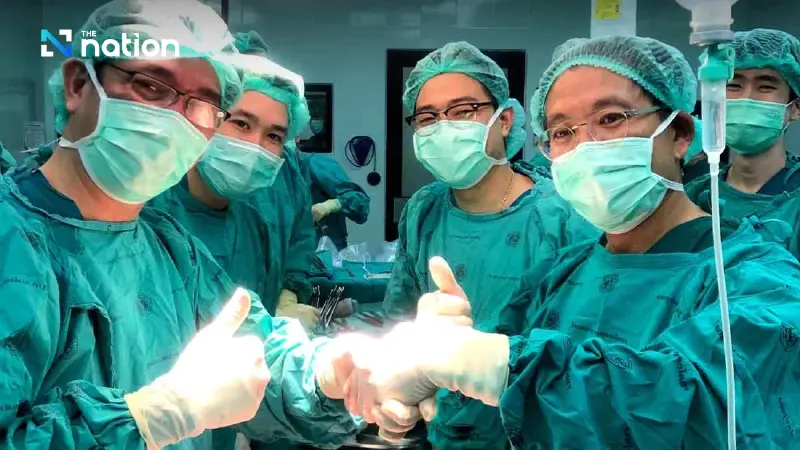


After 38 years of progress, Thailand’s heart transplants now match global standards, yet a critical shortage of donors limits patients’ survival chances
More than 38 years have passed since Chulalongkorn Hospital, Thai Red Cross Society successfully performed Thailand’s first heart transplant in 1987 — also the first in Southeast Asia. The procedure offered new hope to end-stage heart failure patients, improving both quality of life and survival.
Today, Thailand’s heart transplant capability continues to advance steadily. Nearly 200 transplants have been performed, though the number of donors remains limited, echoing a global challenge faced in organ transplantation.
High medical standards, free treatment for all

M.D. Patchara Ongcharit, Head of the Division of Cardiothoracic Surgery at Chulalongkorn Hospital, who has joined Prime Minister Anutin Charnvirakul in the “Heart with Wings” mission since 2014, told that organ transplantation became well-established in 1988. Early efforts faced financial constraints and relied heavily on charitable support, such as from the Thai Red Cross, which could fund only 3–4 transplant cases per year.
Today, funding barriers have been lifted. Patients covered by universal healthcare (30-baht scheme), social security, or civil service benefits can undergo transplants free of charge.
“Transplantation has become a hallmark of advanced healthcare,” said M.D. Patchara. “The Public Health Ministry recognises it as an essential treatment, especially for heart, kidney, and liver transplants. Major medical schools like Chulalongkorn, Siriraj, Ramathibodi, and Thammasat now have world-class specialist teams. Post-surgery survival rates reach 85–90%, and most patients return home within a month.”
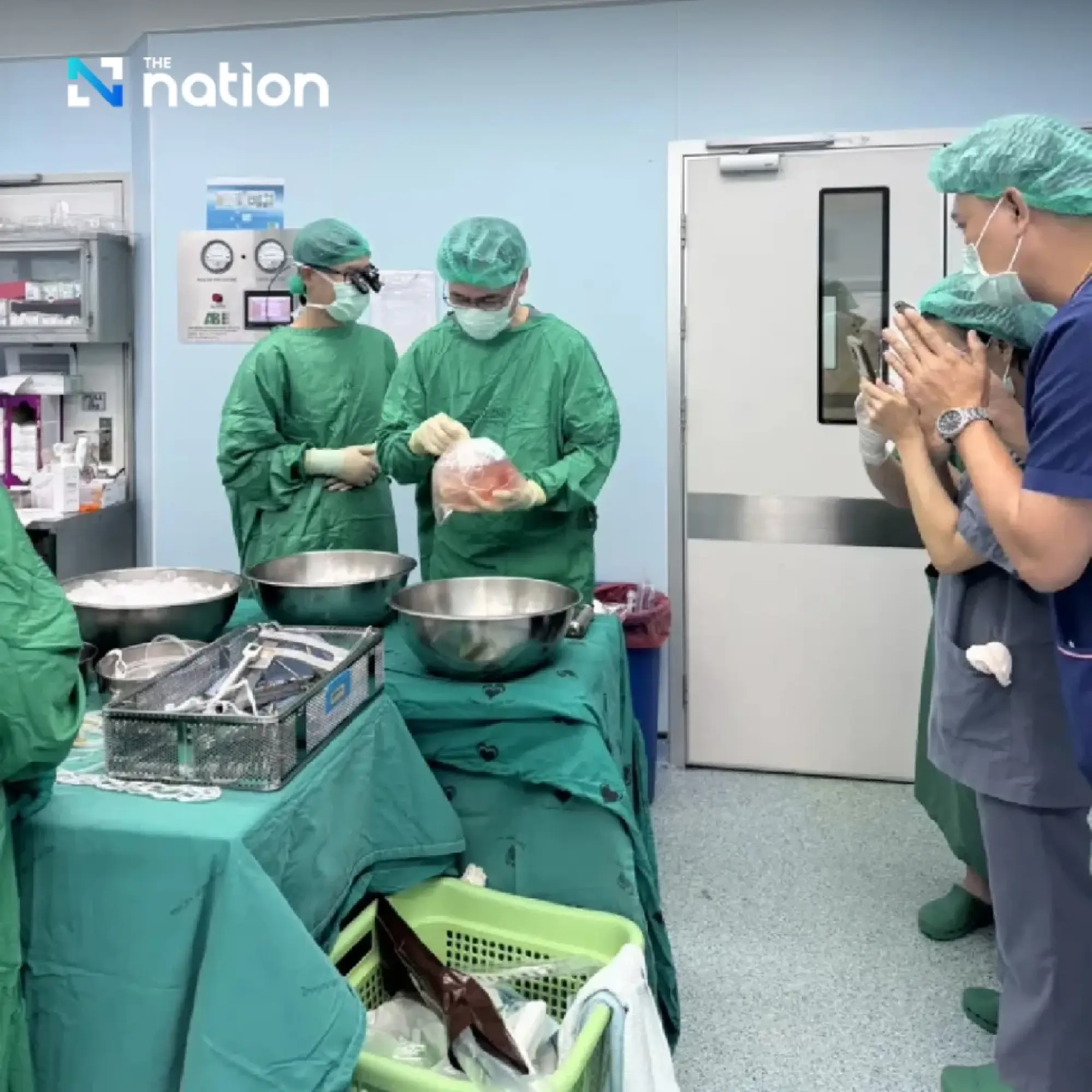

Shortage of organ donors persists
The main challenge, M.D. Patchara explained, lies not in medical expertise but in donor scarcity. Chulalongkorn currently has around 150 living heart transplant patients out of 200 performed. In 2025 (data as of October), 17 heart transplants have already been completed — the highest annual figure ever recorded — with 26 patients still awaiting donors.
The hospital can technically perform up to 40 heart transplants a year, but due to limited donations, manages only about 15–20 cases annually.
“Chulalongkorn handles about two-thirds of all heart transplants nationwide,” said M.D. Patchara. “But the shortage is severe. Currently, 26 patients are waiting here, and many more are waiting at other hospitals. For kidneys, over 3,000 patients are on the national waiting list, while fewer than 1,000 receive transplants each year. Without new donors, it could take up to three years to clear the queue.”
Structural limitations and regional gaps

Although Thailand records tens of thousands of head-injury cases annually — potential brain-death donors — only a few hundred become actual donors each year. Most donors come from the North and Northeast, where hospitals have stronger collaboration and public trust.
Convincing more hospitals to promote organ donation is difficult, M.D. Patchara noted, because regional hospitals are understaffed and overworked, making the complex donation process an “extra task.” Logistical challenges also persist: the ischemia time — the period a heart can survive without blood — is just four hours, requiring rapid coordination between organ retrieval, air transport, and surgery.
“Many patients are referred too late,” he said. “By the time they arrive, they often have multi-organ failure or infections, which reduces surgical success. Candidates must also be carefully screened — those with advanced cancer, severe infections, or poor overall health, and those over 65–70 years old, are often ineligible.”
Innovation improving transplant outcomes
According to M.D. Patchara, progress in medical innovation and care techniques has greatly improved outcomes. “Surgical methods haven’t changed much in 40 years,” he said, “but advances in support devices and drugs have.”
Devices such as ECMO (Extracorporeal Membrane Oxygenation) and mechanical assist pumps act as temporary artificial hearts, sustaining patients with severe heart failure while they await transplants. These devices also help stabilise patients’ organs, improving post-surgery recovery and the performance of the new heart.
Further breakthroughs include immunosuppressant drugs that protect kidney function, allowing patients to live without dialysis, and improved preservation solutions that keep donor hearts viable longer during transport.
“Thailand now has a sophisticated organ donation and transplantation system,” M.D. Patchara concluded. “Financial and technological barriers have been removed, but the biggest obstacle remains the shortage of donors. Most Thai donors are brain-dead patients whose families grant consent — often parents or close relatives — through the Thai Red Cross, which ensures fairness and transparency throughout the process.”


