
Popular fresh vegetables found contaminated with multiple parasites, study shows
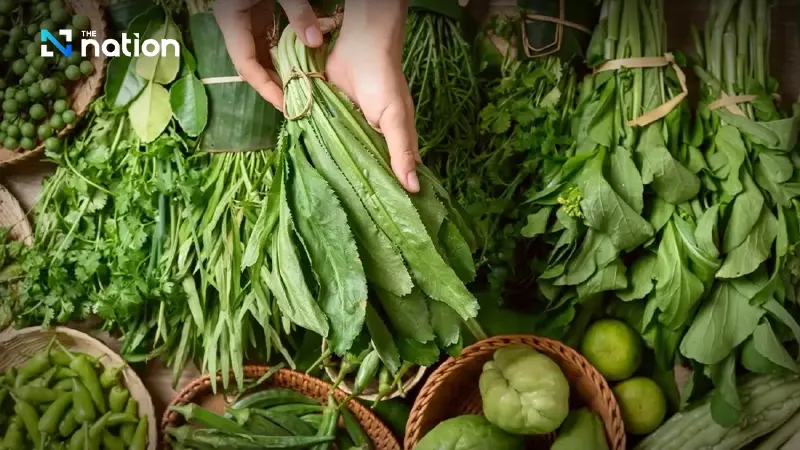


A survey of fresh vegetables from Bangkok and local markets found widespread parasitic contamination, with holy basil showing a 100% contamination rate, followed by coriander and mint.
A study titled “Survey of Intestinal Parasite Contamination in Fresh Vegetables in Bangkok, Thailand”, conducted by Uthaitip Boonkasem of the School of Health Science at Sukhothai Thammathirat Open University and colleagues, and published in the Bulletin of the Department of Medical Sciences in September 2024, has revealed concerning levels of parasitic contamination in commonly consumed fresh vegetables.
The research examined the prevalence of intestinal parasites in fresh produce collected from both local and urban markets across Bangkok. Samples were taken between November and December 2022 and involved 300 specimens from 15 vegetable varieties, analysed using a sedimentation technique.
Overall, 33.3% of all samples were contaminated with intestinal parasites. Local markets showed a higher contamination rate at 38.7%, compared with 28% in urban markets.
Vegetables with the highest contamination levels were:
- Holy basil: 100%
- Coriander: 60%
- Mint: 60%
- Tomatoes: 50%
- Asiatic pennywort: 50%
- Chinese cabbage: 45%
- Lettuce: 35%
- Culantro: 35%
- Water dropwort: 25%
- Long beans: 15%
- Cabbage: 10%
- Morning glory: 10%
- Kale: 5%
Cucumbers and iceberg lettuce were the only vegetables with no detected parasitic contamination.
Across all 15 vegetable types, eight species of intestinal parasites were identified. Helminths detected included hookworm (17.3%), Strongyloides stercoralis (11.7%), roundworm (Ascaris lumbricoides) (3.7%), tapeworms (Taenia spp.) (3.3%), whipworm (Trichuris trichiura) (2.3%), and pinworm (Enterobius vermicularis) (0.3%).
Protozoa detected were Blastocystis hominis (4.7%) and Entamoeba coli (0.7%).
Five districts show parasite contamination rate of 77%
These findings align with another study shared by the Facebook page “Parasite stories”, titled “Widespread Soil-Transmitted Parasitic Contamination in Raw Vegetables at Fresh Markets in the Inner Zone of Bangkok: Findings from a Cross-Sectional Study”, conducted by lecturers from the Faculty of Medicine at Srinakharinwirot University and published in the American Journal of Tropical Medicine and Hygiene on June 8, 2025.
This cross-sectional study assessed parasitic contamination in raw vegetables sourced from five inner Bangkok districts: Huai Khwang, Khlong Toei, Pathumwan, Chatuchak and Phra Nakhon. A total of 200 samples from eight vegetable types were examined using sedimentation techniques combined with microscopic analysis.
The results showed an overall contamination rate of 77%, with 154 out of 200 samples testing positive. Huai Khwang and Chatuchak reported the highest contamination rates, each at 90%.
Parasites detected included Strongyloides stercoralis larvae (57%), hookworm eggs (20%), roundworm eggs (Ascaris lumbricoides) (16%), whipworm eggs (Trichuris trichiura) (12%), Toxocara spp. eggs (10%), and several others.
Chinese cabbage exhibited significantly higher rates of hookworm and whipworm eggs compared with other vegetables, although Strongyloides contamination was lower.
Health risks posed by parasite infections
Tapeworm infections may cause bloating, nausea, vomiting, frequent bowel movements and weight loss. Consuming raw vegetables contaminated with pork tapeworm eggs may allow larvae to migrate into muscles, skin, the eyes or the brain, forming cysts.
Adult tapeworm infections also lead to malnutrition, intestinal blockage, perforation of the intestine and abdominal infections. Larvae in muscle tissue can cause muscle pain, while those in the eyes or brain may lead to blindness, severe headaches, seizures, paralysis or even death.
Roundworm infections occur when eggs enter the body. Larvae hatch in the small intestine and migrate through the bloodstream to the liver, heart, lungs and airways before maturing in the small intestine.
Symptoms include recurrent abdominal pain, nausea, vomiting, rashes, weight loss and a distended abdomen. Infected children may suffer growth delays and difficulty concentrating at school.
Whipworm infections cause nausea, abdominal pain and diarrhoea with bloody mucus. Severe cases may result in inflammation of the intestines, appendicitis or even rectal prolapse.
Hookworm infections vary in severity depending on worm load. As hookworms feed on blood from the intestinal wall, they can cause anaemia, fatigue, dizziness, weakness, poor appetite and delayed growth in children.
Severe anaemia may lead to widespread swelling and heart failure. When larvae penetrate the skin, they may cause itching, blisters and chronic sores.
Three methods to clean vegetables thoroughly
Consumers are urged to wash vegetables properly before eating them, while vendors should wear gloves to prevent direct skin contact with parasites that can penetrate through the skin.
Three recommended methods for cleaning vegetables and fruit include:
- Rinsing under running water
Soak the vegetables for 15 minutes, then rinse under running water while gently rubbing and separating the leaves for two minutes.
- Vinegar wash
Soak vegetables and fruit in a solution of 5% vinegar, using one tablespoon of vinegar per four litres of water for 15 minutes. Rinse thoroughly with clean water afterwards.
- Sodium bicarbonate wash
Mix half a tablespoon of baking soda per 10 litres of water and soak for 15 minutes. Rinse twice with clean water to remove any residue.
