
PM2.5 Dust Levels in Bangkok Reach 'Orange Level' in Three Districts, Affecting Health
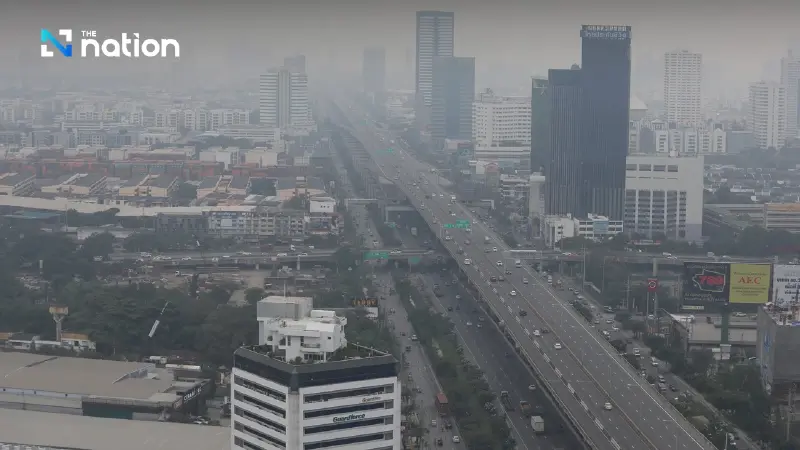


The dust problem is returning. Bangkok residents are advised to check today’s air quality, as the “Bangkok PM2.5 dust levels” have risen to the orange level in three districts, already affecting health.

On November 12, 2025, the Bangkok Metropolitan Administration (BMA) reported that this morning’s air quality in the capital was generally good. However, three districts recorded orange-level dust concentrations that have begun to affect health. The city’s average PM2.5 level stood at 24.1 micrograms per cubic metre (µg/m³).
The Bangkok Air Quality Information Centre reported the fine particulate matter (PM2.5) situation in Bangkok as of 07.00 on 12 November 2025.
The citywide average was 24.1 µg/m³ (standard limit: 37.5 µg/m³).
Top 12 Districts with the Highest PM2.5 Levels in Bangkok
• Lat Krabang District – 39.8 µg/m³
• Bueng Kum District – 39.6 µg/m³
• Prawet District – 39.2 µg/m³
• Bang Na District – 34.9 µg/m³
• Wang Thonglang District – 34 µg/m³
• Nong Chok District – 33.6 µg/m³
• Min Buri District – 33.4 µg/m³
• Khlong Sam Wa District – 33 µg/m³
• Pathumwan District – 31 µg/m³
• Phra Nakhon District – 28.9 µg/m³
• Dusit District – 28.9 µg/m³
• Nong Chok Park, Nong Chok District – 28.6 µg/m³
Dust particles are expected to increase, though overall air quality remains within the good range.
Emergency Health Warning! What to Do When Facing Orange-Level Dust
General public:
Use personal protective equipment, such as PM2.5 protective masks, whenever going outdoors. Limit time spent on outdoor activities or strenuous exercise.
Monitor for abnormal symptoms such as coughing, breathing difficulties, or eye irritation.
Vulnerable groups:
Use personal protective equipment, such as PM2.5 protective masks, whenever going outdoors. Avoid strenuous outdoor activities or exercise. Follow medical advice, and if any abnormal symptoms occur, seek medical attention immediately.
Real-Time Dust Check Channels – What You Should Know Before Leaving Home
Residents can check air quality before leaving home through:
- AirBKK application
- Website: airbkk.com
- Facebook: Environment Department, Bangkok Metropolitan Administration
- Facebook: Air and Noise Quality Management Division, Environment Department
- Facebook: Bangkok Metropolitan Administration
- LINE ALERT
Additionally, if residents detect any pollution sources that may cause dust emissions, they can report the issue through the Traffy Fondue application so that relevant agencies can take corrective action.
