
Nutrition Warning: Why America’s ‘Upside-Down Pyramid’ Could Be a Health Risk for Thais
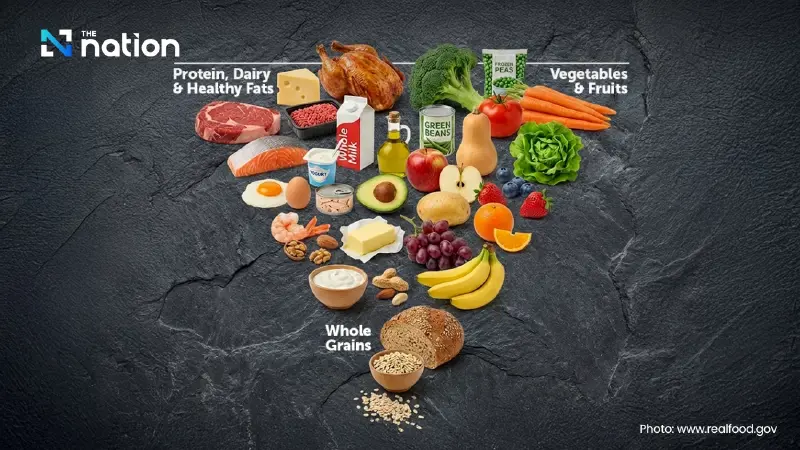


Department of Health urges citizens to stick to Thailand’s "Nutrition Flag" as US dietary shifts towards red meat and full-fat dairy spark global concern
- Thai health officials are warning that the American ‘Upside-Down Pyramid’ diet, which emphasizes high intake of red meat and full-fat dairy, is a significant health risk for the Thai population.
- The high levels of animal protein and saturated fat in the US model are linked to increased risks of heart disease and kidney strain, contradicting World Health Organization (WHO) recommendations.
- Authorities urge citizens to follow Thailand’s own ‘Nutrition Flag’ guidelines, which are specifically designed for the Thai physique and prioritize grains, vegetables, and lean proteins over fats and red meat.
Department of Health urges citizens to stick to Thailand’s "Nutrition Flag" as US dietary shifts towards red meat and full-fat dairy spark global concern.
Thai health officials are sounding the alarm over a growing trend of adopting American dietary habits, warning that the latest "Upside-Down Pyramid" model from the United States may be ill-suited to the Thai physique and could lead to chronic health issues.
The Bureau of Nutrition, under the Department of Health, recently addressed the 2026 US Dietary Guidelines, which shifted focus towards high protein intake—including red meat, butter, and full-fat dairy—while placing plant-based proteins at the bottom.
While this has gained traction on social media, experts warn it contradicts World Health Organization (WHO) standards and poses specific risks to the Thai population.
The Kidney and Heart Risk
The US model encourages a daily protein intake of 1.2 to 1.6 grams per kilogram of body weight, nearly double the traditional minimum recommendation of 0.8 grams.
"Consuming such high levels of animal protein, particularly red meat and full-fat cheese, significantly increases the intake of saturated fats and sodium," a report for the Department of Health noted. "This not only heightens the risk of coronary heart disease but also places an immense burden on the kidneys, potentially leading to long-term renal strain."
Furthermore, the WHO recommends limiting saturated fat to no more than 10% of total daily energy intake—a threshold easily exceeded under the new American model.

Designed for Thais: The "Nutrition Flag"
Health officials insist that the most effective path to longevity for Thais is the 2025 Food-Based Dietary Guidelines, designed specifically for the nation's biological context and lifestyle.
Unlike the new US pyramid, Thailand’s "Nutrition Flag" emphasises a balanced approach:
The Broad Base (Eat Most): Rice, grains, and starches remain the foundation of energy.
The Second Tier: A generous variety of colourful fruits and vegetables.
The Third Tier: Lean meats, fish, eggs, and milk in moderate portions.
The Tip (Eat Least): Fats, sugar, and salt are kept to an absolute minimum.
The Nine Commandments of Thai Nutrition
To simplify healthy living, the Department recommends following the "Nine Nutritional Precepts":
- Eat from all food groups in recommended proportions and monitor body weight.
- Prioritise brown or unpolished rice over refined starches.
- Regularly consume fish, lean meat, eggs, and legumes.
- Eat a colourful array of vegetables and avoid overly sweet fruits.
- Drink plain milk and calcium-rich foods.
- Avoid foods high in fat, sugar, and salt.
- Ensure food is clean, safe, and freshly cooked.
- Drink adequate water and avoid sugary beverages.
- Reduce or abstain from alcoholic drinks.

Cultural Context Matters
According to various regional nutritionist reports, it pointed out that nutrition is not "one size fits all".
Different nations have developed visual guides that suit their specific genetic and culinary backgrounds. While Thailand uses a Flag, Japan uses a Spinning Top, China follows a Pagoda, and South Korea utilises a Bicycle model.
"Adopting a trend simply because it is popular in the West can be dangerous," the Bureau concluded. "Balance, moderation, and variety—the hallmarks of the Thai model—remain the best answers for the health of our people."
