
Public urged to avoid Salween shellfish after heavy metal findings
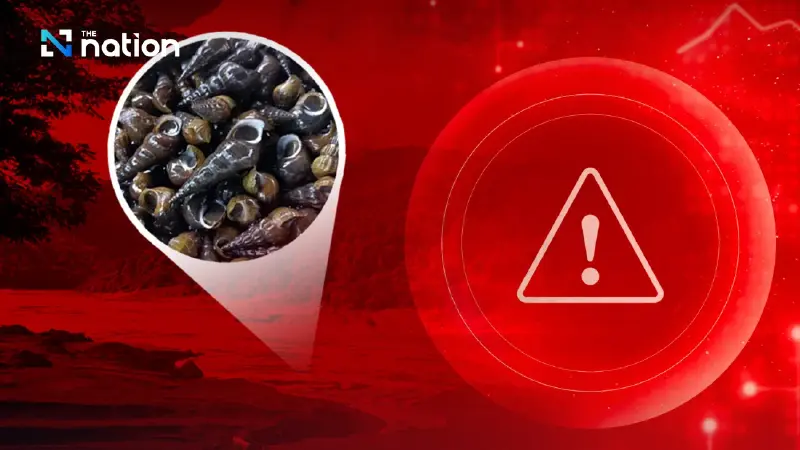


The Public Health Ministry has advised people living near the Salween River to temporarily avoid eating local shellfish after arsenic and lead were found above safety standards.
Public Health Minister Pattana Promphat said the Ministry of Public Health is advising people in the Salween River basin in Mae Hong Son province and nearby areas to temporarily avoid eating Salween shellfish, after laboratory analysis by local research agencies found heavy metal contamination.
The tests detected arsenic and lead in shellfish samples collected from some natural water sources, with levels exceeding the required safety standards.
“The Ministry of Public Health will continue working with relevant agencies to monitor environmental quality and food safety, while communicating health knowledge to the public so people can make appropriate food choices and protect their health,” Pattana said.

Dr Somruek Chungsaman, Permanent Secretary for Public Health, said analysis by environmental agencies and academic institutions in the area, including Chiang Mai University and the Health Systems Research Institute, showed that shellfish tend to accumulate heavy metals from sediment and water sources at higher levels than other aquatic animals.
This is consistent with water-quality tests in some sections of the Salween River, where arsenic levels were found to exceed the standard limit at certain points.
Thailand’s drinking-water quality standard and World Health Organisation guidelines set the maximum arsenic level in water at 0.01 milligrams per litre, a level considered not to pose health risks from long-term consumption.
However, arsenic levels detected in some natural water sources along the Salween River exceeded this limit, which could lead to greater accumulation in aquatic animals, particularly shellfish living on riverbeds.

Dr Amporn Benjaponpitak, Director-General of the Department of Health, urged the public to temporarily avoid eating shellfish from natural water sources in areas where contamination has been reported.
She also advised people to avoid eating bottom-dwelling aquatic animals from risk areas, as well as food sourced from surface water that may contain accumulated contaminants. People should also avoid using river water directly.
“Most village tap-water systems and mountain-fed water supply systems in the area are quality-controlled and have been inspected under the required standards, meaning they can be used safely for household use and consumption,” Amporn said.

