
Thailand readies Ebola testing labs for Bundibugyo strain
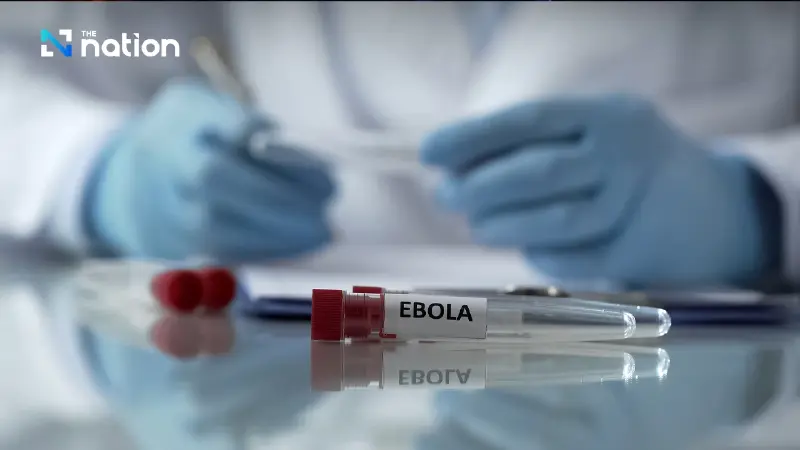


Thailand strengthens Ebola testing capacity and regional lab readiness as WHO recommends three experimental treatments for the Bundibugyo strain
Thailand has moved to strengthen laboratory preparedness for Ebola virus testing as the World Health Organization races to identify treatments and vaccine options for the Bundibugyo strain, a form of Ebola for which no approved vaccine or specific therapy is currently available.
Dr Sarawut Boonsuk, director-general of the Department of Medical Sciences, said Thailand had stepped up surveillance and laboratory readiness after several countries increased screening, quarantine, diagnosis and treatment measures in response to the Bundibugyo Ebola outbreak in Africa.
Thailand currently has two Biosafety Level 3, or BSL-3, laboratories capable of testing for Ebola virus: the Thai Red Cross Emerging Infectious Diseases Clinical Centre at Chulalongkorn Hospital and the National Institute of Health under the Department of Medical Sciences.
Together, they can process around 300 samples a day, with capacity ready to expand if an outbreak occurs.
For provinces without BSL-3 facilities, the department is working with hospital networks nationwide to strengthen 32 Designated Receiving Area, or DRA, laboratories.
These separated laboratory areas are designed to handle samples from suspected Ebola cases under higher biosafety standards than routine hospital labs.

The DRA labs are equipped with biosafety cabinets, essential testing equipment for blood counts, electrolytes, kidney and liver function, and autoclaves to disinfect samples and infectious waste before removal from the laboratory.
Staff have also been trained in real-time RT-PCR testing, safe sample collection, packaging, transport and legal requirements under Thailand’s Pathogens and Animal Toxins Act.
The Thai preparations come as WHO and external experts prioritise clinical trial options for the Bundibugyo strain.
WHO has recommended evaluating three experimental treatments:
MBP134 from Mapp Biopharmaceutical, maftivimab from Regeneron and remdesivir from Gilead Sciences.
Regeneron said supplies of maftivimab were already in the Democratic Republic of the Congo and could be used for immediate treatment or as part of a study if WHO proceeds.
WHO has also prioritised obeldesivir, an investigational oral antiviral from Gilead, for post-exposure prevention trials, depending partly on the effectiveness of contact tracing.
On vaccines, WHO identified rVSV Bundibugyo, a single-dose vaccine developed by the International AIDS Vaccine Initiative, as the most promising candidate, though it may not be ready for testing for another seven to nine months.
Another candidate, ChAdOx1 Bundibugyo, developed by the University of Oxford and the Serum Institute of India, could be ready for testing within two to three months, pending further animal data.
WHO is also considering whether Merck’s Ervebo, the only licensed Ebola vaccine, could be studied, but said it should not be used outside research settings because evidence of protection against the Bundibugyo strain remains limited and inconclusive.
Advisers have also recommended evaluating combination approaches using monoclonal antibodies with remdesivir.
Dr Sarawut said Thailand’s laboratory operations would continue under strict biosafety and technical standards to protect health workers, reassure the public and strengthen the country’s readiness for emerging infectious diseases.
