
MedPark reshapes cancer care in Thailand with precision medicine
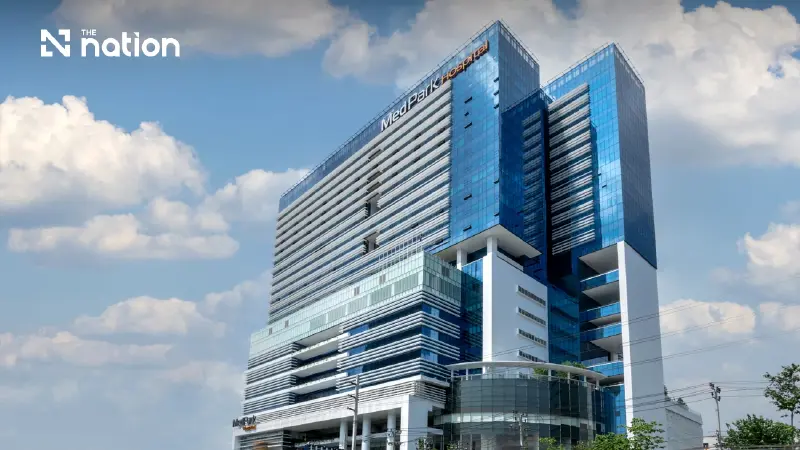


MedPark Hospital is advancing cancer care in Thailand through integrated oncology teams, genomic testing, AI-assisted diagnosis and future CAR T-cell research.
Cancer is no longer a disease defined only by age. In Thailand, doctors are seeing a more complicated picture, shaped by genetics, lifestyle, infections, environmental risks and factors medicine has yet to fully understand.
At MedPark Hospital, specialists say the challenge is no longer simply detecting cancer, but understanding each patient’s disease in enough detail to treat it quickly, precisely and with the least possible impact on quality of life.
The shift is happening as Thailand faces a heavy cancer burden. Cancer remains the country’s leading cause of death, with more than 80,000 to 86,000 deaths a year, or nearly seven to eight deaths every hour.
Data from the National Cancer Institute in 2025 showed around 140,000 new cases a year, equivalent to almost 400 new cases a day, and about 83,000 deaths.
Medical experts at MedPark Hospital warn that the situation in 2026 remains concerning, not only because Thailand is an aging society, but also because cancer is being found in younger patients.

A more complex cancer landscape
Cancer risks differ widely from person to person. For solid tumours, doctors point to risk factors such as smoking, e-cigarettes, alcohol, hepatitis infection and air pollution. PM2.5 fine dust, for example, has increasingly been linked to inflammation in the body and may contribute to lung cancer risk.
Blood cancers, including leukaemia, lymphoma and myeloma, have their own risk pathways. A weakened immune system can increase vulnerability, while viruses such as HIV and Epstein-Barr, as well as some bacteria found in the stomach, can be associated with certain forms of lymphoma.
Yet doctors acknowledge that many cases cannot be explained by obvious behaviour or infection. Some patients do not drink alcohol, smoke or have known viral infections, but still develop cancer.
“There are still many factors we do not know, or factors that combine in complex ways. What matters is that these factors can cause abnormal gene mutations in cells,” Dr Udomsak Bunworasate, a medical oncologist specialising in haematological diseases and haematopoietic stem cell transplantation at MedPark Hospital, told The Nation in an exclusive interview.
That complexity has changed the way cancer is treated. Treatment now depends not only on the type and stage of cancer, but also on genetic mutations and the biological behaviour of each tumour. Even two patients with the same type of cancer, such as lung cancer, may need completely different treatment plans.
From survival to quality of life
Despite the rising number of patients and the increasing complexity of treatment, specialists at MedPark Hospital say cancer care has also improved rapidly.
Screening technology has advanced, diagnoses can be made earlier, survival rates are improving and side effects are less severe than in the past. Patients are also living longer with a better quality of life after treatment.
Dr Sudpreeda Chainitikun, a medical oncologist at MedPark Hospital, noted that new medicines and treatment guidelines are being updated constantly, sometimes every two or three months. Over the past year alone, new approaches have emerged across several cancer types.
Surgery has also evolved. Laparoscopic surgery, once considered advanced, has been followed by robotic surgery and, more recently, AI-assisted surgical support.
“Every aspect of cancer treatment has continued to improve each year. The chance of curing solid cancers is rising every year, although it is not yet 100%. But it is clearly higher than five years ago,” Sudpreeda explained.
He also observed that younger generations are becoming more health-conscious, making them more likely to seek screening and access treatment earlier.

Inside MedPark’s integrated cancer ecosystem
MedPark Hospital has developed an “integrated cancer ecosystem”, with the Light of Day Oncology & Radiation Centre at its core. The centre is designed to support patients with all types and stages of cancer, with the aim of improving both recovery prospects and quality of life.
Speed is crucial. Some cancers grow rapidly, with certain tumours capable of doubling in size within three weeks. This is why MedPark places strong emphasis on technology, infrastructure and fast coordination.
One key asset is its in-house genomics laboratory. In the past, gene testing could take a month because samples often had to be sent overseas. Today, MedPark doctors say some results can be returned within a day, allowing treatment to begin much sooner.
That speed can be decisive in aggressive cancers. Modern cancer care no longer relies only on cell type or disease stage. Doctors can analyse cancer cells, or use blood-based testing to detect cancer-related material in the bloodstream, to understand mutations and predict which medicines are most likely to work.

With broader genetic data, physicians can identify targeted therapies, determine whether a patient may respond well to immunotherapy, or tailor treatment for blood cancers, including stem cell transplantation.
Antibody-drug conjugates, or ADCs, are also playing a growing role. These medicines combine the targeting ability of precision drugs with the cancer-killing effect of chemotherapy, allowing doctors to pursue stronger treatment while trying to limit side effects.
“When we have enough information, treatment becomes faster and more accurate. Even when patients appear to have the same type of cancer, their mutations may differ, so we choose different medicines for each person,” Udomsak explained.
He added that genetic testing can also identify people at higher risk of developing cancer in the future, allowing doctors to monitor and screen them earlier. Earlier detection, in turn, improves treatment outcomes.

Cancer care beyond medicine
Cancer is rarely managed by one doctor alone. MedPark Hospital uses monthly multidisciplinary meetings to plan treatment and monitor side effects throughout the patient journey.
The team may include oncologists, pulmonologists, surgeons, psychologists, pharmacists and nutritionists. Pharmacists help check whether medicines interact with one another, while nutritionists advise on diet and physical strength. Psychologists support both patients and families, recognising that cancer treatment places emotional pressure on everyone involved.
For international patients, MedPark also uses telemedicine to maintain continuity of care after they return home, including patients in the United States, Europe and Asia.

The next five years: AI, targeted drugs and screening
Looking ahead, MedPark specialists expect cancer treatment to become more effective but also more complex. Chemotherapy is likely to play a smaller role, while targeted therapies become increasingly important because they offer greater effectiveness and fewer side effects.
AI is also expected to become more useful in diagnosis. It can help doctors detect polyps that may be missed by the human eye, or assist pathologists by marking areas where cancer cells may be present. Still, doctors stress that humans remain essential, and AI must work alongside medical expertise rather than replace it.
Thailand also faces structural challenges. Specialists urged relevant agencies to support domestic production of medical supplies to reduce reliance on imports, lower costs and improve access to care.
Medical personnel must also be trained continuously as cancer science advances.
“Medical staff need to keep updating their knowledge. Cancer is complex and it continues to develop all the time,” Udomsak emphasised.
Another area where Thailand still lags behind some countries is cancer screening. In many places, people undergo regular screening once they reach a certain age. In Thailand, however, many still overlook preventive checks.
“If Thai people become more interested in their health in the future, they will consult doctors more often about screening. Diagnosing cancer at an early stage gives patients a much higher chance of being cured,” Sudpreeda noted.

Research and future access to CAR T-cell therapy
MedPark is also looking ahead to more research. The hospital has research ethics systems in place and is exploring future medicines, including CAR T-cell therapy.
CAR T-cell therapy has become a standard treatment in some countries for cancers such as lymphoma and myeloma. MedPark is currently conducting research in collaboration with the Faculty of Medicine, Chulalongkorn University, while awaiting approval from the Thai Food and Drug Administration (FDA).
“We are ready to care for patients quickly and in a timely way. We also have strong cooperation with medical institutions such as Chulalongkorn University for better treatment in the future,” Udomsak explained. “For CAR T-cell therapy, we hope that once the FDA approves it, Thai patients will have greater access.”
For MedPark, the future of cancer care is not only about having the most advanced medicines. It is also about building a system where patients feel supported, families feel reassured, and doctors work together as one team.
“We want to care for patients without suffering, to make them feel comfortable, and to give their families confidence. Our doctors are skilled, we coordinate as a team, and we continue updating our knowledge to provide the best treatment for patients,” Sudpreeda concluded.
