
Thailand promotes turmeric as model herb for global wellness market
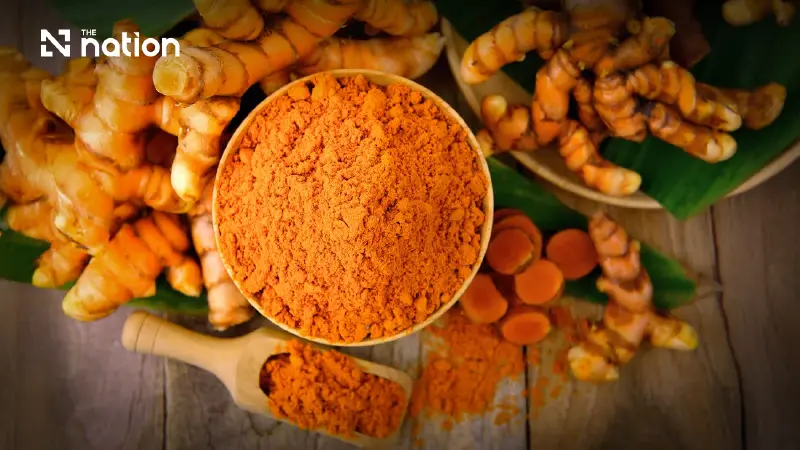


Thailand is promoting turmeric as a model economic herb, aiming to develop evidence-based herbal medicines and expand into the global health and wellness market.
The Department of Thai Traditional and Alternative Medicine is promoting turmeric as a model economic herb with a complete value chain, aiming to develop it into an alternative to conventional medicines while paving the way for Thailand’s health industry to expand globally and capture the growing health and wellness market.
Dr Pongsadhorn Pokpermdee, director-general of the Department of Thai Traditional and Alternative Medicine, said turmeric has long been part of Thai wisdom and society.
He said it has now been scientifically proven to contain super antioxidant compounds, leading to its development into herbal medicines used in the public health system.
One example is turmeric medicine for digestive disorders. Turmeric capsules have been included in the National List of Essential Medicines for relieving bloating, flatulence and indigestion.
Turmeric has also been developed for treating knee osteoarthritis. The Government Pharmaceutical Organisation (GPO) has developed Anti-ox® turmeric extract, which has been included in the National List of Essential Medicines under medicines developed from herbs. It is indicated for relieving knee-joint pain at a level comparable with conventional medicines and has won a Prime Minister Herbal Award for outstanding national herbal products.

In fiscal year 2025, Thailand’s public health system prescribed turmeric capsules for bloating and indigestion more than 2.17 million times, totalling 81.29 million units and worth 136.13 million baht.
Turmeric extract for knee osteoarthritis was prescribed with a value of more than 151,000 baht, reflecting the development of herbal medicines from research into real-world use and their potential to reduce reliance on chemical medicines.
In terms of raw materials, Thailand has turmeric cultivation areas in 67 provinces, with GAP-standard plots in 28 provinces.
A key highlight is Surat Thani turmeric, which has been registered as a geographical indication (GI) product because local conditions allow it to accumulate especially high levels of active compounds in the curcuminoid group.
The department is also preparing to link farmer data with GMP-standard herbal medicine factories through a traceability system, helping ensure the quality of raw materials throughout the supply chain.
Dr Amphon Wehachart, director of the Institute of Thai Traditional and Alternative Medicine Research, said the institute is promoting the development of turmeric using advanced screening technologies.
These include DNA barcoding for genetic identification, HPLC fingerprinting for chemical identity testing, and analysis of the three key active compounds: curcumin, demethoxycurcumin and bisdemethoxycurcumin.
Evidence from systematic reviews and meta-analyses also supports the effectiveness of turmeric extract in relieving pain and improving mobility in patients with knee osteoarthritis at a level close to that of non-steroidal anti-inflammatory drugs (NSAIDs), he said.
At the same time, turmeric extract was found to cause significantly fewer gastrointestinal side effects, making it another promising option for knee osteoarthritis care.
The department aims to use the “turmeric model” as a prototype for driving other Thai economic herbs, strengthening the competitiveness of entrepreneurs, expanding opportunities in the global health and wellness market, and supporting the future growth of wellness tourism.
