
Salud! A night of ceviche and Chicha morada
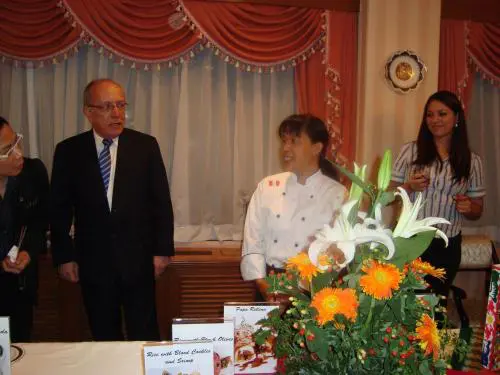


The Peruvian envoy to Thailand serves up some of his country's classic cuisine
Peruvian Ambassador Jorge Castaneda wants Thais to know that there’s more to Peru than the Incas and Machu Picchu. The South American country, he explains, also offers plenty of tasty dishes and to prove it, he recently showcased some of his country’s best rice dishes and desserts at his residence on Sukhumvit Soi 49. While some of the media attending the event had sampled the Peruvian brandy known as pisco, few of us had experienced the food.
“Very few know that my country not only has great cultural and archaeological treasures, vast natural resources and some of the world’s most fascinating fauna and flora but also a rich diversity of dishes and ingredients,” Castaneda says.
For thousands of years, Peruvians have terraced fields at different altitudes to grow quinoa (a high-protein grain), corn (maize), coca, and potatoes. Other staples include fish and shellfish in coastal and Amazonian areas. Guinea pigs (cuy) have been a delicacy since at least Inca times. Native llamas and alpacas have provided wool, meat, and labour as pack animals. In the 1530s, Europeans brought cattle, sheep, horses, wheat, and other crops. Settlers in the Amazon grow cassava (manioc), sugarcane, sweet potatoes, cacao, bananas, mangoes, and other fruits.
According to the ambassador, Peruvian cuisine is a fusion of flavours with a long history of influences from traditional pre-Inca time to Incas-Quechua, Spanish, African, Western European, Chinese and Japanese cuisines.
“Eating in Peru is an exceptional gastronomic experience. There are literally thousands of recipes for traditional or nouvelle Peruvian cuisine. The countless wonderful restaurants around the country offer a great variety of dishes of outstanding quality and flavour, making Peru the gastronomic capital of the continent,” he says proudly.
Peru’s geography, climate, culture and ethnic mix determine the nature of the local cuisine which varies in the three geographical regions: the coast, the Andes and the Amazon.
The native cuisine of the coast has four strong influences: Spanish-Moorish, European (Mediterranean), Asian (Japanese and Chinese) and African. The cuisine of Lima and the central coast has inherited pre-Hispanic and colonial cooking traditions with a degree of Western and Oriental cooking traditions. The Spanish Conquistadors and immigrants (from African to Japanese) brought with them their cooking traditions and ingredients. Creole and Chinese cuisine (known locally as Chifas) are the most widespread.
One of the most popular dishes in Peru is ceviche the flagship dish of the coastal cuisine. It is the quintessence of fusion: Andean chilli peppers, onions and acidic aromatic lime. A spicy dish, it consists generally of bite-size pieces of white fish (such as corvina or white sea bass), marinated raw in lime or lemon juice mixed with chillies. Ceviche is served with raw onions, boiled sweet potatoes (camote), toasted corn (can-cha), and sometimes local green seaweed (yuyo).
Meanwhile, the cuisine of the northern coast is different from the central and southern varieties. This is not only due to the coastal native Indian, Moorish and Spanish influences, but also due to the warmer coastal seas, hotter climate and immense geographical latitude variety. Best known dishes include chinguirito (dried and salted guitarfish); chabelo (stew prepared with shredded grilled beef and grilled banana plantains) and shámbar (a soup combining grains, pork and beef ).
One of the main dishes is Seco de Cabrito. Most popular in the north, goat stew (lamb, chicken or beef are often substituted) is made in a pot after marinating with chicha de jora (corn-based alcoholic drink) or beer and other spices including fresh coriander leaves (cilantro) and garlic.
In the valleys and plains of the Andes, the locals’ diet is based on maize, potatoes, and an assortment of tubers. Meat comes from indigenous animals, such as alpacas and guinea pigs, but also from such imported livestock as sheep and pigs. Typical dishes include carapulcra, a pork and dry-potato stew, whose recipe includes chocolate, cumin, peanuts, port wine and coriander. Boiled potatoes are the base of two of the most popular Andean appetisers.
Food in the Amazon draws on native ingredients, fruits and vegetables, the basis of the jungle diet. Although many animal species are hunted for food in the biologically diverse jungle, one standout is the paiche, one of the world’s largest freshwater fish.
Among the fruits of Peru’s jungle is the camu camu, which contains 40 times more Vitamin C than the kiwi fruit. Fowl, fish and wild meat are indispensable ingredients in preparing the favourite jungle dish juanes (rice dough stuffed with chicken and wrapped in banana leaves for cooking), grilled picuro (delicious wild meat), apishado or pork cooked in a peanut and corn sauce, and patarashca fish wrapped in banana leaves and cooked over a fire.
All Peruvian desserts originated in the colonial times when a household was judged by the quality of the desserts served. These delights include suspiro limeño, arroz con leche and picarones and turrón de doña pepa.
We’re fortunate to be served Peru’s traditional drinks: Chicha morada, Pisco and Peruvian wines. Chicha morada, a traditional corn beer, is prepared from a base of boiled purple corn to which are added chunks of pineapple, sugar and ice as it cools. Pisco, quite strong with 40-45 percent alcohol, is made from distilled grapes in traditional distilleries. We enjoy a free flow of Peru’s national drink, a cocktail made from pisco combined with lemon juice, egg white, ice and sugar.
“A good pisco sour is a first rate way to kick off a Peruvian meal,” our host notes.
