
Our heritage in film
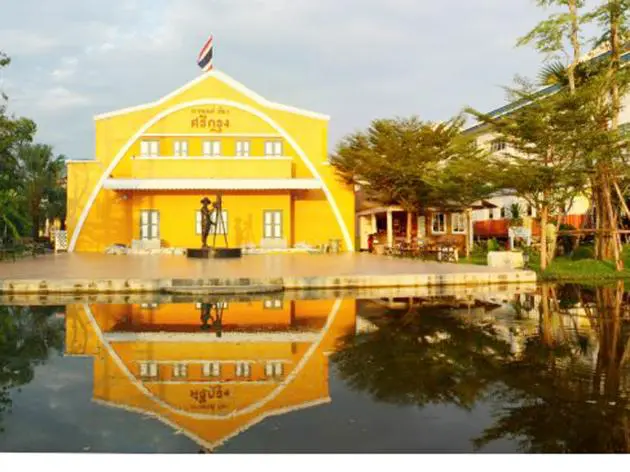


Despite the flood, the Thai Film Archive continues its important work of registering and restoring the Kingdom's most important works
Though surrounded by metre-high waters in Nakhon Pathom’s Salaya district, the Thai Film Archive has managed to remain dry. Its dedicated team has been monitoring the situation and working to keep the precious film reels safe while organising daily screenings for flood refugees living at the evacuation centre nearby.
The movies have been designed to raise spirits with a programme that’s included the Japanese family drama “Always: Sunset on Third Street”, “Panya Raenu” and “Kung Fu Panda” as well as Charlie Chaplin’s “City Lights” and “Modern Times”.
Most of the staff have been living at the archive since the water started flowing into Buddhamondhol Sai 5 last month. They take turns to go out to buy food and supplies while the others update the situation on Facebook with photographs, video clips and brief remarks.
Always short on budget, this humble organisation works hard to keep its treasures safe.
“So far we’ve spent more than Bt100,000 working on the flood situation. We haven’t estimated the damage yet but the air conditioning compressors were affected before we were able to lift them out from the water,” says the archive’s assistant director Sanchai Chotirosseranee.
The situation outside isn’t preventing the archiving work inside from continuing. Last month, the archive and the Culture Ministry launched the national film heritage registry. Even though film media will eventually be replaced by digital media such as hard disk or DVD, the archive believes that original film media can last as long as 100 years when kept in the right conditions.
Archive director Dome Sukwong was inspired by the US Library of Congress’ National Film Registry and he thought Thailand should have its own.
With an initial budget of Bt1 million, the project has selected 25 films from various genres, including features, documentaries and newsreels. Additions to the registry will be announced each year on October 4, which is Thai Movies Conservation Day.
Each film will be restored and two negative copies made – one for public screening and another to be kept at the archive.
The first 25 movies include Cherd Songsri’s classic “Plae Kao” (“The Scar”) and Ratana Pestonji’s eye-popping khon production “New Petch” (“Diamond Finger”). There’s also the newsreel of King Rama VII’s accession to the throne in 1925, the first time a Thai royal ceremony was recorded on film.
Other selections are more recent, among them Apichatpong Weerasethakul’s 2010 Cannes winner “Uncle Boonmee Who Can Recall His Past Lives” and Surapong Pinijkhar’s “Tawipop” (“The Siam Renaissance”), which was made in 2005.
These new movies have been selected because either they are considered as being in a crisis situation or the archive doesn’t have a copy. And if they do, it’s in need of restoration.
“And those are our criteria for choosing which movies should be on the film heritage list,” says Dome.
One of the films that fits both the list and the current situation is a documentary of the Bangkok flood in 1942 by cinematographer Tae Prakardwutthisan.
Others are the first Thai animated feature “Sud Sakorn” from 1979, the blockbuster hit “Monrak Luk Thung” from 1970 and the 1938 documentary “Klong Chang”, which records the corralling of a wild elephant in Lop Buri.
“The film quality of ‘Monrak Luk Thung’ is very bad and we have only one copy, so we are looking for a better one and will also try to restore ours as best as we can,” says Dome of the musical that starred Mitr Chaibancha and Petchara Chaowarat and played in cinemas for six months.
Dome adds that the registry will help Thais learn about several largely unknown films that document the country’s history.
“After we’ve restored and printed two copies, we will have an activity to screen the movies as well,” says Dome.
A committee of academics, filmmakers, critics and archivists will shortlist the movies that fit the criteria.
Other heritage films include Rattana’s “Rongraem Narok” (1957), Vichit Kounavudhi’s “Luk Isaan” (“Son of the Northeast,” 1982), the once-banned indie docudrama “Thongpan” (1977), the anti-communist propaganda “Fire Yen” (“Cold Fire”, 1965), Euthana Mukdasanit’s childhood adventure drama “Pheesuea Lae Dokmai” (“Butterfly and Flowers”) and Tae’s newsreel about the coup d’
