
'Just friends helping friends'
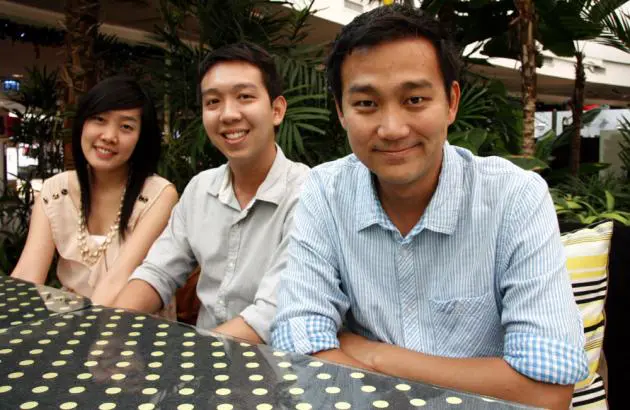


Plajapian shows people 'how to catch fish' for a self-sustaining future
The flooding still hasn’t finished and the millions affected by the worst of it are still in need on Christmas Day. But a group called Plajapian doesn’t want to play Santa Claus. It wants to provide these folks the means they need to get back on their feet and stay there.
“Instead of giving them fish, we should give them fishing rods,” says Zcongklod Bangyikhan, the editor of A Day magazine and a Plajapian co-founder. “But first of all, we need strong, sustainable communities that have particular skills, products and services to offer.”
The collective was conceived as floodwaters threatened Bangkok and officially launched last week at CentralWorld. “What happens after all this water’s gone?” they wondered.
“Plajapian is a non-profit cooperative with volunteer spirit,” says Zcongklod. “We’re confident that creative power can change society for the better.”
Many of the members are designers and creative directors of private firms, so it’s not surprising they’ve got an eye-catching logo – a palm leaf woven into the shape of a carp. “Plajapian” is just jargon that happens to sound like pla tapian, meaning “carp”, a fish that swims upstream, which the group believes people have to learn to do. Thais must persevere.
The 100-odd volunteers come from the Thai Graphic Designers Association, Thailand Creative and Design Centre, Thai Social Enterprise Office, Thai Health Promotion Foundation and the ChangeFusion Institute. The products they help develop will be sold online at Tarad.com.
The group’s mission was spelled out in an easy-to-understand clip on YouTube that within a week had been viewed 6,000 times. Its Facebook page has more than 3,000 followers.
Krittika Kaewmamuang of ChangeFusion, which is part of the Thai Rural Reconstruction Movement Foundation, says Plajapian has thus far selected three communities where its help can make a difference.
“They want to develop the products they already have but they need help in terms of product and packaging design and marketing,” Krittika says. “Their skills are certainly not mediocre – they just need to know how to ‘add value’.
“These communities have good management to a certain degree, but the leaders have to broaden their perspectives and look forward.”
Klong Lat Mayom in Bangkok’s outlying Taling Chan district has the disparate distinctions of owning one of the country’s biggest herb-and-spice plantations – and of remaining inundated to this day.
Community leader “Uncle” Chuan Chomchan is a champion of eco-tourism, having established a floating market and making plans for an earth-friendly Thai-food museum offering hands-on experience in growing and cooking with herbs.
There are lots of good ideas in Klong Lat Mayom, but the members of Plajapian see a need to redesign the herb packaging to boost sales and arrange proper, more informative museum tours.
“These people don’t want sympathy – they need support,” says Zcongklod. “They’re proud of the resources they have. And this is what we want to do: help promote fair-trade products, not fashion.”
The second “community” Zcongklod is ready to assist is the Triumph Labour Union, whose members were laid off by the manufacturer of undergarments.
They took management to court, claiming unlawful dismissal, but in the meantime they’ve produced their own ladies’ panties, under the brand name Try Arm. They were made with “sweat-free labour”, the workers managing themselves.
“These former Triumph employees can produce undergarments of almost the same standard as the ones they made for a world-class brand,” says Thanapon Sreshthaputra of ChangeFusion.
“But the panties are quite plain, so our staff designers are helping make them more attractive. We want people to buy the panties because they love the design and the quality, not out of sympathy for the workers.”
Then there are the 50-odd residents of a village in Ayutthaya who were evacuated to Mahachulalongkorn Rajavidyalaya University when the deluge swept in. The school’s monk-rector taught them needlework as a form of meditative therapy, and with their new skills they ended up forming a group called Nam Muea (Handiwork).
The plan here, says Zcongklod, is to help them also develop talent for knitting, crocheting and similar crafts and get them creating items like hats and scarves, or perhaps tote bags embroidered with dharma wisdom.
“The products could present Buddhist teachings in a clever way through graphic design.”
Zcongklod hopes that people will be able to pre-order the items as early as next month via Tarad.com, Plajapian’s own sites and at many events. Within the first year, Plajapian expects to raise Bt2 million. Money is currently coming in from the sales of its own T-shirt, tote bag and pin.
“We ensure fair-trade practices and principles,” Zcongklod says. “The group is set up as a model social enterprise, with the profits going not to the investors but to furthering our social goals.
“We really hope that Plajapian will become a bridge between the city and upcountry communities. It’s sort of friends helping friends. We’re just trying to merge everyone’s skills to bring about a good outcome.”
YOU CAN HELP
Pitch in if you want to be a Plajapian “volunteer friend” or donate Bt1,000 per year to be a “supporting friend”. Just search for “Plajapian” on YouTube, Facebook and Twitter.
