
Sileni's Kiwi sensations


The wine that's the pride of Hawke's Bay makes a fine companion for cuisine of all kinds
In terms of wine, New Zealand is best known for its racy and vibrant sauvignon blanc, which accounts for 80 per cent of its exports. What’s less known is that those whites go great with Thai food.
Pip Austin, general manager of Sileni Estates in Hawke’s Bay, New Zealand,
proved the point at a recent dinner the firm hosted at Eve, the restaurant at
Bangkok’s Hansar Hotel – even though Western cuisine, not Thai dishes, was on
the menu.
Graeme Avery, a pharmaceutical scientist and former owner of a medical publishing company, founded Sileni Estates in 1997. Silenus was the permanently sloshed fellow who taught Greek god of wine Dionysus how to drink.
Hawke’s Bay is on the east coast of the North Island, where the climate is ideal
for viticulture, although Sileni also grows grapes elsewhere. It exports most of its
annual 600,000-case output to 65 overseas markets.
Austin said the ground makes New Zealand’s sauvignon blancs unlike any
other. “Sauvignon blanc is grown all over the world, but our climate enhances the
aromatic profile in the taste, something that no one else can replicate.”
All of the wines tasted at Eve came from Hawke’s Bay except for a sauvignon
blanc from Marlborough. Chef Chatree prepared a five-course dinner to match
the Sileni Cellar Selection.
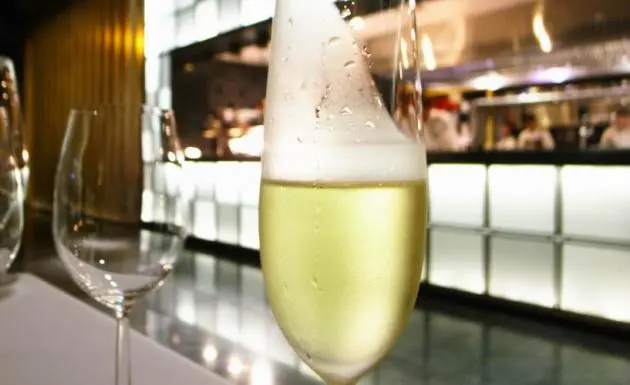
On arrival we were served a sparkling wine as the aperitif, young, fresh and
chilled, with classic stone-fruit flavours.
The amuse bouche was Grilled Hokkaido Scallop & Octopus with avocado and
Sicilian cherry tomatoes.Then, paired with Aceto di Balsamic
di Modena, came the Marlborough Sauvignon Blanc 2011, full of gooseberry
flavour so it’s ideal for seafood and Asian cuisine of all kinds. Commentators long
ago likened a glass of this wine to jumping naked into a gooseberry bush. But it’s
uniquely New Zealand, replete with the natural zing of the sun-warmed fertile silt.
The appetiser, Scottish sea trout tartar and apple glacier mint jelly, was partnered with Pinot Gris 2011 – “good for chillies”, Austin remarked. The apple was too sweet for a wine that Austin admitted is already quite fruit-sweet.
“The fish is too savoury to go with apple, and the apple is too sweet for the
wine, but the wine can go with savoury and sweet elements. This is the wine that
pleases most palates. People who don’t like dry wines will like Pinot Gris.”
Iberico pork medallions with Rustichella risotto flavoured with white truffle in a black perigord truffle jus found a mate in Pinot Noir 2009. The wine is grown at high altitude and is reminiscent of Burgundy, with a trademark soft tannin structure. It’s young,
Austin said, and will keep for a few more years.
The main course – slow-cooked stockyard Wagyu 9 Sirloin with apple, leeks
and mushrooms in a Bordelaise sauce – was married with Syrah 2011, which
Austin described as “more toward the French style”.
The fine tannins complemented the beef thanks to its characteristic white-pepper aroma, different from the black-pepper notes of the Australian syrah.
We wrapped up the feast with Beppino Occelli farm cheese and a warm chocolate-and-raspberry tart paired with Semillon 2010. The wine was my favourite of the night with its dried-apricot flavour and hints of pineapple. It left a sweetness on the palate.
Highly drinkable, fruity in taste and supremely fresh, it was no surprise to learn that Sileni is making serious inroads in Asia, and if these whites do indeed match Thai dishes, it’ll be a hit here.
