
Making the very best of EVIL


Play
Sony's new NEX-7 offers an impressive range of options, as well as a great OLED electronic viewfinder
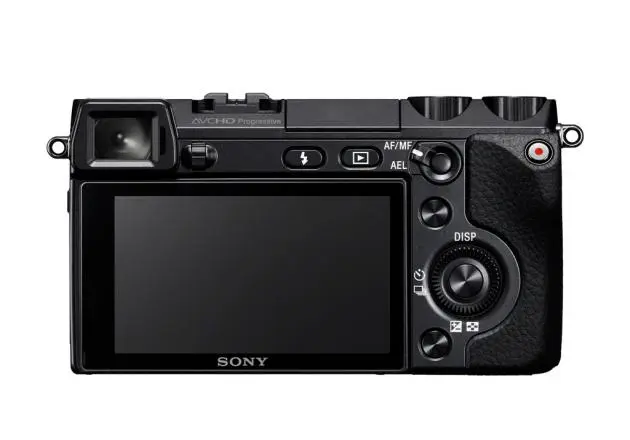
The top-of-the-line camera in Sony’s popular NEX EVIL (Electronic Viewfinder Interchangeable Lens) range, the Alpha NEX-7 offers excellent image quality, superb performance and comes with an impressive OLED electronic viewfinder.
The NEX-7 camera has become so popular that Sony Thailand admits that the kit packages with lens options have been in short supply on the local market since just after the new year – yes, those pesky floods again – though they are now back in stock.
Sony Thailand sent me an NEX-7 body for review with a SEL18-55 F3.5-5.6 kit lens from the Sony NEX-5N and I still found that the camera captured very impressive shots with a superb performance.
The NEX-7 features 24.3 megapixel resolution, very high ISO 16,000 sensitivity and a large APS-C size HD image sensor that allows the camera to shoot good quality 1080p video at 60 frames per second.
Sony boasts that the NEX-7 is the world’s first camera with an OLED electronic viewfinder. The Tru-Finder OLED EVF is very impressive and convenient to use. You can set the camera to turn the viewfinder automatically once you look through it. It will switch to the LCD screen after you stop looking.
The OLED viewfinder is very bright and fast in display view. The through-the-lens viewfinder provides 2359K dots for amazing resolution and high contrast ratio.
If you don’t like using the EVF, switch instead to the Xtra Fine LCD monitor with 921K dots of resolution. The LCD screen can tilt down 45 degrees and up 80 degrees to frame high- and low-angle shots that would be difficult to compose.
The NEX-7 also comes with a built-in pop-up flash.
Performance-wise, the camera took about only one second from its start-up to get ready for the first photo, making it unlikely that you’ll miss any shots.
The NEX-7 also has very short shutter lag – about 0.02 seconds – and is capable of shooting at full resolution at 10 frames per second and 3.7 fps while maintaining a live view feed.
The camera has very fast auto focus. During the drive to Hua Hin, I encountered a team of cyclists and the fast auto focus allowed me to capture sharp shots of the riders while the car was moving past them.
The NEX-7 provides a good control system, which lets you conveniently browse through layers of menus of controls to make most of the camera. Sony calls NEX-7’s triple-dial-control “Tri-Navi”, because it gives you three separate control dials for direct, hands-on access to three settings at a time. The dials can be used to set aperture, exposure compensation and ISO values, among other things.
As part of the Tri-Navi control, you use a Navigation button beside the shutter release to cycle through various options. Then you use the left dial to cycle through the second menu layer related to your selected option and the right dial to cycle through the third menu layer.
For example, you may use the navigation button to activate the picture effect mode. Then, you will use the left dial to select which of 11 picture effects you want and the right dial to select the level of the chosen effect to be applied to the shots.
The NEX-7 is suitable for both amateur and advanced photographers. An advanced photographer can use its Program, Aperture Priority, Shutter Priority and Manual modes to be more creative with his or her shots. And a beginner can use its iAUTO mode, which automatically ensures that every shot will come out well.
The iAUTO mode uses all Sony intelligent technologies to ensure the very best shots. It uses Intelligent Scene Recognition to analyse the lighting condition to select best camera setting and Face Detection technology as well as Optical SteadyShot image stabilisation. During the test, I found that the NEX-7’s iAUTO mode selected the correct scene mode for me.
I took the camera to test at King Rama V’s seaside palace in Hua Hin and was pleased with the colour saturation. I found that the NEX-7 captured scenes with high contrast very well, showing good details in both highlighted and shadowed areas. The camera’s Dynamic Range Optimiser (DRO) contributed to this success, improving the results with backlit subjects and recovering details hidden in shadows.
A shooting mode that Sony has introduces since launching the first NEX camera is the Hand-held Twilight mode. I found this handy, as it can be used to capture lights at night without the use of a tripod and the pictures still look clear and sharp.
In this mode, NEX-7 makes use of its fast BIONZ processor to capture six images in a fraction of a second, and then combines the data, resulting in an impressive looking single image.
The NEX-7 has good battery life, taking more than 300 shots on one charge.
The NEX-7 can be used with Sony A-mount lenses, using one of two adapters. Sony said there are also third-party adapters for using lenses from Canon, Nikon, Leica, Olympus and others.
But of course such perfection doesn’t come cheap. Sony Alpha NEX-7 body retails for Bt39,990. The kit with 18-55mm lens retails for Bt44,990.
Key specs
_ Imaging Sensor: Exmor APS HD CMOS sensor (23.5 X 15.6mm)
_ Processor: BIONZ image processor
_ Effective Picture Resolution: Approximately 24.3 megapixels
_ Focal Length Conversion Factor: 1.5x
_ Lens Mount Type: Sony E-mount
_ Focus Points: 25 points
_ Exposure Settings: iAUTO, Program AE (P), Aperture priority (A), Shutter priority (S), Manual (M), Sweep Panorama (2D), 3D Sweep Panorama, Anti Motion Blur, Scene Selection
_ Metering: Advanced 1200-zone evaluative metering
_ Shutter Speeds: 1/4000 to 30 seconds, bulb
_ ISO: Auto (ISO 100-16000), Selectable (ISO 100 to 1600)
_ LCD Type: 3.0” TFT Xtra Fine LCD (921,600 pixels) w/TruBlack technology
_ Viewfinder: 0.50" XGA OLED EVF (Electronic viewfinder) (2,359k dots)
_ Media Type: Memory Stick PRO Duo/Pro-HG Duo/PRO-HG HX Duo media SD, SDHC and SDXC memory card
_ Interface: HDMI mini, USB 2.0
_ Battery Type: InfoLITHIUM NP-FW50 (7.2V)
_ Dimensions(W/H/D): 119.9 x 66.9 x 42.8mm
_ Weight: 291g (excluding battery & media)
