
At home with 'Amanpour'
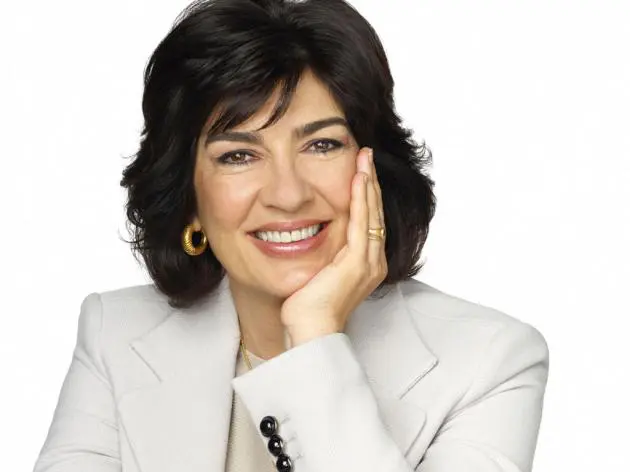


The veteran news correspondent returns to CNN to anchor her own show
A veteran television news correspondent, Christiane Amanpour left CNN in 2010 to anchor the ABC News programme “This Week”. She is now back with CNN while retaining her position as global-affairs anchor of ABC News. At CNN, she returns to host her global-affairs programme “Amanpour”.
Why did you come back to CNN?
CNN is family. CNN is where I’ve been for decades and it is from here that I’ve seen the world change. CNN has played a role in all the changes that we’ve witnessed over the last three decades, so for me it was a really wonderful opportunity to come back and anchor this new programme at a time of incredible, almost unprecedented global change and upheaval.
What type of guests will you interview for “Amanpour”?
As a major story breaks, you see the same people, day in and day out, interviewed across the world. We’re going to go to people who you may have never seen before, the real players, the people who can really impact the outcome.
What are the stories that are now waiting to be told?
Everything is shifting. Emblematic of the state of our world right now are the protests of people around the world. We all used to think of globalisation in mostly industrial terms, but the social uprisings have been globally inspiring one another as well. There’s mass unemployment, markets are recovering from the global financial crisis and democracy is trying to make a break for it inside what we thought were immovable dictatorships.
One of the most unpredictable and volatile stories right now is what’s going to happen with Iran’s nuclear programme. Will there be a negotiated resolution? Will there be military action?
Has the Arab Spring stalled – or, will the democracy movements of North Africa and the Middle East continue to unfold?
I’ve witnessed many of the revolutions of the so-called Arab Spring. I’ve interviewed the dictators and the powerful – as well as the people behind the uprisings who have been waiting for their opportunities at leadership. But none of this is finished. What happens next is vital to international security, energy security, global markets, the way people will go about their daily lives and even earn a living halfway around the world from the centres of the revolutions. The ‘Arab Spring’ has impacted the internal politics of every major world power.
Why are you so passionate about journalism?
Journalism is a way of life – a mission. For me it sprung out of the massive upheaval in my own country, Iran, during the 1979 revolution. I wanted to become a journalist because I wanted to be a part of ensuring that the truth of events and facts are told – and that power is held accountable to the truth. Sometimes this is difficult, sometimes it is even dangerous, generally it is unpopular..
Whether it’s a political upheaval, a natural or terrorist disaster, a famine, a tsunami, an earthquake, genocide, a terrible civil war – whenever I cover a story, I strive to gather the facts about what’s going on, report the feelings about how it affects the people impacted, represent the full context of the unfolding story, and offer perspective on why the story matters.
I’m committed to journalism because good journalism makes a difference in all of our societies. Good journalism is what holds governments and powerful people accountable. It makes democracies strong – and even the most developed democracies need strong, rigorous, fair, free, and independent journalists.
Finally, what would you ask the new President of China when he comes into power later this year?
If I was to interview the president of China, I would ask him how much of a powerhouse can China become, how long will it take China to be able to meet the demands of its massively growing middle class. But I’d also ask him whether having seen the uprisings all over the world, whether it might be time for China to become more democratic, to have more political freedom – and of course, if he envisions a free press for China.
CHANNEL SURFING
“Amanpour” airs Tuesday through Saturday at 9pm on CNN International..
