
Murakami goes to Hollywood
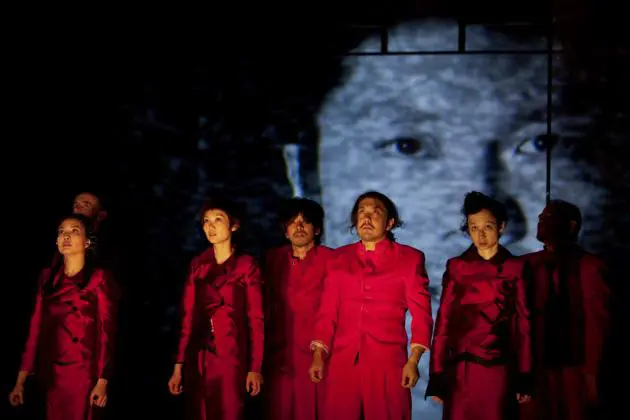


A cinema guy over-inflates 'Wind-up Bird' for the theatre
Stephen Earnhardt, former production chief at Miramax Films, spent seven years getting his adaptation of Haruki Murakami’s story “The Wind-up Bird Chronicle” onstage. It premiered at the Edinburgh International Festival a year ago. Maybe that was a little too long, judging by the version I saw during the recent Singapore Arts Festival.
The American director had the Japanese writer’s full artistic licence to try and create a “theatre of dreams” to match the novel’s multiple layers of reality. Earnhardt and co-writer Greg Pierce turned the 600-page book into an engaging two-hour play tracking Toru Okada’s search for his missing wife and cat and his rediscovery of his identity.
The tale was shared with such insistent narrative clarity that viewers might have forgotten they were watching a stage adaptation. This was more like a Hollywood action colossus.
Perhaps Earnhardt forgot that theatre audiences usually prefer exercising the imagination. They don’t need everything laid out for them realistically the way Western movies tend to do. Less is more in this living art.
Scenic designer Tom Lee made deft use of space, structures and pieces, but the frequent scene changes, as quick and efficient as they were, made the production look busy most of the time. The puppets Lee designed, using elements of Japanese bunraku, sat downstage right to add depth to some scenes.
Meanwhile Adam Larsen’s projections bombarded the senses, as if trying to enhance the cinematic experience. They appeared everywhere, on two LCD television sets, on the backdrop and across the whole stage. Viewers’ eyes were frequently wandering from one corner to another, their brains racing to upload the images, leaving little time to properly enjoy the story.
Korean-American composer Bora Yoon’s enthralling soundscape and experimental music created live from multiple instruments in front of the stage was able to subtly steal the show. The instruments were mesmerising and her movements dance-like. I wish there were a scene featuring only her and her music to fire our imaginations like Murakami’s words do.
Led by veteran James Yaegashi, who played Okada, the cast comprised mostly New York-based Japanese stage actors speaking English, commendable individually and as a strong ensemble. It’s a shame they were often upstaged by the production spectacle.
I inevitably recalled a much better stage adaptation of Murakami. Britain’s Theatre Complicite and Japan’s Setagaya Theatre collaborated on three short stories in 2003 – “The Elephant Vanishes”, “The Second Bakery Attack” and “Sleep” – and travelled the world, including a stop at New York’s Lincoln Centre Festival.
Credit should probably go to that project’s director, Simon McBurney, and the nature of the collaboration between two top companies. The production struck a better balance between spoken word and visuals – and between acting and technology.
Discussions are underway to take “The Wind-up Bird Chronicle” across Europe and the US, with the cost of moving such a big production obviously a deciding factor. You can watch its progress at www.WindUpBC.com.
Singapore’s National Arts Council supported the writer’s trip.
