
Healthy bites with a hallyu twist


Play
The Bibimbab offers the nutritious rice and vegetables dishes that Thailand's K-pop heroes enjoy everyday
Most Thais know and enjoy Japanese food like sushi, sashimi and ramen but ask them about Korean dishes and chances are they’ll only be able to name kimchi. That seems strange in a country besotted by K-pop and Korean soaps, so South Korean entrepreneur Chang Kwan Chun has set out to put us right on his country’s cuisine.
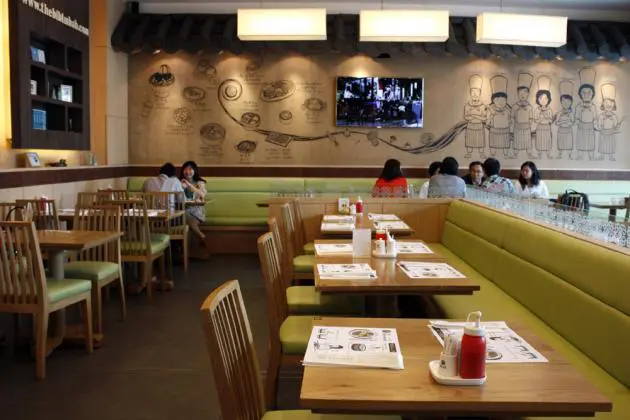
“Korean electrical appliances and mobile phones hold a 60 per cent market share in Thailand yet there are just 300 Korean restaurants in the country compared to 3,000 Japanese eateries. That’s why I decided to establish a well-organised chain to promote Korean delicacies in a fast-food setting at affordable prices and with a welcoming ambience,” he says.
And, truth be known, the food is not all that different from the healthy southern khao yam, which features cooked rice with herbs and vegetables. Koreans instead have bibimbab, an all-in-one, highly nutritious meal, with “bibim” meaning mixing and “bab” meaning rice. It’s simply a bowl of rice topped with various kinds of vegetables, together with mushrooms, raw egg and ground meat and seasoned with red chilli pepper paste. Bibimbab, stresses Chun, can be both fast food and healthy food.
The Bibimbab restaurant brand was thus launched in November last year on Sukhumvit Soi 24 and its latest outlet is at Mega Bangna with a dozen choices of bibimbab served in a hot stone bowl.
“Thais love Korean-style barbecue, but many people, especially women, are concerned about bad odours lingering in their hair after eating. Barbecue restaurants are perfect for a party group but so not suitable for the individual diner, especially women, who tend to feel uncomfortable. But with the fast-food ambience and a wide choices of single dishes, you will feel at ease at our eatery even if you come alone,” says Chun.
Chun’s wife Myounghee Kim is a master chef certified by the Korean government, meaning she has a responsibility to maintain standards of health, taste and presentation.
The bibimbab is served in a hot bowl imported from South Korea to help retain the temperature of the food and ensures the crust of the rice sticks to the bottom of the bowl. The traditional version (Bt220) offers carrot, mushroom, Chinese spinach, zucchini, bean sprouts, Chinese jujube, gingko nut, Korean bracken, konyakku, and your choice of sauteed pork or beef strips on top of rice. And on top of all that is a raw egg and gochujang – red chilli paste. As with khao yam, the ingredients are mixed thoroughly just before eating to harmonise the contrasting tastes. A dribble of sesame oil adds to the savoury taste.
Other versions of bibimbab can be ordered with different meats topping the basic ingredients. For marinated beef, opt for Bulgogi. Tteokgalbi offers grilled patty of minced short beef ribs. Jeyook bibimbab features spicy stir-fried pork and Dakgalbi has spicy stir-fried chicken. Nakji is for spicy stir-fried octopus and Dubutuikim for fried tofu.
If you’re worried about carbohydrate intake, order the diet bibimbab (Bt250), where the white rice is substituted by a small amount of brown rice. Kim has also come up with a creative bibimbab burger (Bt270) to please the kids. The rice burger features a minced pork patty cooked in red pepper paste sauce, topped with assorted vegetables and slow-cooked egg.
Other traditional Korean cuisine is also available. It’s worth trying Tteokgalbi (Bt450) or grilled minced short ribs beef patty with green onion, garlic and soy sauce served on a sizzling stone plate. Other tempting dishes are Bulgogi (Bt350) featuring thin slices of marinated beef with assorted mushroom, leek and onion, and Jeyookbokkeum (Bt290) with slices of stir-fried pork belly and onions with spicy sweet soybean sauce.
And of course there’s kimchi. You can enjoy as kimchi fried rice (Bt200) cooked with needle mushrooms and seaweed, topped with fried egg, and Kimchijeon (Bt200), kimchi pizza pan-fried with pleasantly crispy edge and chewy soft centre.
For a light meal, Japchae (Bt300) or stir-fried Korean glass noodles with sauteed carrot, broccoli, turnip and sausage is terrific. And if you’re familiar with Japanese maki roll, try the Korean version of Kimbab (Bt150), seaweed rolls with assorted vegetables.
The meal wouldn’t complete without the popular sweet treat of Patbingsu (Bt120), s shaved ice dessert. On top of the shaved ice are sweetened red beans, small rice cake pieces, chewy jelly bits, various fresh seasonal fruits such as kiwi and watermelon and a scoop of your choice of ice cream.
THE FAST AND THE FRIENDLY
The Bibimbab is at Sukhumvit Soi 24 (02 662 4646) and Mega Bangna (02 105 1661). Find out more at www.TheBibimbab.com.
