
An epic for the ages
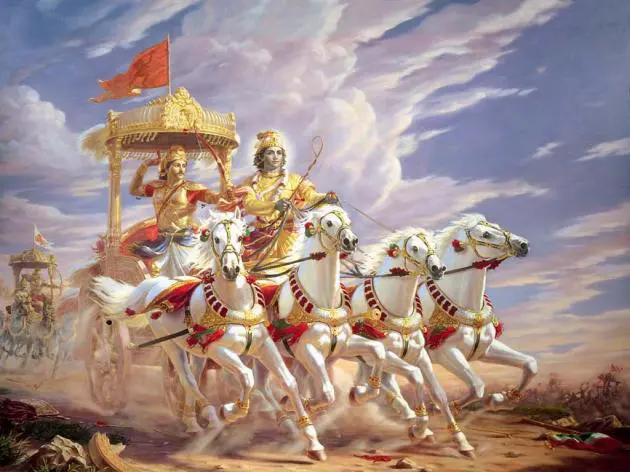


A vigorous new translation of the Mahabharata underscores why it's made for storytellers
The Mahabharata,
Volume I
TRANSLATED BY BIBEK DEBROY
PUBLISHED BY PENGUIN BOOKS INDIA
The Mahabharata is not a lovely epic; the main story is replete with smaller stories of doom, desecration and guile. We are consumed by its violence, we are in admiration of Krishna’s craft in plotting the war’s outcome, we feel sorrow that the need to repay a debt, rather than righteousness, informs Karna’s choices, we feel horror at the goriness of the battle, climaxing in Bhima tearing open Dushasana’s chest and drinking his blood. This is an epic for everyone, for all ages.
The Mahabharata’s infinite possibilities ensured that other cultures embraced it and added their own stamp. Thailand’s masked Khon performers feature a flirtatious Hanuman, far removed from Rama’s celibate devotee. In the Chinese temples of Ho Chi Minh City’s Cholon region, I have seen a bare-torso Hanuman in boots, like a WWE wrestler. Such statements provide new sartorial and personality twists to this timeless story. But this translation is not as subversive. Debroy announces at the outset that it is a faithful reproduction of the original unabridged text. The outcome of such an exercise can be perilously confusing.
For this, we cannot fault the author too much, because he will not contrive compromises to make the story plausible. The elaborate descriptions, while accurate translations in themselves, fail to capture the original. Consider “having conquered the earth with righteous conduct and performed sacrifices with appropriate offerings,” or, “Takshaka, king of the nagas, cast impediments in my path.” “Cast impediments in my path” could simply have read, “put obstacles in my path.” The complexity of the plot and the emotions get oversimplified in the language employed.
Debroy tries hard to make the original unabridged work accessible. The science is good, but a technical feat is not a work of art, and erudition takes a front seat, not enjoyment. A great translation is one that adds something of lasting value, and I did not find phrases that I might like to go back to. Maybe, someone else should attempt another translation of the unabridged text one day, with some creative tinkering to insert literary craft.
Debroy says that the abridged Mahabharata has things in black and white, while the unabridged version is more nuanced. But actually, this story reads like a collection of implausible events. Consider this: “It was the greatly valorous Tamsu who extended the Puru lineage. He conquered the entire earth,” or, “a person who drinks this cow’s tasty milk will live for 10,000 years with undiminished youth,” or, “King Shalva, best among men, covered Shantanu’s son Bhishma with hundreds and thousands of swift arrows.” Such fantastic tales of valour are a yawn.
This Bollywood-style extravagance can be explained. There are so many plots, subplots and digressions in the original text that we are in fear of losing the way. When the main story, which every Indian household knows, makes its appearance, in the middle of the book, we clutch on to it to steady our wavering attention. And this is where we have passages of beauty, such as the Pandavas’ escape from the house of wax, with Bhima carrying his exhausted mother and siblings on his arms and shoulders. In making good this escape, Bhima “shattered the trees with force and pounded the earth with his feet. The energetic Vrikodara rushed on, with the violence of a storm.” This is powerful prose.
We should also be grateful to Debroy for the restitution of our myths. The world I inhabit today is filled with memories of mother’s bedtime stories, and many such stories adorn this book. There is Shakuntala’s long pleading with Duhshanta to accept her as his wife, and her son, Sarvadamana, as his own son, and we have the story of Kacha and Devayani. I knew these stories, but what I did not know is that these are also stories of the Mahabharata. The epic as we commonly know is something else, beginning with Duhshanta’s son, Bharata, announcing his successor to the throne. This was how it went in the epochal TV serial of the same name.
Peter Brooks adapted the Mahabharata to the stage with a cast of diverse nationalities and races. This bewildered Indian audiences, but Brooks’ reputation ensured that the interpretation was seen as mostly seminal. Maybe the Mahabharata’s time for a makeover has come.
As India gains economic strength, its appetite for a new look at its own culture will grow. This will be driven by India’s growing consumer class, and the Indian diaspora. Who knows, we may soon see a black Arjuna duelling with a blond Karna at the National Theatre in London. If Krishna was blue, why can’t the other characters in the Mahabharata come in rainbow colours?
Jitendra Nath Misra is an Indian Foreign Service officer and, most recently, was India’s ambassador to Laos. The views expressed in this essay are his own, and do not in any way reflect the opinions or policies of the government of India.
