
Break the cage with Trasher


Break the cage with Trasher
If gay culture is so far removed from heterosexual culture, do we need to meet halfway?
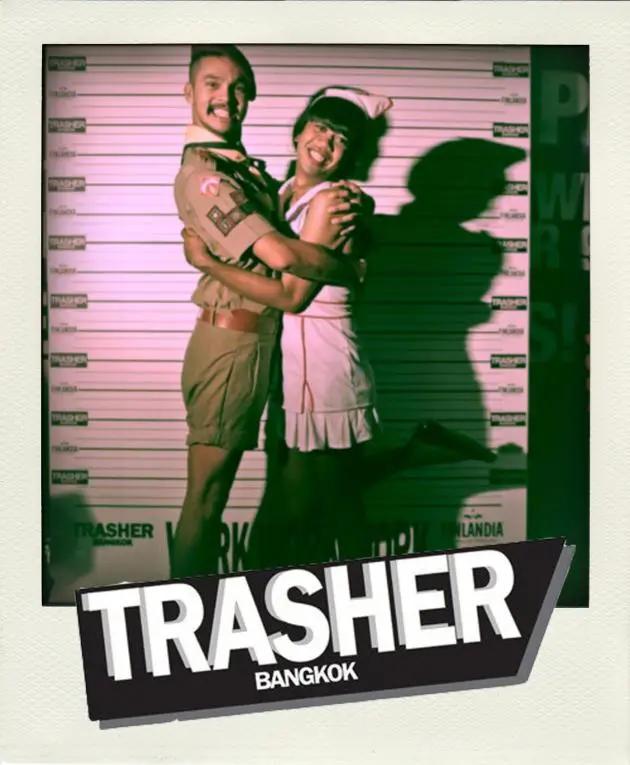
Trasher Bangkok is a familiar name to party people. I’ve never attended any of the monthly pop-dance parties the group organises, but I’m a big fan of its “Bangkok Version” videos – parodies of hit songs such as “Call Me Maybe”, “All I Want for Christmas is You” and Katy Perry’s “The One that Got Away”.
You can “like” Trasher on Facebook and subscribe to its YouTube channel.
The three videos I’ve mentioned all have Jenny as their lead actress, a dark-skinned katoey of below-average beauty.
“In “All I Want for Christmas”, Jenny lip-synchs to Mariah Carey’s voice but then “reveals” another side – playing cards, wishing for seven husbands and pole-dancing on a footpath. The added local context extends to Thai teen bands’ moves and Khao San Road, in contradiction to the old-fashioned radio Jenny carries on her shoulder.
“The One that Got Away” and “Call Me Maybe” involve stories about Thai-style black magic, and Jenny confirms to viewers that she’s a ladyboy by urinating on her boyfriend’s painting while standing up. She slips a rubber tube down her shirt and lets the pee flow from her pants.
In her latest video, covering Lana Del Rey’s “Video Games”, her wish has come true – she has seven husbands. But she steals money and cars from them and abandons them.
I love these videos because of the way Jenny gives the foreign tunes a Thai context – and because of her queerness. I believe LGBT people can see different aspects of life more easily than straight people can because we’re forced to see ourselves differently. We know how to turn what seems simple into something weird.
Trasher has other videos that reflect this sense of alienation from Thai society. Some viewers might be merely amused, but I think the clips are seriously questioning society’s unfairness.
People tend to think we have to abide by common rules, but society is predominantly heterosexual, so the rules aren’t appropriate for everybody. How can we obey rules that ignore our needs and rights?
The Bangkok Versions reflect the differences and diversity in our society. We, the “different people”, can’t be denied. The majority must accept us because we are who we are, not who we’re expected to be.
