
Tradition takes a bow
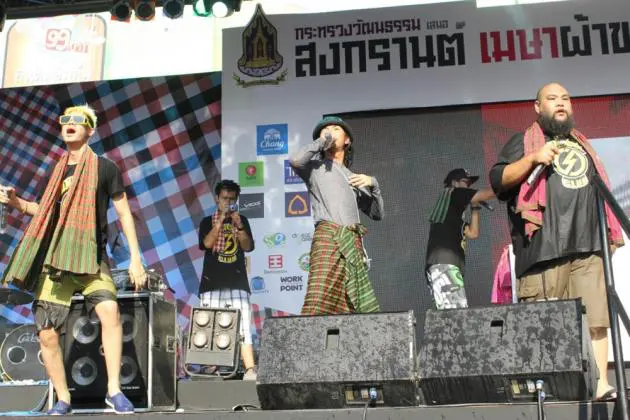


Songkran rites of the past revived |for celebrations in Siam Square and Chiang Mai
Can the Songkran festival in modern-day Thailand be more than just a continuous water fight? The Culture Ministry is convinced it not only can but should be by organising a three-day event that’s free from booze, powder play and high-powered water guns while simultaneously resurrecting the traditions of bygone days.
Working in collaboration with Chulalongkorn University, the ministry is organising its second traditional Songkran celebration at Siam Square in the heart of downtown Bangkok from Friday through Monday.
“I want it to be a ‘white’ Songkran and a kind of family event,” Culture Minister Sontaya Kumplome explained during the recent press conference at Thailand Cultural Centre.
The Bangkok festivities get underway this afternoon at 2 with the traditional pouring of scented water on the hands of 17 National Artists at the Cultural Centre’s Small Hall, and asking for their blessing. The artists include Suprawat Patmasut, Saowalee Pakapun, Suthep Wongkamhaeng, Chai Muangsingh, Waipoj Petchsupan, Chinnakorn Kailas, and Cholathee Tarnthong.
The Siam Square celebration starts on Saturday with revellers invited to celebrate in four zones. The first of these is front of the Hard Rock Cafe and features concerts by Room 3.50, Joey Boy and Gancore Club, Richman Toy, Mild and Modern Dog’s Tanachai “Pod” Ujjin, as well as a folk performance by comedians Yong, Puang and Nong.
Soi 2 will be home to an exhibition of Songkran traditions from the country’s four regions while Soi 4 offers Lanna and Mon Songkran customs, among them bathing the Buddha image by pouring water through a bamboo tube. The final zone will feature ram wong, or Thai folk dance.
“There’ll be highlights on all three days,” says Chutima Attavorarat, director-general of the university’s property management office. “On Saturday, visitors can enjoy a Songkran parade by representatives of the country’s four regions as well as from our neighbours Cambodia, Laos, Myanmar, Vietnam and China. On Sunday, there’ll be a fashion show of pah khao ma created by 15 teams of young designers. And on Monday, drums will be pounded at 3.50pm to welcome New Year’s Day. That will be followed by a pah khao ma flash mob led by comedian Theng Therdterng.”
“We’ve looked at last year’s mistakes and made adjustments for this year,” says Chai Nakonchai, director-general of the ministry’s Cultural Promotion Department. “Last year, more than 100,000 people packed into Siam Square.”
“This year, we will have 100 uniformed and plainclothes police and security guards in charge of safety and portable toilets to serve the crowd. The footpaths around Siam Square will be free from the stalls. But we also need to control the traffic and are asking everyone to come here by BTS Skytrain or public bus.”
Chiang Mai too is benefiting from a cultural celebration with a Lanna style New Year’s Eve event scheduled for Saturday. Sunday is marked as a sacred day when people go to the temple and build sand stupas decorated with flags while Monday will feature a water-pouring ceremony to receive blessings from respected. “Wan Pak Pi” – which marks the beginning of a new year – will be celebrated on Tuesday with food being offered to monks in a rite known as “Than Kan Kao”.
“The Lanna Songkran is different from other forms of festivities,” says Tussanai Buranupakorn, mayor of Chiang Mai Municipality. “The tradition of building a sand temples in the North is called ‘Maha Natee Sithandorn’. We also have a ritual known as ‘Hae Mai Kam Salee’ or the Bodhi tree's pole, where the placing of supporting poles beneath the tree's branches attests to the religious support of the laity.”
In between the rites, revellers can have fun splashing water at Thapae gate and Ku Muang canal. There’ll also be a parade on Saturday from Sanpakoi Market to Wat Phra Singh of several important Buddha images. Ku Muang canal will be home to several exhibitions while Songkran celebrations by different countries by the Asean Economic Community will be showcased at Nong Buak Had Park.
“We’re also encouraging local people to put on traditional costumes with pah khao ma,” says Tussanai.
“This is the fourth year that the Thapae gate and Ku Muang canal are being promoted as safe areas with alcohol totally banned. So far, the results have been good. We’ve seen no deaths and a 50 per-cent decrease in injuries and harassment.”
What the stars have to say about Songkran
PAE MILD
“It’s good that drinking alcohol in public places, especially in the car, isn’t only illegal for the driver but also passengers. I’d prefer to see teenagers, especially girls, dress in clothes that cover them up as opposed to revealing too much flesh.”
FILM RATTAPOOM
“I would like everyone to pay more attention to the traditions of Songkran, like pouring water over the hands of elders, rather than throwing water at each other.”
AE WIZARD
“The Songkran Festival has nothing to do with alcohol. So, it is good that we enjoy the festival without it. Most importantly, road accidents should decrease.”
KACHA AF8
“Many people think that Songkran is about splashing water, drinking alcohol, and harassing women. Personally, I would like Thais to stick to such traditions such pouring water over our elders’ hands.”
BELLE GIRLY BERRY
“I would ask everyone to be gentle in playing water on Songkran Day and not to trouble other people. It would be good too if people cleaned up after themselves and not leave piles of garbage like plastic bags and bottles.”
JING HELMETHEADS
“In addition to Songkran, Thailand is also celebrating its older people. This includes the tradition of pouring water on the hands of parents and relatives and asking for a blessing. I would like people to gently splash water and not get violent.”
