
Hong Kong's other skyscrapers


Play
High above the city, walkers dodge the clouds on the sweeping paths of Lantau
Mention of Hong Kong conjures images of gleaming high-rises, smog, sampan-dodging ferries, red double-decker buses and millions of people buzzing in one the world’s most active commercial hives.
But arrive by air and you will already have visited Lantau – the city’s airport stands on reclaimed land right next to Hong Kong’s largest island.
Peer out as you land and you get a glimpse of the juxtaposition of skyscrapers and unspoilt countryside that makes Hong Kong so compelling and unique.
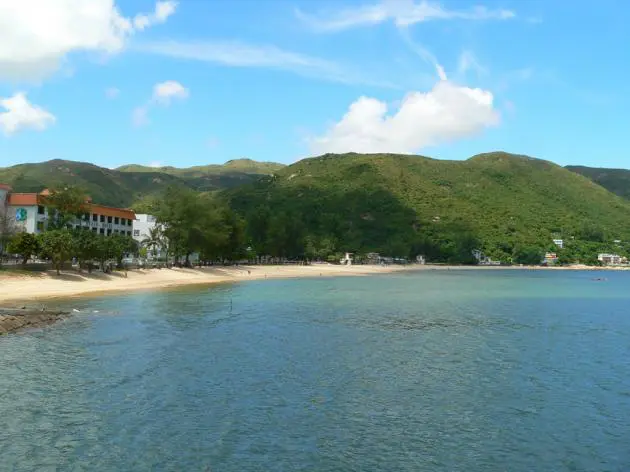
Craggy mountain peaks and deep forested valleys plunge down to bays fringed by dazzling white beaches lapped by the deep blue South China Sea. Lush, green and more than double the size of Hong Kong Island, Lantau has much to offer as an outdoors destination.
Two years after first spotting this amazing mountain vista during a transit stop, I am back and eager to explore.
“We could be walking through the highlands of Scotland,” I say to my friend as we clamber up Lantau Peak. Except, of course, we wouldn’t be gazing out over the South China Sea from Aonach Eagach.
Wild and exhilarating space is the foremost sensation up here. Granite studded ridges and peaks protrude like islands from the clouds and windswept pastures. The ever-diminishing high-rise buildings of the new airport city Tung Chung way below only heighten the sense of floating above the world.
We are on the 70km circular Lantau Trail, situated in the Lantau Country Park, which covers much of the glorious southern coastline of the island, encompassing kilometres of deserted sand and traditional fishing villages, rocky peninsulas and magnificent camping grounds.
As we wind our way up the last torturous bend in the track and crest Lantau Peak, we are rewarded with a sweeping view below of the 34-metre-high Tian Tan Buddha, surrounded by the red-tiled buildings of the Po Lin Monastery.
Within moments, thick cloud moves in, obliterating the view, and we hurry down the path, eager to arrive at the SG Davis Hostel where a warm bed awaits us.
Dawn on our second day infuses the Buddha with the rosy glow of the sun rising above the hill opposite, while clouds linger around the peak of Lantau.
As we enter the plaza, the first busload of tourists arrive to form a stream of camera-clickers heading towards the 271 steps that climb to the Buddha.
After a bowl of noodles in a nearby vendor’s tent, we follow them to Tian Tan, which is all the more impressive up close. Then it’s time to hit the trail again.
The Lantau Trail skirts the upper banks of the picturesque Shek Pik Reservoir before crossing the Sham Wat Road and once again climbing into the wilderness of craggy peaks, past the tranquil Lung Tsai Ng lotus gardens before finally descending on a horrifically steep paved path into Tai O. Weak-kneed walkers, beware!
Tai O, a centuries-old fishing village, is famous for its traditional stilt homes built on the water. The narrow lanes dissecting the village throng with vendors selling dried seafood of every imaginable kind. But the afternoon light is failing and we head out of town quickly on the coastal pathway that follows the shoreline to our first Lantau Trail camp ground, where a cold running stream provides water and a bucket bath.
The coastal views are glorious as the trail skirts along the rocky Fan Lau Peninsula. People have inhabited this area of the island since the Neolithic and Bronze ages, and the headland has a number of historical points of interest.
On the headland past the traditional Fan Lau village stands the remains of Fan Lau Fort, built in 1729 to guard the channel between Lantau and the Pearl River Estuary from pirates. Further on lies a small Bronze Age stone circle. From the old stone walls of Fan Lau Fort, we gaze awhile down the coast before us, across broad bays flanked by dazzling white sands and dotted by fishing vessels. There are numerous villages along the south coast leg and lots of shops for tasty treats.
After two days, we eagerly climb once more into the clouds; this time headed for the 869m Sunset Peak, the second highest and our last leg.
“You’re doing the whole thing too?” call two English hikers close to the peak.
“Well, we’re just finishing it actually. You’re lucky, you’ve got it all ahead,” we reply.
Below us the trail winds down towards Tung Chung Road and our bus back to the airport.
“Who’d have thought it, hey?” the big burly bloke quips sweeping an expressive arm out across the view. “Hong Kong and so much wild beauty, you could be in Scotland!”
We couldn’t agree more and wish we were just beginning the trail all over again, too.
