
Munching on word salad
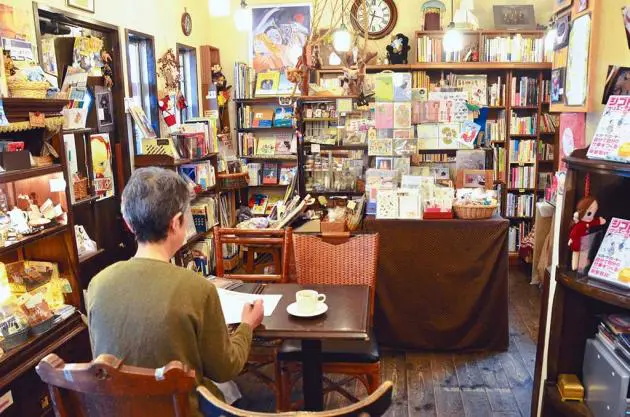


Bookworms leaf hungrily away in Tokyo's back-street cafe libraries
Takeshi Okazaki takes a sip, but it’s not the frothy coffee that is forming a soothing bubble for his city-strained nerves. Something emanating from the books surrounding him at beco cafe is putting him at ease.
“I feel as though something coming from the spine of a book calms everyone down,” says Okazaki, a book reviewer, at the cafe that opened three years ago near Nishi-Ogikubo Station in west Tokyo.
Beco doubles as a library of books collected by the owner – novels, photo collections, manga and the complete works of famous writers. Cult classics are conspicuous among the stacks piled high in the pine bookcases.
A typical Tokyo book cafe, beco invites customers to step out of the work-day grind and into an ink oasis where they’re free to flick through pages while sipping a drink. Part of the charm lies in the chance encounter with books they might not otherwise pick up.
Okazaki, 56, is an Osaka-born freelance writer whose favourite subject is Japan’s culture of second-hand books and the shops and cafes it has spawned.
A prolific reader, he loves the stress-free atmosphere of book cafes where he can read at his own pace in a comfortable chair or sofa.
“There’s something about casually reading in a bookstore that makes even us middle-aged men look good,” he says as he flips through a photo collection from a Thomas Edison exhibition.
“Today we can read digital books, but they lack the tactile charm of handling an actual volume. In a book cafe, you can relish the texture of the paper and delight in a tome’s heft.”
He often selects essays and collections of short stories to read, and cuts straight to chapters that pique his interest. He also recommends dipping into a long novel you’ve never read, and reading a section from the middle.
“I don’t think you have to read books in their entirety. Sometimes if I leaf through a book, a phrase or two will jump out at me that I like.”
Some Tokyo book cafes preserve a special space for cult or rare books not easily found in ordinary bookstores.
Lifting their eyes from the page, patrons can refresh their ears with the classical music that flows in the background.
Book cafes began appearing on the streets of Japan about 15 years ago, says Ozaki, and have been increasing in number ever since. They are especially popular with travellers seeking a quiet spot to unwind.
“Many book cafes also provide delicious coffee, mini-publications by other customers or essays on books available at the shop,” says Okazaki.
Beco also acts as a showcase for local artists, as well as holding public talks.
Okazaki also recommends the nearby Sabo Koenji Shorin cafe close to the Koenji railway station, which specialises in Japan’s tide of non-commercial mini-publications, rarely found in a bookstore.
Book cafes, he says, are often tucked away in narrow alleys rather than along main streets.
“It’s really fun to enter a book cafe that I stumble across while on a walk, and to encounter a book there. Book cafes make our lives richer.”
