
Putting a new shine on silk


Play
Project aims to update the traditional fabric and make it more attractive for everyday wear
Famous the world over for its for its special qualities, unique patterns and colours, Thai silk has long been the fabric of choice when dressing up for a special occasion.
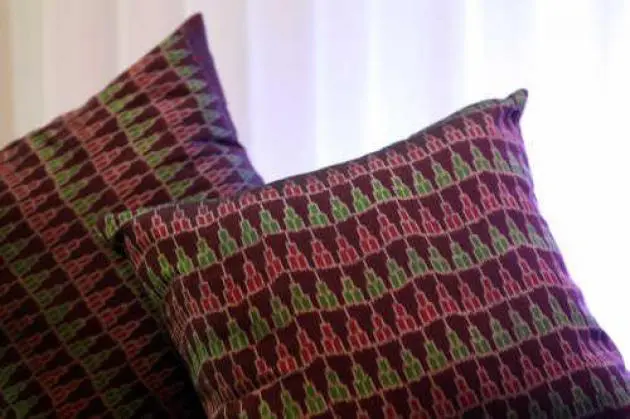
But with only a few people wearing silk in everyday life, the Office of Knowledge Management and Development is setting out to create a prototype of the iridescent fabric through its Modern Thai Silk project.
Working in collaboration with the Thailand Textile Institute and the Queen Sirikit Department of Sericulture, the three-year project aims to improve Thai silk so that it responds to global market demand.
The project, which is also receiving support from Thai Airways International, Queen Sirikit Museum of Textile, Bangkok Fashion Society and the Thai Silk Association, is drawing on the expertise of Ornella Bignami and Daniele Aliverti of Italian fashion studio Elementi Moda.
In 2012, exports of Thai silk were valued at US$18.53 million (Bt553 million), a reduction of more than 16 per cent over the previous year. Most the silk, accounting for some 57 per cent of all silk products, is exported, with the US and Japan being the top destinations. But Thailand also imports silk, mostly raw silk and silk thread from China, spending $20.73 million last year.
During a talk at the Eastin Grand Sathorn Bangkok, Orathai Silpa-Napaporn, deputy director general of the Queen Sirikit Department of Sericulture, said that Thai silk farming has decreased by more than 30 per cent over the past few years with just 90,000 silk farmers and 100,000 rai now devoted to sericulture.
“The silk market is facing shortages. Market demand is for 600 tonnes of silk threat, with 500 tonnes required for local use and the balance for industrial use. That’s why we are forced to import raw silk. The production of silk thread for industrial use requires high quality and consistency but our production tends to rely on local wisdom so the department of sericulture can only certify the quality of part of that production. China currently has the highest market share at about 80 per cent while Thailand has just one per cent, which is very little.”
Thai silk is highly valued for its glamorous identity and the growing demand throughout the world cannot help but improve methods, innovations and design concepts. Many of these improvements are already underway thanks to technical programmes and instructional assistance to growers and weavers.
“We need to preserve local wisdom, our silk’s unique pattern motif and artistic creation – these are our signatures and our pride. The main purpose of the project is to create economic value added for Thai silk and enter the new era with modern Thai silk,” Orathai says. “We must ensure that the young generation appreciates our heritage too. Developing Thai silk fabric will reflect a culture and society that never stops working to improve itself while retaining its own identity. Modern Thai silk should also be suitable for the world.”
Suthinee Pupaka, director general of the Thailand Textile Institute, says the project aims to boost contemporary design and everyday use especially to value-added One Tambon One Product (Otop) items.
Three procedures are involved, the first focusing on analyses of product development and Thai and foreign consumer behaviour in parallel with the improvement of raw silk, its production and technological methods with non-user, current users and commercial users as the targets.
Next is the creation of a “Modern Thai Silk Design Brief”, which Suthinee describes as a kind of bible on Thai silk creation. Thirdly, emphasis will be placed on the development of a collection for spring-summer 2015, which will introduce 15 trendy designs for home textiles, men’s and women’s clothing and accessories.
Budsaya Khunwong, deputy managing director of silk manufacturer and exporter Chun Thai Silk Group, which has been in business for 76 years, has seen profits fluctuate wildly over recent years in this fragile market. She is, however, hopeful that the project will achieve its objectives.
“Thai silk will never be competitive in terms of pricing,” she points out. “Unlike Chinese silk, Thai silk is not for mass or industrial production. We have to highlight quality, service and creativity.”
Thai silk expert Pilan Thammakol agrees. He notes that the Chinese are using more of their own silk these days, as the middle classes indulge their of love for silk bedding. That’s led to a reduction in the export of raw silk and silk thread.
“Silk’s durability, elasticity and versatility have inspired myriad uses beyond clothing. It resists rot and even though it doesn’t conduct heat, it still keeps the wearer warm on a cold day. Silk is a perfect material for many products. But old methods of production from silk farming to dying combined with old-fashioned pattern cutting and designs mean that Thai silk has no appeal to young people.
“Modern technology has already improved the dying techniques and the range of colours is greatly improved. We must continue to create modern Thai silk for the new era. Colourful silk scarves can do so much to enhance darker toned dresses or power suits,” he adds.
Orathai compares the potential for Thai silk to the success being enjoyed by Italian linen. “Linen has been constantly improving. In the fashion work, linen has been given a metallic sheen to create a new dimension in design. We need to look closely at trends in colour so we can design the print motif and the texture of the fabric. Thai silk has great advantage in that its nubby texture and iridescence make it look hand-crafted,” she says.
“We must always remind ourselves that foreigners and the young generation have no bond or emotional attachment to local wisdom, so our success depends on marketing as well as what the consumers need.”
TRENDY THREADS
- Interested silk entrepreneurs can contact the Product Development Centre at the Thailand Textile Institute at (02) 713 5492.
