
Riddle of the Nazca Plateau


We might never know why an ancient people carved enormous pictures in Peru's rocky soil
Two millennia ago the Nazca people of what is now southern Peru cleared long paths in the sun-baked earth of all the pebbles, then scraped away the brown topsoil to reveal the grey clay beneath. Today we wonder why exactly these “Nazca Lines” were created, some extending 200 metres across a flat plateau, as if inscriptions for the gods to read.
There are clues, and the Embassy of Peru offers them for Bangkok’s perusal in the exhibition “Nazca Lines Live the Legend”, opening today at the Emporium.
Unesco in 1994 dubbed the plain criss-crossed by the lines a World Heritage site. Among the many scientists to study it over the centuries was the late German archaeologist Maria Reiche, whose dozens of photographs from the 1940s form a key part of the exhibition.
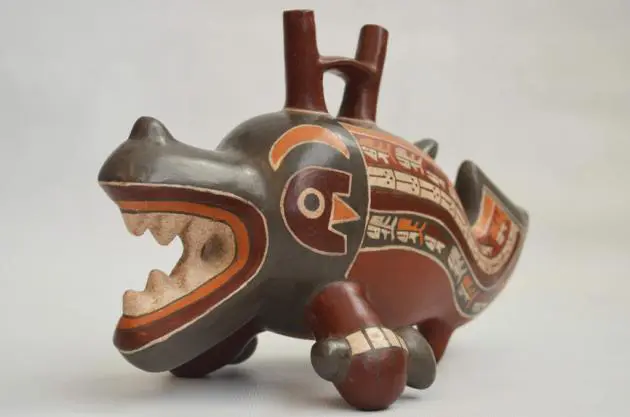
Rounding out the display are 20 reproductions of Nazca ceramics, textiles, utensils and musical instruments – the originals are far too valuable (and fragile) to travel.
The textiles bear complex designs that show the influence of the Paracas culture that preceded the Nazcas in the same area, and many of the same motifs etched out on the ground as well.
The earthenware plates, bowls and pots, decorated with a dozen different colours, are characterised by handles with tips extending upward.
Reiche’s greatest success was in winning international recognition for the Nazca Lines, which in turn helped convince Peruvians to treasure the ancient “geoglyphs” and take pains to conserve them.
The soil-carvers forged these stony troughs in geometric shapes and the outlines of plants and animals – a spider, fish, jaguar, monkey, dog, flying creature and humans too. As whimsical as the effort seems to us now, they used the same skills to build an impressive system of underground aqueducts, known as puquios, that still functions today.
They were gifted as well at farming, making baskets – and the interment of the dead. Believing in life after death, they would wrap the deceased in patterned cotton coated with turpentine to deter insects and bacteria, and then store them a coffin made of adobe.
But it is mystery that continues to shroud the Nazca Lines, and archaeologists still poke the soil for keys to the puzzle.
ANCIENT WONDER
- Peruvian Ambassador Jorge Castaneda and his wife Diana Angeles de Castaneda will open the exhibition at 6.30 tonight in the Fashion Hall on the first floor of the Emporium.
- The exhibition continues through next Wednesday. There is no admission charge.
