
The new definition for smart


Play
A lot of thought went into Nikon's D7100 - and all of it clever
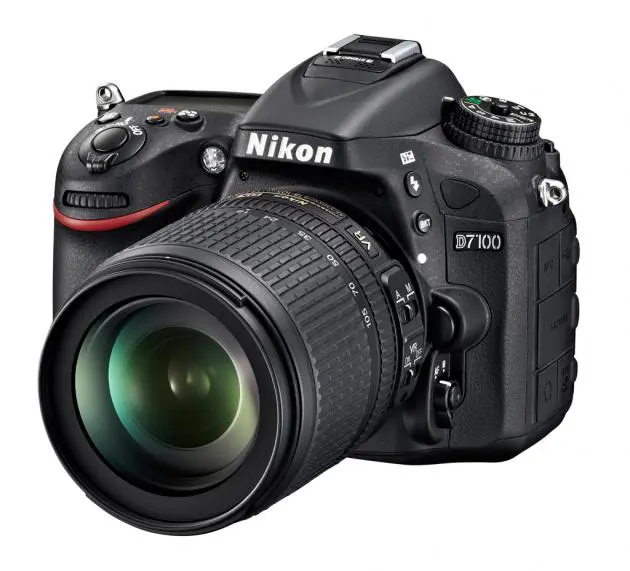
D7100 is Nikon’s new top-of-the-line DX-format digital SLR camera that has good performance and excellent image quality.
D7100 features a 24.1 megapixel image sensor without an optical low-pass filter to take the full advantage of the high resolution. And it comes with a high-performance optical viewfinder utilises a glass pentaprism and offers approximately 100 per cent frame coverage. The OVF is very bright with high-contrast thanks to its low-power consumption OLED display.
Its excellent performance comes from an Expeed 3 image-processing engine that processes multiple tasks in parallel while maintaining high precision to bring out the full potential of the 24.1 effective megapixels. The engine does very good job in colour reproduction, gradation processing and image quality at high sensitivity. It reproduces human skin tone, hair and eyelashes more faithfully.
And it is very good that D7100 has fast auto focus system for both stills and video shooting thanks to its 51-point AF system. The AF system uses the new Advanced Multi-CAM 3500DX autofocus sensor module covering broad range of the frame for increased accuracy in subject detection. Cross-type sensors have been adopted for subject detection and to track moving subjects rapidly. Its centre focus point (cross-type) supports auto-focusing for lenses with a maximum aperture of f/8 as well.
Nikon uses the term DX format for its 23.5 x 15.6 CMOS sensor, which other brands call an APS-C sensor, which is mostly used by DSLR cameras and is a step lower than the full-frame format.
D7100’s new 24.1 megapixel imaging sensor provides increased sharpness and clarity thanks to the lack of an optical low-pass filter used in most DSLRs.
D7100 has a strong build because it is made of magnesium alloy for the top and rear covers to ensure great durability, and it has sealing of individual components to ensure a high level of water and dust resistance.
The camera also provides several buttons and dial knobs for controlling various functions conveniently without the need to bring up the menu for changing functions.
For example, it has mode dial, shutter-release mode dial, exposure compensation button, metering mode button, main command dial, sub-command button, function button, white balance button, ISO button, and more. Another useful button is one to allow you to change functions of some buttons and change some settings.
And it’s very good that the mode dial has a lock switch to prevent you from accidentally changing the shooting mode you are using. The shutter-release mode also has a lock switch to prevent you from changing from single frame, continuous low speed (3 frames per second), continuous high speed (6 fps), quiet shutter release, self-timer, and mirror up.
We tested D7100 at The Nation newsroom with two kit lens – AF-S Nikkor 18-105mm 1:3.5-5.6G ED lens and AF-S Nikkor 16-85mm 1:3.5-5.6G ED lens as well as AF-S Nikkor 12-24mm 1:4G ED lens.
D7100 has 1.5x crop factor so the 18-105mm is equal to 27-157mm in 35mm photography so it is an all-around lens that with 27mm wide angle and 5.8x zoom. During the test, we shot sharp and beautiful portraits with this kit lens.
The 16-85mm is equal to 24mm wide-angel focal length in 35mm photography with 5.3x zoom to 127mm focal length. It took beautiful scenery shots with 24mm wide angle.
The 12-24mm has an impressive widest angle of 18mm equivalence so it is very good for taking scenery shots.
D7100 is designed for enthusiast photographers who are advanced users and want to have controls so they may use the manual mode, shutter-priority, aperture-priority, and programmed auto. There are also two user modes for which you can customise the settings.
If you are a new user, you may enjoy the full auto exposure mode, scene modes or special effect mode. The scene modes include portrait; landscape; child; sports; close up; night portrait; party/indoor, sunset; dusk/dawn; pet portrait; candlelight; and blossom.
New users can also have fun shooting with one of several special effect modes, which are night vision; colour sketch; miniature effect; selective colour; silhouette; high key; and low key.
D7100 has an impressive performance. It took less than a second to power up and get ready for the first shot. I didn’t feel shutter lag at all. And shot to shot time in single shot mode took less than a second when I didn’t use flash or just over one second when the flash was used. While Nikon says the highest bursting mode rate is 6 fps, the real speed might be affected by the type of memory card used.
The test found that D7100 captured excellent image quality for both outdoor and indoor shootings. Scenery shots yield very good details and portrait shots were really beautiful.
The camera is also capable of capturing clean and sharp Full HD video.
D7100 provides two SD card memory slots. Slot 2 can be used for overflow or backup storage. Or you can set the first card in the first slot to store RAW files while the second card for storing JPEG files.
Nikon D7100 body retails for Bt42,900. With AF-S Nikkor 18-105mm 1:3.5-5.6G ED lens and AF-S Nikkor 16-85mm 1:3.5-5.6G ED lens, D7100 set retails for Bt52,900 and Bt62,500 respectively.
Key facts
_ Image sensor: 23.5 x 15.6 mm CMOS with 24.1 effective million pixels
_ Lens crop factor: 1.5x
_ Shutter Speed: 1/8000 to 30 s in steps of 1/3 or 1/2 EV, bulb, time
_ ISO sensitivity: ISO 100 to 6400 in steps of 1/3 EV
_ Metering mode: TTL exposure metering using 2016-pixel RGB sensor
_ Autofocus: Nikon Advanced Multi-CAM 3500DX autofocus sensor module with TTL phase detection, fine-tuning, 51 focus points
_ Exposure modes: Auto modes, P, S, A, M scene modes, special effects modes, user settings 2
_ Viewfinder: Eye-level pentaprism single-lens reflex with 100 per cent coverage
_ Monitor: 3.2-inch 1229k-dot (VGA; 640 x 480 x 4 = 1,228,800 dots), TFT monitor with approx. 170° viewing angle, approx. 100% frame coverage and brightness adjustment
_ Battery: One EN-EL15 Rechargeable Li-ion Battery
_ Dimensions: (W x H x D) Approx. 135.5 x 106.5 x 76 mm
_ Weight: Approx. 765 g with battery and memory card but without body cap
