
The Tao of dance


Admired from Sydney to New York, Tao Ye is nervous as he finally comes home
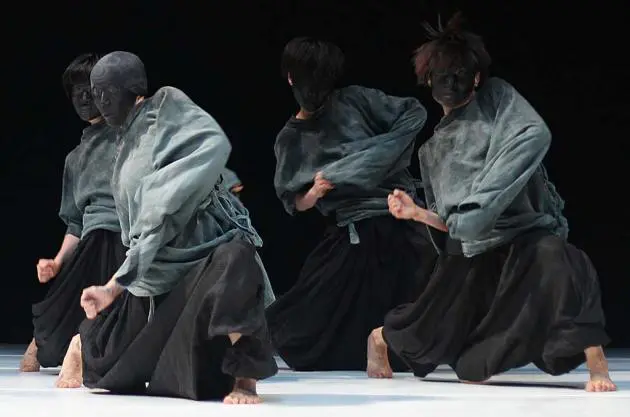
Tao Ye, artistic director of China’s Tao Dance Theatre, reaches for a cigarette. After a couple of hours on the dance floor, he is soaked to the skin and ready for a break. The 28-year-old choreographer is rehearsing his works, named “2” and “4”, part of a performance to be staged at the National Centre for the Performing Arts in Beijing.
What challenges him most is that this is the first time his works are being premiered in his home country.
The five-year-old Tao Dance Theatre is known for its unconventional works and has been touring the world since it was founded. Despite the acclaim he has won abroad, Tao says he is unsure about the feedback he will get here.
“We haven’t built a connection with audiences in China,” he says. “I guess the outcome might not be good because our performances break with conventional aesthetics.
“Though the number of Chinese watching modern dance has grown fast in the last few years, I don’t think they have opened their hearts and communicated with the works yet. For us, these shows will be a litmus test to see how the audience will react to our works and how advanced the modern dance environment in the country has become.”
Widely regarded as one of the most progressive contemporary choreographers in China, Tao is focused on revealing himself in movements and establishing his own order in dance.
His works “2” and “4”, created years ago and staged hundreds of times around the world, have digits for titles because “I don’t want to give my works a certain name with a few words. Language can deceive and limit the imagination. So I used numerals, simple and free.”
The duet, simply named “2”, was created in 2005. It has Tao and co-choreographer Duan Ni repeating rubbing their bodies against the floor. Over a year, they brainstormed ideas on the work and explored the possibilities of using their bodies.
“The whole year was torturous. You couldn’t imagine. We couldn’t think of any ideas and cried,” recalls Tao. “Our clothes were torn because of the constant rubbing on the floor. It was a confrontation between the floor and us.”
For Tao, art is personal, and the only way to get the right move he wants is by listening to his heart. The same philosophy applies to “2” and “4”, which he created for his dance theatre.
In the beginning Tao wanted to show the techniques of his theatre, which had four members then. However, as he added his ideas into the work, the quartet wearing masks has expanded into a display of the individuality of the dancers’ body language.
Beijing-based folk-punk musician Xiao He composed music for “2” and “4”, a collaboration that Tao describes as both painful and inspiring.
“We lived together for two months to work on the show. He is very emotional and locked himself in the bathroom to compose. Just when I thought I found the wrong person to work with, he gave me a great piece of music at the last minute. When I look back, it seems like a miracle.
“Putting my choreography and his music together was like giving birth to a new baby, with DNA from both of us.”
Tao says that he knows many in China complain that modern dance is too abstract to understand. But, he wants to ask, “Why do you want to understand it?”
“The dance was born out of my emotion at a certain moment. You won’t understand it because you are not me. You just feel it your own way. Whatever it is, you are part of the dance.”
Tao’s early piece “Do Beautify” used bodies to connect with space, which shocked audiences and was met with mixed comments. He only had two dancers, Duan Ni and Wang Hao. The hard times inspired him to create “Weight X 3”. Money was a big issue. He had to spend five to six hours commuting between Beijing and Zhuozhou in Hebei province, where he had a cheap studio.
Now, with six dancers, Tao says that he is having his best days ever. The studio walls are painted in red and black. There are no mirrors because he wants his dancers to feel their bodies from the inside.
“To create a good work I have to endure solitude, starvation and sleepless nights. But I am okay with all that. The task is to create good work from the heart,” he says.
“We’re both nervous and excited about the China premiere,” says Alison Friedman, founder and director of the arts-management company Ping Pong Productions in Beijing, which is Tao Dance Theatre’s international handler.
“We’ve been to so many places around the world and I am not worried because no matter how the audiences and critics respond, I know they are going to respect it. But it’s a big question mark in China.”
Friedman helped Tao arrange the premiere two years ago and says it’s ridiculous for Tao Dance Theatre to not perform in China. “No matter what the outcome is, it’s just the beginning,” she says. Though the modern-dance scene in China is growing, she adds, it has not yet reached its prime.
“The audiences need more diversity. They are looking for something new and different, and not just out of curiosity.”
