
No monkeying around


Play
Research shows that even apes are bored by the political programmes on television
New research shows that like their human cousins, apes prefer to sit down and watch a good wildlife documentary or colourful animation film on television, not current affairs or programmes with political content.
Bonobo apes, which are more closely related to humans than the gorilla or orang-utan, were given access to a television by scientists at the Wilhelma Zoo in the southern German city of Stuttgart – with fascinating results.
Banbo, an 11-year-old female, was the first of the bonobos to learn how to switch the television on in her enclosure, whereas 15-year-old Liboso still occasionally kicks the screen with his foot.
The rest of the group have grown accustomed to simply sitting down and watching programmes.
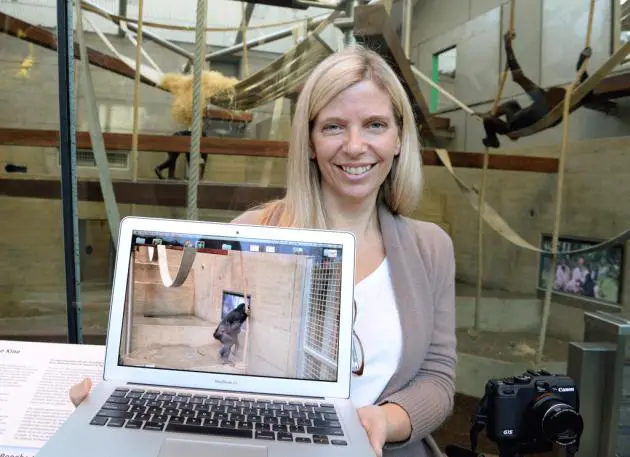
Primatologist Amy Parish learned very quickly that convincing the apes of the merits of watching television was no easy task.
The 47-year-old hopes to continue her research into how primates behave when watching television until 2014 at the Stuttgart zoo.
The bonobos have access to a flat screen TV with five different channels for entertainment in their new state-of-the-art ape house, with scientists monitoring what they watch.
Zookeepers and scientists have trained the bonobos how to use the “Bonobo Cinema”, allowing the primates to choose from programmes with content ranging from sex and aggression to play. Apes are always the main protagonists. One film documents the life of wild bonobos in Congo.
Professor Parish has worked with bonobos for 23 years and carries out her research in different zoos throughout America and Europe.
Parish is already familiar with the Wilhelma as it was here where she carried out her doctoral studies in the 1990s.
At that time, Parish discovered that amongst bonobos, which have a very similar genetic make-up to humans, the female of the species is dominant.
“The power clearly lies with the females,” she explains.
The question remained how this dominance would be reflected in front of a television screen. The scientist sought the answer in Stuttgart with the help of
sponsorship from a private US institution.
Parish’s research involves aspects of both primatology and anthropology and ideally she hopes her work will shed light on how violent films affect behaviour in humans as well.
The experiment is not the first to investigate how apes react when watching images on television, but in Stuttgart the primates decide for themselves which programmes they want to watch by pressing buttons.
“It’s a global pilot project,” Parish says.
It is hoped the research will reveal which topics interest the apes, whether males choose different subject matter to females and if there are differences of taste within the group.
The intelligent Banbo needs a little time to find the on button, but Parish shows the ape how the television functions via a video screen.
The female bonobo comes from a British zoo, where several years ago researchers showed the apes films of different animals.
The bonobos jeered when the saw predatory animals. The sight of smaller creatures aroused soothing noises, according to one animal keeper.
“It was only when a snake appeared in the picture that they lost their nerve and ran away screaming. However, they composed themselves after a short time and went back to see if the coast was clear.”
The research revealed that bonobos favour animated features and wildlife documentaries. The apes loved action and bright colours, but were bored by political programmes.
On one occasion when the television broke down and needed to be repaired, the technician who brought it back was greeted with jubilation.
