
The reality behind the reality


Play
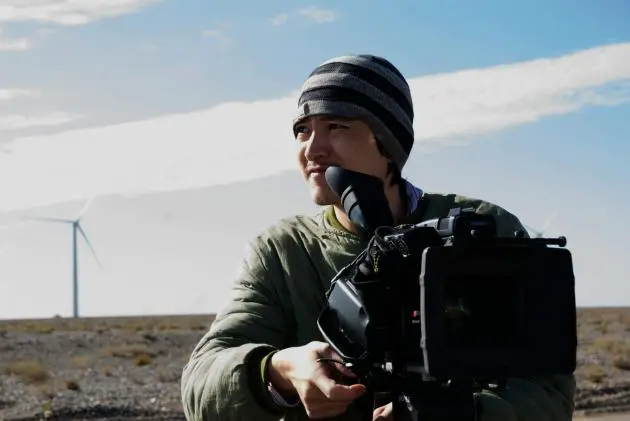
Documentary filmmaker Fan Lixin explores the aspirations of talent show contestants.
For documentary director Fan Lixin, 36, it’s not easy to break his own record and surpass his past glory. His masterpiece “Last Train Home” in 2009 garnered dozens of awards and in 2012, Fan became the first Chinese to win the News and Documentary Emmy Awards, for both Best Feature Documentary and Outstanding Business and Economic Reporting – Long Form.
In September, The New York Times named him as one of the 20 Filmmakers to Watch, among those who were under the age of 40.
“I feel a bit ashamed about the nomination as after all these years, it’s my only representative work remembered by others. I’m embarrassed that I don’t have many works.
“If there is still no new production, I don’t feel I deserve these honours,” says the former cameraman for Wuhan TV station and China Central Television.
A die-hard movie fan since he was a child, Fan fell in love with documentaries when he accidentally read a summary about a national documentary conference in 1998.
“You can learn a great deal by observing others through camera lens. It’s a little like leading several lives,” he says.
“Last Train Home” focuses on chunyun – the period of travel around the Spring Festival or Chinese New Year. It recorded the bittersweet annual journey of a migrant worker family in Guangzhou as they travelled from the city to their rural hometown for a family reunion.
Numerous migrant workers join the so-called largest human migration every year. It’s so difficult to get a ticket home that they often have to wait in line at midnight or buy one at a high price from scalpers.
“When I was with the family, I gradually opened my heart to them and they to me. Trust is slowly established and that feels good. That’s the magic of documentary,” he says.
Topics related to migrant workers and rural areas are close to his heart.
But his latest work has nothing to do with that. It’s a documentary that explores “Super Boy”, Hunan Satellite TV’s singing talent show, the latest season of which premieres in March. The show has been criticised for the handsome boys’ ordinary singing, and most audience members are females born in the 1990s.
“It’s a controversial topic, but my thoughts are quite simple. I hope to observe the values of young Chinese and the characteristics they present on the entertainment stage and in real life,” he says.
“I see them more as a group of young people against the background of 2013 in China than just some idols.
“The commonality of those born in the ‘90s is that they do things without any purpose and are more self-centred, a characteristic that can be considered
as both positive and negative. “It may be difficult to cooperate with a self-centred person. But they are more prone to seek freedom,” he says.
He is often moved by their stories.
“This year also marks the 10th anniversary of Hunan TV’s talent show. The work is not only a summary, but also reflects the changes in China’s reality show business and society,” he says.
In addition to focusing on such popular candidates as the top three singers Hua Chenyu, Ou Hao and Bai Jugang, the documentary also tells the stories of those who did not make it past the audition and failed to impress the audience.
Among them is 21-year-old Hu Wanbang. Last year, he followed his father to Guangzhou to become a migrant worker. He left his rural hometown after his planned marriage was cancelled because his father was unable to pay the 50,000 yuan (Bt270,000) demanded by his fiancee’s family as a dowry.
Hu likes to write his own songs under his quilt when other workers are asleep. He only sings in the spinning factory’s workshop at night when others have left and his voice is drowned by the roar of the machines.
“I’m nobody and no one wants to hear my songs. The city is large but has nothing to do with me. Although I’m trapped in the factory and have no friends, I will walk out of here someday,” Hu told Fan.
Fan’s documentary film also includes a middle-aged woman from Shanghai who leads other elderly women to sing and dance in different iconic places.
“One scene has them dancing in front of a community, where the residents will be relocated to make way for development. The city’s transition reflects changes in the whole country,” he says.
In October, the production received more than 5.07 million yuan from 29,166 supporters within 20 days on a Chinese crowd-funding website. A ticket to the premiere of the film costs 60 yuan.
“In China, hardly anyone is willing to pay to see documentaries in the theatre. I want to change that and the first documentary to do that must be an entertaining one,” he says.
