
Lord of the water is thrown a lifeline


Play
Drowning beneath the screech of chainsaws, locals make a stand to save their Island paradise
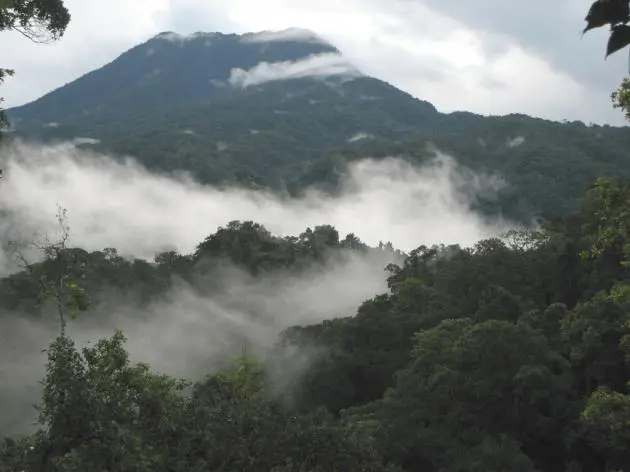
Mysterious and mystical, Kolombangara Island spends much of the year shrouded in cloud. This extinct volcano rises out of the sea in the Solomon Islands, which lie scattered beyond Papua New Guinea in the southwest Pacific.
A veil of mist clings to the edge of the crater, believed to be the original home of the indigenous Dughore people, while the shrill call of birds and the thunder of waterfalls echo through the dense tropical vegetation.
Kolombangara means “Water Lord”, a tribute to the more than 80 rivers that cascade down its steep slopes, providing a lifeline for the villages that cling to the coastline of this 15-kilometre-wide island.
In the Solomon Islands more than 80 per cent of land is forested and the vast majority of people here are engaged in rural-based subsistence livelihoods.
The forests are vital both to the locals’ identity and to their physical sustenance. They are home to 4,500 plant species, of with 600 are used by indigenous communities for medicines, food and to build canoes and homes.
But on the island’s southwest coast near the village of Kuzi there is a reminder of a longstanding threat to their survival.
It is a clear morning and the sun shines on the sheltered cove, the wild orchids sway in the breeze along the shore and the nearby lake, while white cockatoos soar across tree tops. This could be paradise, except for the screech of chainsaws from not more than a kilometre away.
Commercial logging began on Kolombangara Island in the 1960s but it wasn’t until the 1990s that extraction reached unsustainable levels both here and in other parts of the country.
Today, the industry remains one of the greatest threats to the nation’s biodiversity alongside population growth and climate change.
On Kolombangara about 30,000 out of 50,000 hectares of government-owned rainforest (which comprises three quarters of the island) has been destroyed. The same proportion of loss has occurred on the remaining privately owned land.
Villagers have seen no benefits, says Lima, a young woman who lives in Korare village. Tree clearance has worsened soil erosion and “there are more land disputes and access to alcohol, which causes fighting among people, affecting women and children”.
For Ferguson Vaghi, witnessing the destruction inspired him to quit his job as a logger and devote his life to conservation.
He is now dedicated to protecting the last forests on the island, working for the Kolombangara Island Biodiversity Conservation Association (KIBCA).
“We rely on natural resources for almost everything,” Vaghi says. “Some of the foods that we lost in the forest because of logging are local yams and wild fruits. And because wild animals’ natural habitat has been destroyed, they end up destroying our gardens – especially the wild pigs.”
Formed in 2008 by local landowners, the association’s objective is the sustainable management of natural resources. It also helped to get the remaining 19,400 hectares of undamaged hill forests above the 400-metre zone declared a conservation area.
The main habitat of endemic plant and bird species, such as the Kolombangara White Eye, and newly discovered species of frogs, is now protected along with the headwaters of all the rivers.
This includes the former volcano’s crater, an area still to be explored.
“Biodiversity studies have been only been done as far as the peak of the mountain. No study has been done in the crater,” Vaghi explains.
“There are old village and historical garden sites, which our ancestors built with stones near many of the rivers. Here you can see how people devised irrigation channels for the cultivation of swamp taro,” he adds.
“There is also evidence of ancient shell money, the old currency used by islanders. These are what we call tambu [forbidden] sites and are evidence that we own the land.”
KIBCA, with approximately 500 members, was crucial to motivating people across the island to sign an agreement not to engage in any logging or mining within the protected area.
The association monitors the ban and seeks injunctions against illegal logging operators in the High Court. To date all of their legal challenges have been successful.
At the grassroots level, KIBCA educates people about their rights, environmental and forestry laws and the significance of decisions they make for future generations.
Vaghi attributes their achievements, which have been internationally recognised, to the islanders being united, informed and organised.
This year the association received a Conservation Leadership Programme Award from organisations including Conservation International and the Wildlife Conservation Society.
