
The daily jog comes down to (easy) science


Play
Garmin Forerunner 620 is a boon to runners, keeping pace of every turn, step and heartbeat
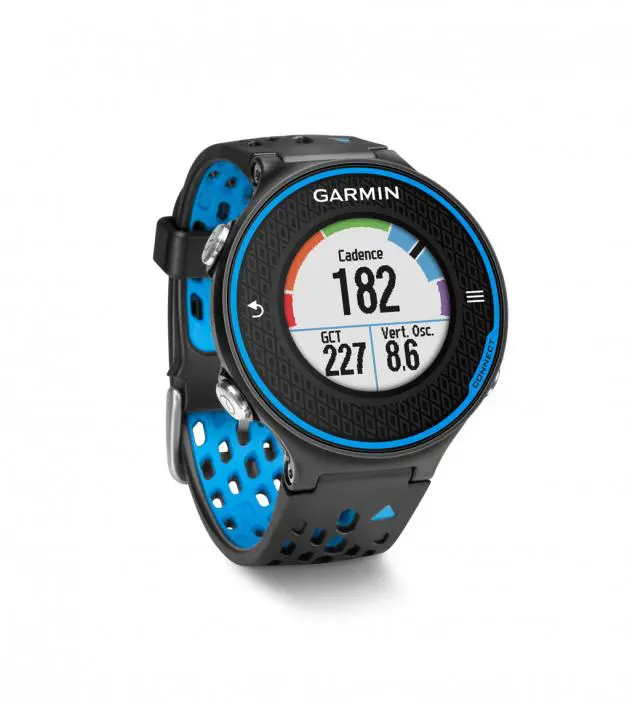
If you love jogging, you will find Garmin Forerunner 620 very useful. It’s a touch-screen GPS running wristwatch that tracks the distance, pace and time as well as calculating how many calories you burn.
It can automatically link to Garmin Connect (www.GarminConnect.com) so you can upload your data as a way of keeping records and analysing your performance.
And you can link to the Garmin HRM-Run monitor for recording data on cadence, ground-contact time, vertical oscillation, recovery time and maximum oxygen consumption. All of these data could help improve your performance.
The watch uses a rechargeable lithium-ion battery that lasts up to six weeks in watch mode and up to 10 hours in training mode. You get a charging data-cradle for connecting it to your PC or notebook computer for recharging and for uploading data to your Garmin account.
I’ve found that holding a phone in one hand while running just isn’t comfortable. The watch is of course strapped to your wrist. And a smartphone’s GPS requires an Internet connection, but the watch has its own, real GPS receiver.
Forerunner 620 is intuitive to use and easy to set up. The first time you use it, you need to enter your gender, birth year, height and weight for calculating calories and linking to Garmin Connect. At the front of the screen are two touch buttons - “back” and setting menus. On the option menu, you simply scroll up and down to browse and then confirm your choices by tapping the screen.
There are four hard buttons around the “dial”. One is the power and turns the backlight on and off, another shows the time of the day. A third starts a new lap and uploads data online, and the last button, marked with a stylised runner, starts and stops the timer.
So, off you go. Press the run button to display standby mode. The watch will attempt to connect to a GPS satellite, so you have to be outdoors. Once connected, the satellite logo turns solid and the watch vibrates to let you know you’re on radar.
Press the run button again to start the timer and don’t hit it again until you finish. You’re then asked whether you want to save or discard the run data.
En route the watch vibrates every five minutes and displays your current average pace per kilometre or mile, depending on how you set the distance preference. You can also choose to have your heart rate displayed, or to alert you at set intervals, when you’ve gone a certain distance or burned a certain amount of calories.
After your run, place the watch in its charging cradle and connect the cradle to your computer. The first time, Garmin Connect will prompt you to download and install the Garmin Express software, which will thereafter automatically sync your data to your account.
The website shows your dashboard with a map of your latest run, indicating distance, time, average pace, burned calories and elevation gain. The Analyse section provides more data and graphs, such as your best pace, maximum speed, maximum run cadence and average stride length, as well as the weather and temperature at your run.
You can also connect with other Garmin users to exchange tips and moral support. The watch has its Virtual Partner option, a training tool to help you meet your goals. You can customise it to run at a target speed or pace. Training plans are also available for download.
To make most of Forerunner 620, use it with the Garmin Heart Rate Monitor (HRM). Easy to connect to the watch, it’s worn directly on your skin just below the chest, held in place by the provided strap. Select the HRM option in the watch’s sensor-screen settings.
Now you can use the “running dynamics” features. You can monitor your cadence - the number of steps per minute - for example. The vertical oscillation is your “bounce” while running. The vertical motion of your torso is measured in centimetres per step. Ground-contact time is the length of time each foot spends on the ground. Your “VO2 max” is your maximal oxygen consumption, easily measured by running for 10 minutes with the HRM-Run switched on.
My test of the watch involved a four-kilometre run around the neighbourhood. It had no problem connecting to a GPS satellite and the map displayed correctly once the data was uploaded.
Garmin Forerunner 620 retails for Bt13,300. With the HRM-Run monitor, it sells for Bt15,500.
Key specs
_ Unit dimensions: 4.5 x 4.5 x 1.25 cm
_ Display size: 1 inch (2.54 cm) diameter
_ Display resolution: 180 x 180 pixels
_ Weight: 43.6g
_ Battery: rechargeable lithium-ion
_ Battery life: Up to 6 weeks in watch mode; up to 10 hours in training mode
_ History: 200 hours of activity data
