
A culture of heritage


Play
Traditional troupes, dancers and orchestras celebrate Bangkok's founding 232 years ago
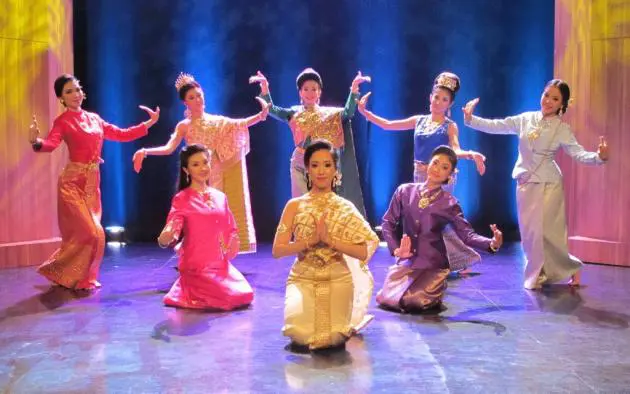
Thoroughly modern misses are dressing up in the finery of bygone days this weekend as they join the Culture Ministry in celebrating the 232nd anniversary of the Rattanakosin kingdom.
The cultural festival, which features a range of traditional Thai performing arts along with a magnificent light and sound show, runs through Monday at Sanam Luang in front of Wat Phra Kaew and the Grand Palace with the entertainment taking place daily from 9am to 10pm.
“We have joined with various agencies in marking the founding of the Rattanakosin kingdom, which officially falls on Monday, April 21,” says Dr Preecha Gunteeya, the ministry’s permanent secretary for culture.
“We mark not just the anniversary but also commemorate Phraphutthayotfa Chulalok the Great or King Rama I, who established Bangkok as the capital the kingdom and held a ceremony at the city pillar on April 21, 1782,” he adds.
“This year, we’ll be performing ‘lakorn nok’, a play with an all-male cast, in honour of our Thai heritage,” says Nipha Sophasamrith, the vice-president of Bunditpatanasilpa Institute.
“It’s adapted from ‘Kaew Na Mah’, a traditional folk tale about a woman who after being rejected by the prince she loves because she resembles a horse, is rewarded for her goodness and unconditional love by being transformed into a beautiful woman.”
The three-day festival also features a multimedia light-and-sound show titled “Tai Rom Phra Baramee Chakriwongs”, a performance of “Piromrumpeay” from the reign of King Rama V, khon (masked drama), likay by Chaiya Mitrchai and a puppet show. In addition, there’s folk music, traditional sounds from the Ching Cha Sawan band, a four-region performance from the Art Association for Youth plus concerts by national artists, Suntaraporn and The Stars.
China, Indonesia, India and Republic of Korea are also celebrating alongside the Thais, bringing their own music and dance cultures to a sensory extravaganza designed to draw foreign tourists.
Highlights include the cultural procession through nine reigns, which features a parade by 20 classic cars, the Royal Thai Army Orchestra, a car parade of nine royal paintings, a Rattanakosin Lady contest, a kite-flying show, demonstrations of local products from 77 provinces, exhibitions of Thai fabrics and national costumes, as well as a food fair and folk games.
Sightseeing tours both by bus and by boat are available and take in various cultural and historical sites in the city.
This upcoming festival will help promote Thailand’s tourism and develop Bangkok as one of the world’s cities of arts and culture.
Since its founding as the capital city in 1782, Bangkok has grown to become an important political, social, and economic centre, one that abounds in cultural and historical sites reflecting the country’s long history and unique culture.
The shortened official name of the city is Krungthep Maha Nakhon, meaning the Great City of Angels. The name “Bangkok,” as it is commonly known, comes from “Bang Makok,” the riverside town of the makok, the hog plum.
In the early days of its establishment, the river and canals served as the main communication routes . The city was first concentrated along the east side of the Chao Phraya River. In the Fifth Reign, King Chulalongkorn opened the vista of the city beyond the original city walls, when he had Dusit Palace built, linking it to the Royal Palace by Ratchadamnoen Road, which transformed Bangkok in every aspect, leading to the modernisation of the city.
Besides touring historical and cultural sites, tourists can also spend an enjoyable time walking around the Rattanakosin Island, the heart of the original city. Foreign and Thai visitors can also admire the distinctive beauty of Thai culture and learn about its great history at various places in this city.
