
Seeing is mindfulness
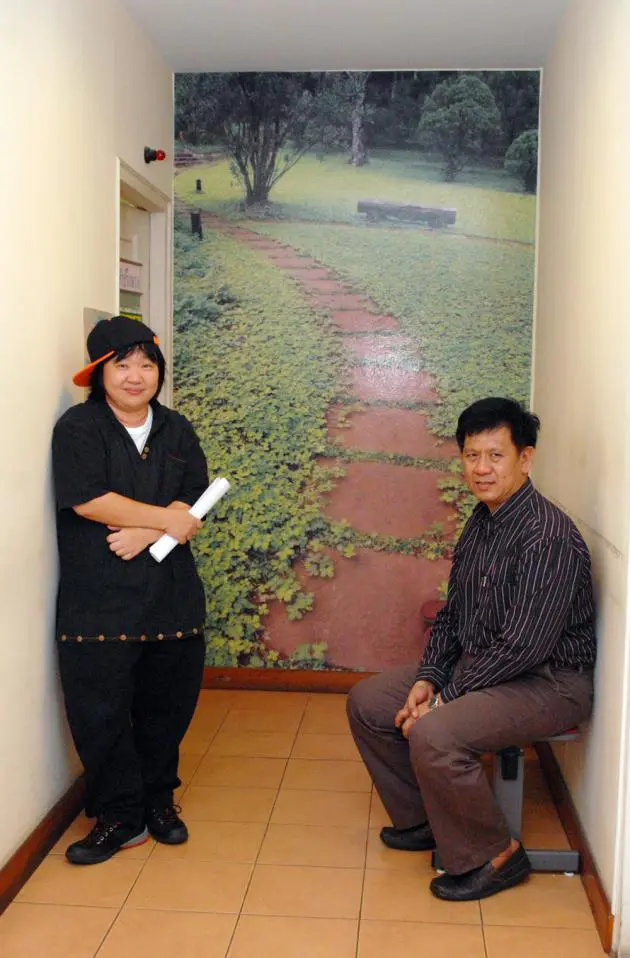


Photographer Somkid Chaijitvanit brings peace and tranquillity to the walls of care facilities
THERE’S LITTLE MORE depressing than hanging around a hospital’s outpatients department or a doctor’s surgery waiting for the results of a test. We may try to read a book or chat online but inevitably our minds drift back to the nagging question: Will the news be good or bad?
Photographer Somkid Chaijitvanit hopes to bring peace to such troubled minds through her charity project Art Care, which brings aesthetic and calming scenes to dull hospital corridors, elevators and inpatient wards.
The 47-year-old shutterbug, who has made a career shooting images for newspapers and dharma projects, recently launched her third Art Care project at the Anonymous Clinic in the Thai Red Cross Aids Research Centre.
The clinic, the first of its kind to be exempt from revealing the names of patients with HIV to the government, has been providing anonymous blood testing and advice on transmitted through the blood and sexual intercourse like HIV, syphilis and hepatitis B since 1991.
Her serene photos now hang in front of the consulting rooms and in patients’ rooms, drawing the attention of patients as well as the doctors and nurses who work there. A floor-to-ceiling shot pasted at the end of the walkway takes the viewer into a beautiful garden, offering hope to those who fear their life’s journey is coming to an end.
“The photos are mindfully designed for this purpose,” she says.
Somkid’s inspiration came from her own experience taking care of a sick relative. “Waiting around to see a doctor or even paying the bill takes so much time. I found myself looking around and all I could see other than patients trapped in their misery or pain were posters about how to protect yourself from haemorrhagic fever. I thought my photos could help cheer up the place and mentioned this in a 2009 interview with Krungthep Turakij newspaper. Not long after, I had a phone call from Nilapa Sukchareon, a nurse in the intensive care unit of King Mongkut Hospital. We got together to decorate the unit, giving it peaceful ambience that could console patients and relatives in their despair. Forty four pictures of my ‘Water’ series were selected for the unit,” she says.
The second invitation came in 2010 from Hua Talay Hospital in Nakhon Ratchasima. This time, Somkid and her friends organised a photography workshop and encouraged the hospital staff to become involved by taking photographs for the walls.
“The photos not only helped comfort patients but gave the staff an added sense of self-worth,” she says.
The Anonymous project was initiated by Torsak Bunupuradah, a doctor specialising in HIV who’s attached to the Thai Red Cross Aids Research Centre. He saw Somkid’s photos while visiting a relative in King Mongkut hospital’s ICU and was struck by the serenity.
“The photos are powerful and invoke a sense of calm,” he says. “My first thought was that they would be ideal for the Anonymous Clinic where patients have to wait for two hours for the results of their tests. Their minds wander and you can tell from the expressions on their faces that they are thinking the worst. Being able to focus on mindfulness is beneficial.”
The Centre’s director Prapan Panupak is also delighted with the project and convinced that aesthetic art therapy works well, especially with chronic patients.
“Photos of nature work better than music in our case,” he explains. “The centre is by its very nature scary and depressing. Even though a patient might be aware that advances in treatment have been made giving them much more of a fighting chance, coming for a check up can still be traumatic. Creating a healing ambience is good not only for patients but also the nurses and doctors who often see 20 to 30 cases a day,” he says.
Somkid is careful to keep the subject of her photos simple and says they don’t have to be professionally perfect.
“Ideally, the picture should capture stillness, a drop of water for example. It makes you feel calm and relaxed,” says Somkid. “When I was hosting photography workshops, I taught participants to only take pictures when they themselves felt calm. A successful photo is one that heals the photographer too as it requires total stillness, rather as if you holding your breath. It’s like mediation and mindfulness.”
Fellow photographer and writer Teeraparb Lohitkun, whose works are also adorning the walls of the Anonymous Clinic, says he found peace in Somkid’s photos. A victim of Parkinson’s disease, he contributed an image of the Zen garden at the Royal Project in Chiang Mai.
“It’s a place where you feel lost in time and I thought it would be perfect for the project. It’s now in the perfect position stretching from floor to ceiling at the end of a corridor,” he says.
Jitr Tantasathien, a social communication expert and spiritual practitioner, says the photos invoke an “open minded conversation within yourself”.
“The photos communicate to you, they makes you feel calm and create a sense of tranquillity even when you feel downhearted,” he says.
Somkid is planning to create a photo bank that would allow the hospitals to rotate the pictures so the walls never become boring. She’d also like to introduce her project to a specialised Children’s Hospital though points out that the images would focus more on joy than on calm.
“Children need laughter and cuddles. Let’s see,” she says.
A HELPING HAND
- To volunteer to help Somkid or support her projects, visit www.Facebook.com/pages/Art-Care/1405069396394561.
