
'Marco Polo' in Malaysia


Play
First production commences at Pinewood Studios Asia
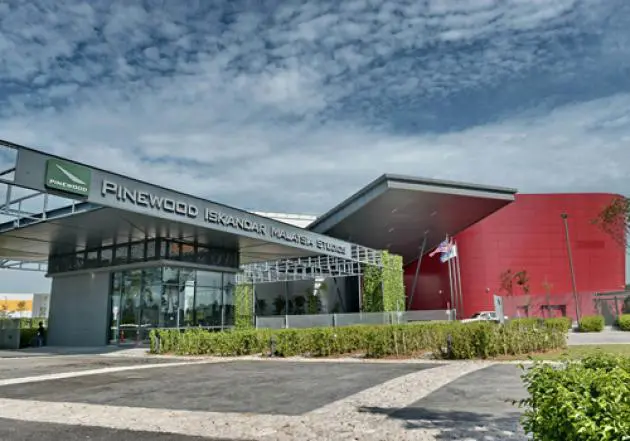
A Marco Polo-era replica ship floats in a massive water tank while just metres away ancient Mongol tents recreate the court of Kublai Khan – welcome to Pinewood Studios’ new Asian production facility.
The 20-hectare, $170 million complex in southern Malaysia’s Iskandar investment zone is the studio’s first in Asia and marks its expansion East in search of lower production costs.
Britain’s Pinewood, a 78-year-old movie industry institution that boasts James Bond and the Harry Potter films in its portfolio, is the latest global entertainment brand to open operations in Iskandar.
Pinewood Iskandar Malaysia Studios opened last month and is making “Marco Polo” – a sweeping 10-part historical drama about the 13th-century Italian explorer. The series will be shown by Netflix, the US video-streaming giant.
“It was a big bonus to have Marco Polo here as the first client. It’s like winning the lottery,” the Pinewood Iskandar’s chief executive Michael Lake says.
“I’m a big believer that when you open a new studio facility, the best thing you can have is a television series,” he added, referring to the fact the series will utilise the facility for an extended period.
Officials predict the complex, a licensee of Pinewood and owned by Malaysia’s sovereign wealth firm Khazanah Nasional, will contribute around $560 million (Bt18.1 billion) to the economy over the next eight years and 1,700 jobs annually.
With 9,300 square metres of sound stages, sprawling backlots for outdoor shoots as well as two television studios, the complex is one of Asia’s largest and most modern video-production centres.
More than 500 production staff from 18 countries are working on “Marco Polo”, which is being produced by the Weinstein Company and occupies most of the new studio, set next to a man-made lake and forest.
Lake, a former studio executive in Australia, said Pinewood Iskandar is hoping to draw a broad range of clients from around the world, attracted by lower production costs in Malaysia.
He also lauds its proximity to well-connected Singapore, just 15 minutes away.
Lake said the facility will also benefit from a new scheme rolled out by the Malaysian government last year that offers a 30 per cent cash rebate on production and post-production spend for projects that exceed $1.6 million in value.
Similar incentives exist in other countries eager to attract film production, such as New Zealand and Ireland.
Lake said Pinewood Iskandar is also planning to collaborate with regional production facilities for large-scale projects, “especially in the use of manpower and infrastructure so we can promote this whole area as one region for filming”.
Industry insiders say the facility will inevitably have to compete for business with these regional locations that are equipped with similar state-of-the-art infrastructure.
Sydney’s Fox Studios has hosted productions of multiple Hollywood blockbuster movies, while Singapore’s newly-opened Infinite Studios in April hosted the filming of upcoming spy movie “Agent 47”.
“In the longer term, all locations, including well-equipped new studios such as Pinewood Iskandar Malaysia Studios have to compete for business,” said Patrick Frater, the Asia bureau chief for Hollywood trade journal Variety.
“That’s because modern technology such as green screens means that many film and TV projects could actually shoot anywhere in the world,” Frater says.
The “robustness and transparency” of incentives handed out to production companies as well as the quality of crew available “are ultimately what keeps studios and locations attractive”, Frater adds.
In Singapore, officials have welcomed the opening of Pinewood Iskandar despite the possibility that it could steal business away.
Singapore has a small film industry that has steadily won critical acclaim overseas as well as production companies such as Infinite that cater to foreign clients.
Angeline Poh, assistant chief executive of industry at Singapore’s Media Development Authority, says that the opening of Pinewood Iskandar now ensures that the region “offers a compelling proposition for producers to undertake large-scale international productions here”.
Since 2006, former palm oil plantations in Iskandar have been transformed into hotels, luxury homes, offices and universities.
Named after a former sultan – the area landed $40.5 billion in investment commitment as of last year, one-third of the way towards an ambitious 2025 target of $123 billion, according to the zone’s official website.
The set of Marco Polo, with its weathered Venetian galley ship bobbing in one of the studio’s multiple water tanks and its exquisite reproduction of a sand-coloured Mongol facade, reflects that ambition.
