
Across the teak bridge to history


Play
Myanmar's vast U Bein Bridge is getting some much-needed care after a century and a half
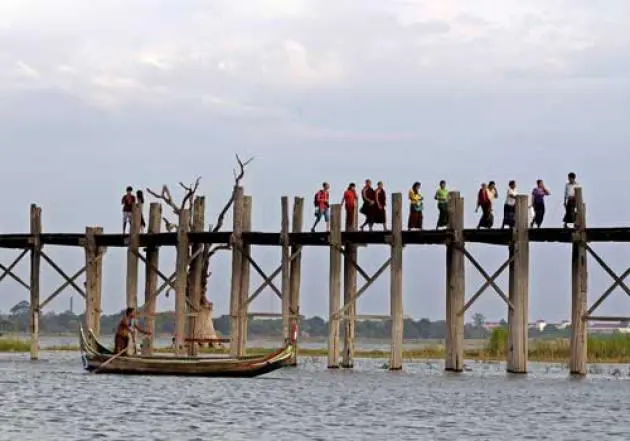
July is the best month to visit the U Bein Bridge in Mandalay Region’s Amarapura Township. One of Myanmar’s most-photographed sites, the 160-year-old bridge runs 1.2 kilometres, across Taungthaman Lake. With the lake rising to its highest level in the monsoon season, especially this and next month, the bridge basks in the reflected glory of the reservoir’s crystal-clear rainwater.
Behind the veneer of beauty – and despite its durable teakwood structure – the bridge is actually falling apart due to exposure to the elements. During the dry season, different parts simply shrink and cracks develop due to the loss of moisture. The structure expands in hot and humid conditions.
While the changing seasons and natural disasters like earthquakes are detrimental enough, the lake’s increasing pollution compounds further the problem. It results in mould and rot.
Officials have lately expressed concern that the ramshackle bridge might collapse soon unless a complete overhaul is undertaken. The government’s Department of Archaeology, Museums and Libraries is handling the first phase. So far, decaying planks, beams and pillars have been replaced – with no brick and concrete used in order to preserve the bridge’s original teak structure and historical importance.
Named after the mayor who had it built around 1850 as an important passageway for local folks, the U Bein was made not with ordinary teak but teak pillars from the former Innwa Palace, according to Win Maung, a traditional architect also known as Tampawaddy.
A series of earthquakes in 1839 destroyed the palace of Innwa. A new one was erected in Amarapura in 1842. Eleven kilometres south of Mandalay, Amarapura is one of Myanmar’s former capitals. Established by King Bodawpaya in 1783, it was the centre of power until 1857, when the capital moved to Mandalay.
The best time to visit the bridge is in the late afternoon, when it’s at its most vibrant, with a steady stream of locals scurrying back home from work, some riding bikes, others strolling with loads of firewood or dinner ingredients perched atop their heads. Tourists take up positions at one of the nearby tea shops and watch the human tide streaming across in a steady rhythm, the grand finale to their day trips.
