
The martini and its creation myth


Recollections are understandably vague, but there was this miner during the gold rush
The martini has a pedigree. Who knew? Its grandfather was called the martinez. This is the sort of thing you could learn at distiller Diageo’s World Class Global Finals for bartenders in London last month.
There is no firm “origin story” for this most iconic of cocktails, only a fog of creation myths. But some people who drink a lot and still manage to do scholarly research – the “cocktail historians” –believe the martini’s roots lie in the town of Martinez, California.
During the California Gold Rush, the story goes, a miner struck it rich, went to a bar to celebrate and asked for Champagne. The bartender instead served him a cocktail called the Martinez Special, and it proved such a hit that gold was struck again – in the form of a world-class tipple.
Simple slurring of the sort that naturally occurs after a few of these drinks gradually transformed the martinez into the martini. But the ancestor was actually much different from the martini we know today. It was sweet, thanks to sweet vermouth added generously to the gin, along with Grand Marnier or cherry liqueur, Maraschino for a fruity note, and a dash of bitters for balance. It’s believed that the only garnish was a shard of orange peel.
They did serve it chilled in a long-stemmed glass, as is still done today, not for the sake of haughty elegance but to keep the liquid cold longer, since there’s no humid miner’s paw wrapped around it.
The martini has undergone a steady evolution ever since, and it’s probably still not quite finished. Mixers have tried various alternatives to gin as a base spirit (vodka, bourbon, even sake), different names, and of course alterations in the vermouth proportion – as in the driest martini, with none at all.
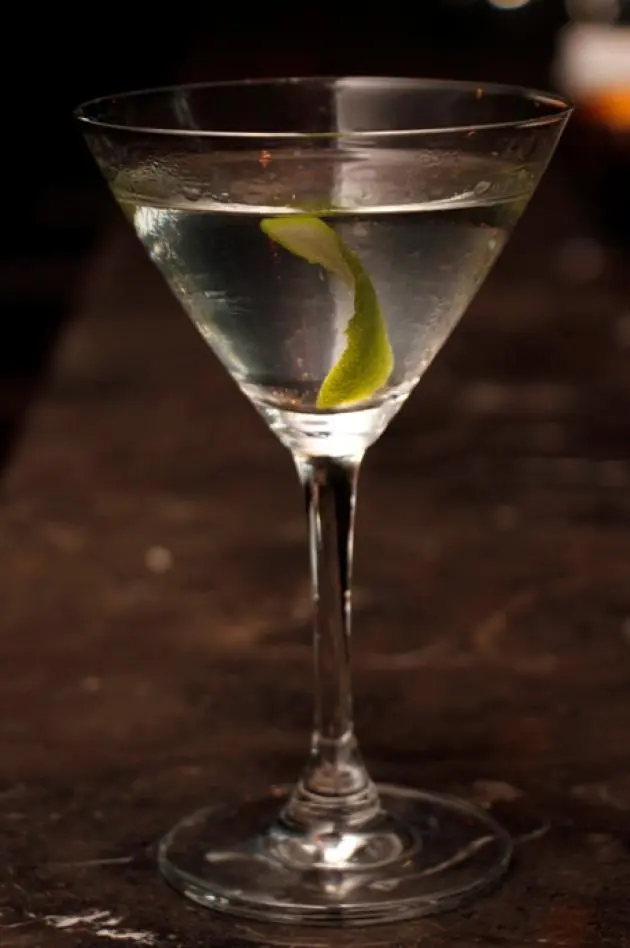
For the record, James Bond demanded his martinis “shaken, not stirred”, but also half gin and half vodka. Traditionally served in a Champagne coupe with a slice of lemon peel, that one’s actually called the Vesper.
Olives in brine emerged as the most popular garnish, but lemon and other fruits have had a go, and tea, coffee and fancy bitters have been tested with varying but inevitable success. The result is an ever-expanding repertoire of “tini’s”. You have the appletini with apple liqueur, the chocolatini with, yes, chocolate, and the espresso martini with its coffee jolt.
These days you might even get a martini that’s smoking, as if to keep its origin shrouded in mystery. This is the brave new world of molecular mixology, and who’d not up for occasional experiments?
Of course you don’t have to be an alchemist to make a decent martini, or even a martinez. You only need a few ingredients – probably anything left over in the booze cabinet at home right at this moment. Just pour everything into a jug with lots of ice, stir well and strain it into a martini glass. Use any garnish you like. You needn’t follow a recipe. You don’t even need to measure amounts. (No wonder we’ve forgotten how the martini was invented.)
However, keep in mind that, for a basic dry martini, you use more gin (or whatever) than vermouth (or whatever). A very, very dry martini would have no more than a few drops, if any – added to the glass first, just for the aroma.
Zero vermouth means you’re drinking a “bone dry martini” or “desert martini”, which sounds like fun. A “dirty martini” sounds like even more fun: It has some of the brine from your preserved olives added for an extra kick. If the vermouth asks to be included, don’t laugh heartlessly. Let a few drops climb in to play.
Vermouth comes to the fore anyway if you want a sweet martini – many would call this “the perfect martini”. It’s one part gin, one part sweet vermouth and one part dry vermouth. Offset the sweet with the tang of a lemon-peel garnish.
If olives from brine leave you with a salty aftertaste, toss in a twist of orange peel instead. If you add cocktail onions (those salty, sour, pungent pearls), your martini becomes a “Gibson”. Similarly, Scotch whisky instead of vermouth turns it into a “Smoky”, cherry brandy makes it a “Rose”, and, for reasons we can’t quite fathom, curacao and lemon give you a “Journalist”. It would be nice if everyone loved a Journalist.
