
The beauty is in the letters


Play
A museum devoted to the Hangeul alphabet opens in Seoul amid growing artistic, cultural interest
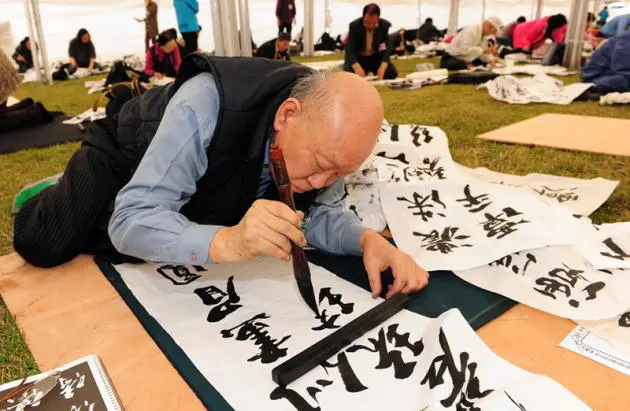
Hangeul, the writing system for the Korean language, has always been a source of pride for Koreans. So much so that they mark October 9 as Hangeul Day, a national holiday celebrating its creation more than 500 years ago.
Efforts to cherish King Sejong’s great gift to the people went further this year, resulting in a brand-new museum dedicated solely to the alphabet.
The National Hangeul Museum opened last Thursday with the stated mission of raising public understanding of its language. It is also starting a month-long festival celebrating the 24 letters – 14 consonants and 10 vowels – that make up Hangeul.
“Hangeul is the No 1 linguistic and cultural asset passed down to us,” says Moon Young-ho, the museum’s inaugural president. “The National Hangeul Museum aims to promote its value and extend it beyond the linguistic realm by promoting the use of Hangeul as a motif in art and culture.
“Hangeul is not just a writing system for our language. It’s a cultural medium.”
Located near the National Museum in Yongsan, the building is an architectural embodiment of the philosophy behind the alphabet – heaven, earth and man. It has four floors – three above ground and one below.
Nearly 10,000 Hangeul-related artefacts are housed there. Some have been newly discovered by the museum, according to Hong Yun-pyo, who led the preparatory committee. “At least 10 of them deserve national treasure designations,” he says.
Among the highlights of the inaugural exhibition is an original copy of “Hunminjeongeum Haerye”, a commentary on “Hunminjeongeum”, the original promulgation of the alphabet on loan from the privately run Gansong Art Museum.
There are also “Yongbieocheonga”, the first work written in Hangeul,, the oldest Korean typewriter in existence and a cache of letters written in Korean by King Jeongjo, a Joseon-era ruler who took the throne some 350 years after King Sejong the Great.
The third floor is dedicated to children and foreign visitors, with various multimedia devices and programs designed to help them understand the basics of Hangeul.
For some Korean artists, Hangeul is not just an alphabet. It’s their source of artistic inspiration. Many years after designer Lie Sang-bong’s signature Hangeul-theme fashion show, the Korean characters are now more widely used as a design motif in everyday life in Korea – from Starbucks tumblers to T-shirts.
Earlier this year, up-and-coming designer Nohant and actor Yoo Ah-in released a line of T-shirts, featuring a mix of Korean and English letters, which became an instant sensation.
A stage musical currently running at Theatre Yong inside the National Museum tells the story of King Sejong and all the obstacles he faced within the court as he pushed to create a writing system for Korean. The “Deep Rooted Tree” is based on the best-selling novel of the same title by Lee Jeong-myeong. A TV adaptation ran in 2011, winning both public and critical acclaim. The musical continues until Saturday.
Off you go
The museum is near Exit 2 of Ichon Station on Seoul’s Line No 4.
It’s closed on Mondays. Admission is free.
For details, visit www.Hangeul.go.kr.
