
A plate full of PALEO
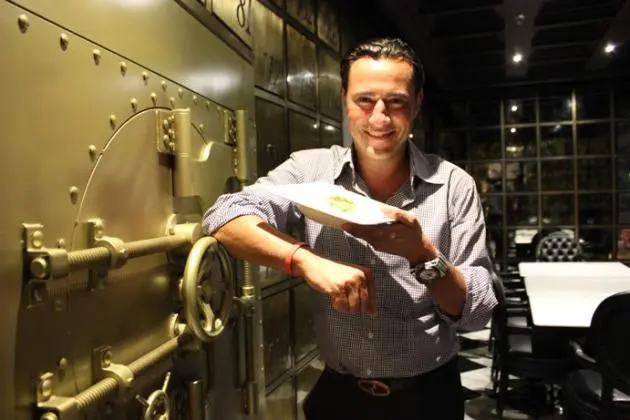


Health is yours, says Chef Daniel Green, if you swap around ingredients in four-fifths of meals
IF YOU’RE NOT feeling well, consider the food you eat, says TV chef Daniel Green, a champion of healthy cuisine. He made another in a long string of visits to Bangkok last Saturday to introduce the Paleo diet plan.
It can turn your life around without any of the usual miseries of dieting, he said.
Green manned the kitchen at the Capital by Water Library, the new steakhouse at Empire Tower on Sathorn, to prepare a terrific Paleo feast.
“I was a Paleo chef before the name was even invented,” said the British-born chef who is a presenter on the ShopHQ channel and is a judge on the Food Network’s “Kitchen Inferno”. “I battled weight gains in my teens by cutting out gluten, dairy, bad fats and bad carbs, and it proved how a Paleo lifestyle can keep you healthy, slim and still able to enjoy gourmet food.”
Paleo isn’t a weight-loss regime you follow religiously for a given period of time but more of a lifestyle change, he said, and it guarantees lasting benefits.
“It’s all about eating fresh food, more meat, more vegetables and less carbohydrates and fats – and no processed food. It’s about returning to a healthier way of life – cutting out all the heavily processed, high fat, fast food that’s an invention of recent times and getting back to the fruit, veggies, meat, seafood and nuts that our Paleolithic hunter-gatherer ancestors thrived on.
In fact Paleo has been half-jokingly called “the caveman diet” (though never “the Flintstone diet”, given Fred’s hankering for massive slabs of dino-steaks in the TV cartoons).
Evolution shaped the digestive system we have now, Green said, “so it makes perfect sense to return to a similar diet – eating organic foods, omitting dairy and cooking with healthy fats and the right kind of carbs.
“The main thing is that it’s gluten-free, but ‘gluten-free’ doesn’t mean the food is Paleo. The reason why wheat – which is where we get most of our gluten – is bad is because in America they modified the crop in the 1960s so it would grow fast in any climate. They changed the whole component of the plant in a way that doesn’t benefit our body. It makes us feel tired and makes us binge on food.”
The menu he prepared wasn’t all greens by any means. Patrons were treated to seared scallops in a red-wine reduction, rich mushroom soup with a truffle, savoury crab and avocado with salmon roe, miso-glazed salmon, a hearty fillet mignon and even meringue for dessert.
It was a fulfilling, hearty meal that didn’t leave anyone feeling so guilty that they wanted to fast the next day.
“You wouldn’t even notice if I didn’t tell you that I used less oil when searing the scallop,” Green said. “I put no butter in the puree and I used parsnips instead of potatoes. The sauce had no flour. Instead of seasoning the crab and avocado with salt, I used salmon roe. Even the dessert, which is very sweet, had no fat.”
Food laden with fat, carbohydrates, cream, sugar and flour is what we’re accustomed to, even though we know it’s not good for us. Green suggested that chefs be trained to cook with health in mind and give diners more choices. For now, though, our best option is making our own meals, ensuring that we use the right ingredients.
“Organic food is good if you can find it in the part of the world where you live. You say people should eat organic food and then you go to the supermarkets here in Bangkok and the organic-food section is tiny – you can’t live on that!
“But what I like about Asia – and Thailand in particular – is that everyone can have fresh food anytime. In the rest of the world it costs a lot of money to eat fresh food all the time. Most of the food is processed and comes in cans, with preservatives added. Here, though, everyone can have fresh vegetables and fruit from the markets and the streets.”
Green pointed out that the term “healthy” is open to interpretation. “If you live in France it’s healthy to have bread with butter and cheese, because they only have it in small portions. Thais have a very good philosophy – you eat small portions several times a day – which helps your body to process the food. But it’s difficult to find small portions in America – everything comes in big portions!”
Green’s latest cookbook, “The Paleo Diet: Food Your Body is Designed to Eat”, came out earlier this year, with 100 easy-to-follow recipes for breakfast, lunch, dinner and snacks. He uses Asian cooking styles with which we’re already familiar, further inspiring home cooks.
And, when cooking your own food gets tiresome, the Paleo diet gives you permission to go out and enjoy whatever you like – as long as you keep the meals moderate.
“With Paleo you can eat healthily without starving,” Green said. “This diet is based on the rule of ‘80 per cent on the diet and 20 per cent off’. You could follow the diet Monday to Friday and then on weekends eat whatever you like, treat yourself a little. It’s not super-strict, so that you can’t have anything else. As long as you maintain the 80-20 ratio, you’ll be great.”
