
Drama through the ages


Play
Theatre events in Kyoto and Osaka are set to highlight the 700-year tradition of Japanese noh
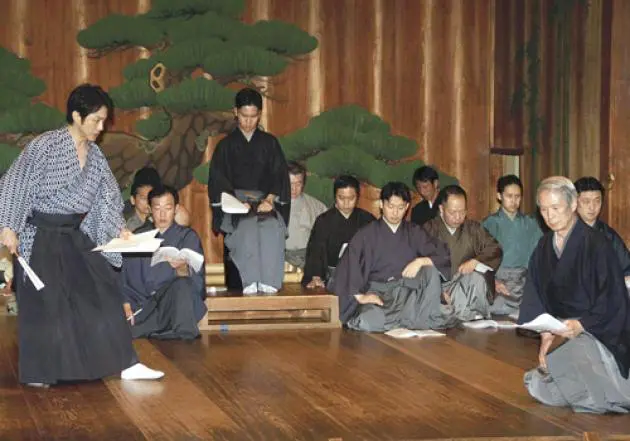
The traditions of noh, a type of classical Japanese musical drama, have been handed down from generation to generation through masters who transmit their skills, knowledge and enthusiasm to younger performers. In a rare event, two shows will be held in Kyoto and Osaka this month to give spectators a chance to see the passing of the torch.
In Kyoto, young noh actors will perform a show on Saturday, along with a noh piece starring famed 84-year-old Katayama Yusetsu. In Osaka, master noh performer Otsuki Bunzo will stage a famous piece called “Takahime” (“The Hawk Princess:) with younger generation performers on November 23.
The Kyoto performance titled “Densho no Kai” – “an event to carry on tradition” – will feature 12 performers aged eight to 23. Katayama will perform the lead role in “Kayoi Komachi” (“The Nightly Courting of Komachi”) to “deliver an exemplary performance for young noh actors who are in pursuit of artistic excellence”.
The event is organised by Kyoto Kanze-kai, a Kyoto-based group of noh performers belonging to the Kanze school of noh.
“These days my father Yusetsu is so old that he gets winded whenever he performs on stage,” says the organisation’s chairman Katayama Kurouemon. “I hope young performers will feel his passion for noh and turn it into an asset of their own.”
Katayama Kiyochika, the 10-year-old eldest son of Kurouemon, will perform the leading role for the first time in “Tsuchigumo” (“Giant Ground Spider”). The piece features a spectacular finale in which a spider's web is woven. Other young actors will also perform noh dances.
To coincide with Saturday's performance, Kyoto Kanze-kai is soliciting memberships through its One Coin Supporter programme. For 500 yen (Bt140) a unit, members receive additional chances to meet young noh actors.
According to Kurouemon, noh circles have had difficulty finding successors recently.
“In the past, dedicated noh fans watched the young performers attentively and encouraged them,” he says. “They were a great help to us when we had hard times during our severe training period. I hope members of the programme will support young performers today in the same way.”
“Takahime” will be performed at the Otsuki Noh Theatre in Osaka. Conceived nearly 50 years ago mainly by Kanze Hisao, the piece is a noh adaptation of “At the Hawk’s Well”, a play written by Irish poet William Butler Yeats. Kanze was dubbed “a second Zeami,” a reference to the founder of today’s noh tradition, which dates from about seven centuries ago. With a script written by Mario Yokomichi, the piece has been performed by such masters as Kanze Shizuo (later Kanze Tetsunojo VIII), Nomura Mansaku and Nomura Mannojo (current Nomura Man).
“The piece is infused with the passion of those who were involved in its premiere,” says Otsuki Bunzo, who will star in the performance. “Its direction is highly innovative but not outside the framework of noh. It has inspired the creation of countless other noh works.”
Otsuki has performed the piece with Kanze Shizuo and others. “This time, by performing together with young people, I want to convey to them the energy of the time when it was first produced,” he says.
The piece is set on a solitary island in the middle of the ocean. Takahime (performed by Otsuki Yuichi), an old man (Otsuki Bunzo) and a prince of a certain country (Nomura Mansai) play tug-of-war over water that bestows immortality. In an unusual move for a noh piece, noh and kyogen performers interact closely with one another. Noh singers, who normally sit onstage, also act.
Nomura Mansai has been commissioned to direct the upcoming production. “The piece depicts the endlessness of human desires,” he says. “When a person with a certain desire perishes, another person with the same desire comes along. Their remains turn to stone, which have a face. As a kyogen performer, I want to take an unprecedented approach to directing this work.”
