
Seoul forum delves into design


Play
International gathering explores what defines good design and how it shapes modern life
World-renowned thinkers and designers meeting in Seoul last week explored the growing role of design in making human life richer, healthier and more sustainable.
The fourth annual Herald Design Forum had top architect Rem Koolhaas, advertising guru Alex Schill and other prominent figures sharing their vision, philosophy and knowledge.
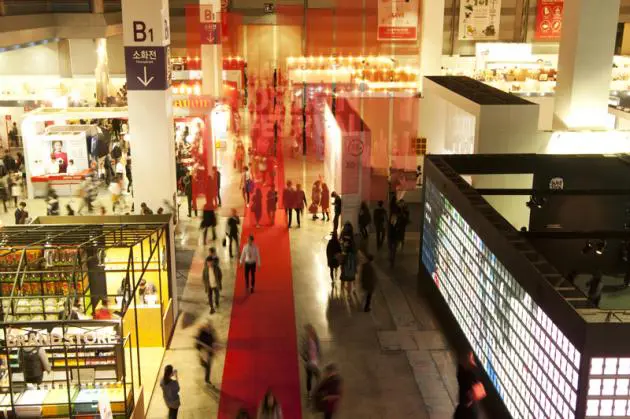
The nation’s largest conference on design was held at Dongdaemun Design Plaza.
“The biggest adversary of a good design is not a bad design, but a mistaken belief that one is creating a good design,” Herald Corp chairman Jungwook Hong said in the opening address.
“Good design is the combination of aesthetics, effective engineering and attention to detail. A lot of factors restrict the role of design such as focusing only on aesthetic aspects, practicality or maximising profits. But good design should be based on the love of human beings and nature.”
In an address presented on screen at the conference, South Korean President Park Geun-hye pointed out that the creativity and imagination that drive good design also help promote a creative economy, a key motto of her administration.
“The government is pushing creative economy as the new paradigm of the Korean economy,” she said. “The imagination, creativity and diverse ideas from each and every individual are ultimately what will drive the growth of this new paradigm.”
Culture Minister Kim Jong-deok and Seoul Mayor Park Won-soon stressed that the forum is a productive and rich platform for the discussion of design and its growing role.
“Design is producing new values when combined with other areas. It is a tool that realises the world’s most innovative technologies and effectively delivers them to people. There are no set boundaries for design. Its potential is unlimited,” said Kim.
Mayor Park said design has been the key strategy for city governments around the world to improve infrastructure and take further steps toward becoming green cities in the 21st century.
Ten speakers gave talks on the latest innovative undertakings in their fields, under the theme of the forum “Design Spectrum, Expanding the Definition of Design”.
Architect Rem Koolhaas, founder of the OMA and curator of this year’s Venice Architecture Biennale, spoke about the changes in perspectives on design through the years.
He said design has moved on from being a form of aggressive intervention in our surroundings to being a soft, attractive tool, which aspires to make our lives comfortable. He cited his latest exhibition at the Biennale as an example of the changing perceptions about design.
Another architect, Joon Paik, discussed the challenges facing modern architecture and design. He introduced some of his recent projects, including the Spaceport America in New Mexico.
Mathew Cockerill, associate design director at Seymourpowell, brought up the most pressing issue in design today: sustainability. He stressed the importance of sustainable design in a modern world where “90 per cent of products end up in waste in three months”. He noted efficient processes for maintaining, re-manufacturing and recycling products.
Daniel Kim, Asia partner of Daylight Design, a San Francisco-based innovation and design consultancy, stressed the responsibilities of designers. He raised issues that designers should ask themselves such as why they are designing, the impact of design on society and their social responsibility.
Alex Schill looked at design on a broader scale. He said that, in order for companies to survive in this fast-changing world, they need to know how to sell their brands, not products.
Fashion designer Olivier Theyskens talked about his career as creative director at Rochas, Nina Ricci and, most recently, Theory, as well as the inspirations that have driven him to create new designs at different fashion houses.
Architect Nahyun Hwang talked about the need to “reprogram” metropolitan cities that are in the end stage of the development cycle. Recent projects she’s been involved with include the Nam June Paik Library in the Nam June Paik Art Centre in Yongin and the High Line in New York.
Architect Jeff Vandeberg, an innovator in urban renewal, shared some of his previous architectural projects in major cities in the US, including Philadelphia and New York, as examples of how to bring about changes in an old urban environment.
Artist Chris Riggs shared his attempt to bring “peace and love” to the conflicted world through his pop art paintings, featuring those words repeatedly drawn on a canvas. He began to use dolls in his paintings by simply attaching Barbie dolls to the surface of a canvas as a way of making art toys incorporated with his signature funky, pop art painting design.
Food stylist and caterer Peter Callahan showed a variety of food presentations at events he planned for famous figures such as Alexander Wang, Martha Stewart and Jenna Bush, daughter of George W Bush. He said what differentiates his food presentations from others is “shrinking food”.
He explained how he attempted to bring in fresh ideas in parties by making popular food items such as hot dog, meatball spaghetti and sandwich in small sizes and presenting them in creative and beautiful displays.
“I’m trying to bring something different in what I do and what already exists,” said Callahan, who is also the author of a food style book “Bite by Bite”.
