
Head, heart and soul


Play
Once considered a must for every child, the Southeast Asian tradition of the topknot has virtually died out
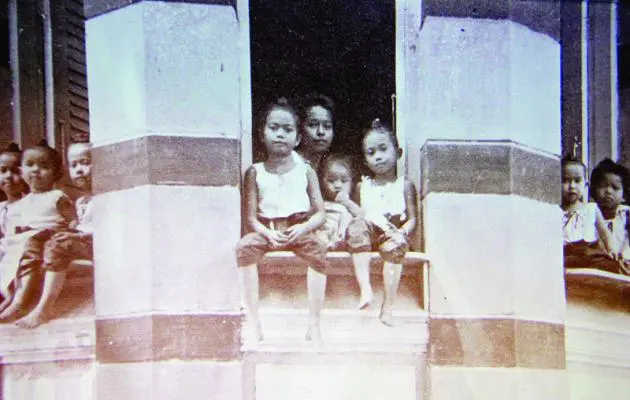
NOT SO many years ago, the majority of Thai children proudly boasted a topknot, a single tuft of hair braided or wound into a knot on the top of the head. Today, the custom has all but expired, made redundant by stylish cuts and the oh-so-fashionable long hair. Known as the chuk in Thai, the topknot was originally believed to have been brought to Siam from India, where it remains a mainstay of the Hindu religion.
Historians, however, now think the chuk dates back too well before the days of Indian influence.
“Historical evidence shows that the ancient ethnic groups in Asia wore topknots and buns throughout their lives so these were here before religion. When we researched the many cultures of Southeast Asia, we learned that the topknot was a traditional hairstyle even in the days of animism and spirit worship,” says historian Bulong Srikanok of the Fine Arts Department.
The topknot is a testament to the South Asian belief that every being has khwan, components of the souls that are responsible for psychological and spiritual wellbeing. In man, the gateway for the main khwan is the crown of the head and to protect it, children wear a topknot hairstyle so their souls cannot slip away when they are frightened.
The crown of the head, known as kramom in Thai, has traditionally received the greatest share of attention and respect because of this belief.
“Apart from beliefs about khwan, the specific anatomy of the newborn is another reason for a child to wear a topknot. When a baby is born there is a soft spot on the top of the skull – the fontanelle – with soft membranous gaps between the calvarium.
“Babies in many ancient cultures wore a topknot to protect that soft spot.
“These ancient beliefs existed in just about every Southeast Asian culture and when Hinduism and Buddhism arrived, each nation blended the new beliefs and rituals with their ancestral beliefs,” Bulong adds.
The rite of cutting the topknot is called sokan for a prince and princess, kesakan for a prince’s children and ghon chuk for commoners. The ceremony can be traced back to India where it is called chudakarma or keshanta karma, the ceremonious tonsuring of the head. This rite is one of the 16 major rites of passage in Hinduism that mark the important stages of one's life and enable one to live a fulfilling life complete with happiness and contentment.
Siamese boys and girls sported a topknot from their first haircut – ghon phom fai – usually done one month after birth. The rite of tonsure is traditionally performed during an odd year of the child’s age, mostly from the ninth to the thirteenth, and before he or she has reached puberty.
“Most of the countries in Southeast Asia have been influenced by Hindu traditions and beliefs but each country would adopt and adapt the traditions to fit its preferences and local beliefs,” Bulong says.
The most remarkable evidence of the Hindu influence in topknot cutting was the royal tonsure ceremony which can be traced back to Ayutthaya era and ended in 1932.
“Though the royal tonsure ceremony doesn’t exist now, its legacy still stands in the inner court of the Grand Palace. The miniature model of Mount Kailasa, the mythical abode of Shiva, was built during the reign of King Rama IV as a setting for the ceremony. The lower part of the mountain is decorated with stone sculptures of miniature mythical animals of the Himavanta Forest. The ceremony, which lasted from three to seven days, involved a purifying bath and the cutting of the traditional topknot hair of the prince and princess around the age of 13,” Bulong explains.
“In Thailand and Cambodia, we traditionally cut the child’s first hair when the child is one month old and then let the child wear a topknot until his or her topknot cutting ceremony. We treated the topknot cutting ceremony as rite of passage from adolescence to adulthood. In Myanmar, the custom of ear-piercing is more important than the topknot cutting ceremony, just like in India where ear-boring or piercing indicate a transition to adulthood.
“For Thais, the topknot is like a symbol of childhood. When we see children wearing topknot, we would know immediately that they are young so we would be kind to them and look after them.”
The delicate lock of the child’s hair also served as the golden thread that bind the hearts of the children to their parents and others in the community, the historian adds.
“Both the ghon phom fai and ghon chuk ceremonies focus on the importance of children to the community. Everybody, even the monks and the village head, would join the ceremony. As the centre of attention, the children would feel secure and safe in that community. All in all, it is like a ritual to welcome the children as they become a full part of that society.
“The ritual focuses on love and compassion between the community and the children so the children feel loved and secure. For its part, the community acknowledges the existence of the children and would help the parents taking care of the children and protect them from harm. This is what modern society has already forgotten.
“These days we give children loads of toys and games but these materialistic gifts cannot substitute for the love and compassion children received from the community. Modern children have no idea where they stand in the society and society neglects the importance of children.” Bulong laments.
“The topknot hairstyle and the rite of topknot cutting couldn’t stand the fast paced of the modern world but its character and what it represented should not be forgotten. Old traditions and beliefs in every culture always have good reasons behind them.”
