
Calligrapher to the fashion world
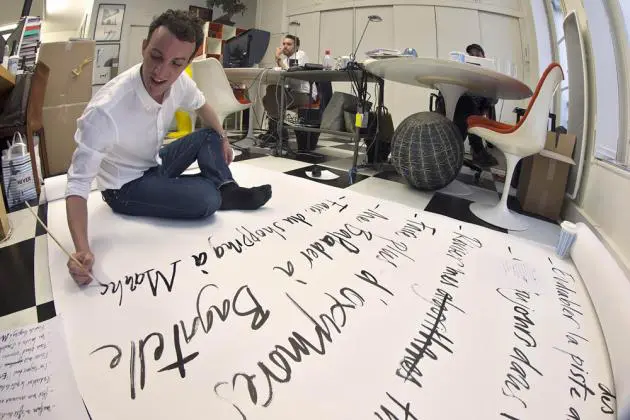


Nicolas Ouchenir's skilled hands are behind the exquisite invitations sent out to the industry's a-listers
HIS HAND is steady and sure as it delicately traces the contours of the biggest names in the world of style: the celebrities, the magazine editors, and the clients.
Nicolas Ouchenir is a calligrapher, a member of a rarified profession whose ink appears on the must-have invitations of Europe’s fashion shows.
He might not personally meet all the VIPs attending the catwalk parades. But his personalised flourish to them, deliberately evoking the elegance of times past is carried close in their hands, in handbags, in tailored breast pockets.
With Paris Fashion Week now in full flow, Ouchenir is being kept busy. The phone rings incessantly in his office with the fashion houses’ press and publicity people calling to reserve his service – most at the last minute.
“You have to react fast,” says the 36-year-old, who is dressed in jeans and a white shirt, and sitting behind a desk upon which piles of invitations await. Next to them are pots filled with quill pens, pens of whittled reeds and calligraphers’ instruments, all of them on a stained leather desk pad.
He knows well the codes and hierarchies of the fashion world, having eased ink onto countless cards that serve as coveted entry passes to the biggest fashion events in the world.
He is especially versed in the seating plans for those invited. Codes often marked on the invites correspond to the spots where the guests are to sit – with the front row, just a stiletto’s slide away from the catwalk, reserved for the elite.
Ouchenir works out of an office on Paris’s chic-and-expensive rue Saint-Honore – shared with several other entrepreneurs working in different sectors.
“Sometimes I work all night and fall asleep in my office and awake to find ink everywhere, or I spend whole nights waiting for a seating list in a PR’s office,” he says wryly, his humour serving him well in a business where “nervous breakdowns happen often”.
Ouchenir has been a professional calligrapher for 12 years and taught himself the craft after completing business studies.
For the French fashion brand Berluti, known for its men’s luxury shoes, the writing is “very masculine, very simple, straight-lined, very bespoke,” he says.
“Versace writing is more rococo, with very long upstrokes and downstrokes. Margiela writing, for haute couture, is John Galliano English-style, but for its pret-a-porter it’s more like a typewriter.”
Dior, Hermes, Louis Vuitton, Miu Miu, Gucci, Pucci, Missoni – Ouchenir has an enviable portfolio of clients including not only the biggest brands but also young names like jewellery designer Elie Top and Hugo Matha, who makes “pochette” bags.
While writing letters and the like has gone out of fashion, calligraphy endures, he says, because “it has become rare – it’s like haute couture itself: the more exclusive it is, the more it is desired”.
