
A great camera gets even better


Play
With the X100T, Fujifilm rewards the series that saved its life, and the customers are the winners
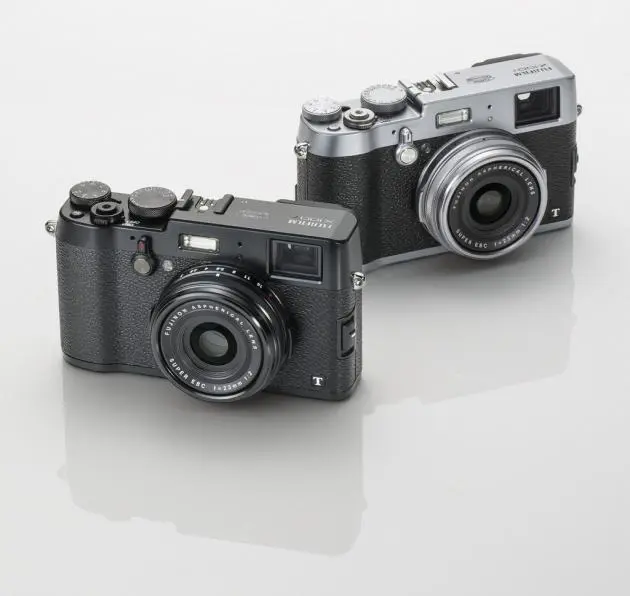
With its retro look, premium build, excellent hybrid viewfinder, large image sensor and great wide-aperture lens, the Fujifilm X100T is a digital camera for dedicated enthusiasts. All this, however, comes at a high price.
This being the third camera in the X100 series since February 2011 (five months after its unveiling at the 2010 Photokina trade show), it follows the X100S. There aren’t a lot of letters left in the alphabet to add to the series name!
The original X100 was seen as the milestone, and it saved the firm, which was in the business of making camera film, from demise in the new digital world order. Its archrival Kodak had meanwhile collapsed.
The X100T retains the same excellent qualities of its predecessors and adds some improvements.
You have that great retro rangefinder design, resembling a classic camera in a 126.5x74.4x52.4mm body. For some users this feels large, but for others it’s compact, especially when compared to a DSLR camera.
The X100T uses the same size image sensor as most DSLRs, resulting in excellent image quality. It’s got a 23.6x15.6mm X-Trans CMOS II with primary-colour filter and a premium 23mm-equivalent Fujinon premium lens with an impressively wide aperture of f/2.
Among the improvements, the already impressive hybrid optical/electronic viewfinder is now even better. There is still the 2.3 million-dot LCD panel, but now there’s a darkened tab that pops up in the viewfinder for clear monitoring of the statistics in any lighting conditions. So you can use the viewfinder to frame photos in bright sunlight while displaying the basic settings at the same time.
The tab is also useful with the Digital Split Image manual-focus system. You can zoom in to one section of the scene and adjust the manual focus. It is indeed just like rangefinder focusing.
The viewfinder optics have been boosted so you get 92-per-cent coverage of what will be the final image, compared to 90 per cent with the X100S. Now you can also use the optical viewfinder while shooting video without having to switch to live view, so it’s more like handling an actual movie camera.
Also new on the X100T is the electronic shutter, which delivers ultra-high speed, up to 1/32000 of a second. Shallow depth-of-field effects can now be shot with the aperture wide open, even on the beach under a blazing sun.
The X100 series simulates the look of Fujifilm’s actual film, which appeals to a lot of the experts, and the X100T adds Classic Chrome simulation, offering the tonal depth required for documentary and street photography. The new algorithm incorporates soft gradation, rich detail in the shadows and more full-bodied tones. You won’t see any saturated blues, greens and reds, so the result is more like historical photography.
New in the auto focusing is Multi-Target Auto Area AF, by which the X100T distinguishes subjects from multiple focus points. You have face detection, too, helping ensure beautiful portraits.
In terms of operation, the new Q menu button brings up several settings that can be quickly adjusted without having to hunt around elsewhere. You can switch among seven customisable settings – ISO, dynamic range, white balance, film simulation, image quality, image size and auto-focus mode.
You can now customise the Fn button with another seven functions that are frequently used.
And you can now hook up to Wi-Fi and your smartphone. Download the Fujifilm Camera Remote app to your phone and use it as a remote control for the X100T. The app not only lets you adjust the focus, shutter speed and other settings, it also lets you browse and transfer images. Wireless printing becomes easier as well.
To get the most out of the X100T, you should know how to adjust shooting parameters like shutter speed and aperture, because the camera has only one automatic exposure mode – Programme Auto (labelled “P”). The other exposure modes are Shutter Priority, Aperture Priority and Manual.
Don’t worry, though, because it’s easy to change the settings thanks to the shutter speed dial and aperture ring. The traditional dials let you see the settings at a glance so you can shoot with confidence.
There are also dials for exposure compensation, power button, and shutter speed ring. The aperture ring allows exacting control in steps and the focus ring uses a precision-milled pyramid pattern. There’s even an easy-to-use command dial for fine-tuning the selected shooting parameters.
A powerful EXR Processor II image processing engine guarantees good performance. The start-up time and shot-to-shot time are half a second, the shutter lag 0.01 seconds.
The APS-C 16M X-Trans CMOS II sensor has phase detection built in. Between that and the processing engine, auto focusing takes a mere 0.08 seconds. The maximum high-speed continuous shooting speed renders six frames per second.
I tried out the X100T using mostly the P mode and managed to capture beautiful photos with accurate exposure settings. The portraits were sharply focused with dissolved backgrounds. A portrait of a Nation sub-editor taken outside the newsroom brought out the fine detail of his beard. The colour does vary with your choice of film-type simulation. There are 11 to choose from, including Sepia, Provita (standard), Velvia (vivid, and best used for landscapes and nature) and Astia (soft).
The X1007 has good battery life, allowing for up to 700 shots per charge. You can charge it up from a computer too, using a USB cable.
The Fujifilm X100T retails for Bt42,990.
Key specs:
- Number of effective pixels: 16.3 million
- Image sensor: 23.6x15.6mm APS-C X-Trans CMOS II with primary-colour filter
- Storage media: Internal memory (approximately 55MB); SD memory card / SDHC memory card / SDXC (UHS-I) memory card
- Lens: 23mm-equivalent Fujinon Single focal length with f/2 aperture
- Exposure control: TTL 256-zone metering, Multi / Spot / Average
- Exposure mode: Programmed AE, Shutter priority AE, Aperture priority AE, Manual exposure
- Shutter speed: Mechanical Shutter: 30 to 1/4000 seconds and Bulb; Electronic Shutter: 1 to 1/32000
seconds.
- Focus type: Intelligent Hybrid AF (TTL contrast AF / TTL phase
detection AF), AF assist illuminator available
- Hybrid viewfinder: Optical viewfinder (OVF): Reverse Galilean viewfinder with electronic bright frame display with 0.5x magnifications and 92 per cent coverage; Electronic viewfinder (EVF):
0.48-inch, 2.36-million-dot colour LCD with 100 per cent coverage and 0.65x magnification
- LCD monitor: Three-inch, aspect ratio 3:2 1.04-million-dot, TFT colour LCD monitor, 100 per cent coverage
- Movie recording: 1920x1080 pixels / 1280x720 pixels (60fps, 50fps, 30fps, 25fps, 24fps) with stereo sound
- Terminal: USB2.0 (high-speed), HDMI output, audio input microphone
- Wireless transmitter: Standard IEEE 802.11b / g / n (standard
wireless protocol)
- Power supply: NP-95 Li-ion battery (included)
- Dimensions: 126.5x74.4x52.4mm
- Weight: 440g including battery
and memory card
