
From street to stage


Play
The Asia Centre brings three Japanese dance troupes to communicate, connect and collaborate with Bangkok audiences
Thanks to the Japan Foundation’s Asia Centre, we have been entertained in recent months by Hanchu Yuei’s “Girl X” – which won the Best Play award at Bangkok Theatre Festival last November – and Democrazy Theatre Studio’s Thai version of the Japanese play, which premiered last month in Yokohama.
Now the Centre is moving on to dance with a new mega-project, “Dance Dance Asia”.
XP recently had a chat with Norihiko Yoshioka, Asia Centre’s assistant director. Better known here as “Khun Yo”, thanks to his previous long tenure at Japan Foundation Bangkok and considerable contributions to the local arts scene, he inspired Prabda Yoon to write the screenplay for “Last Life in the Universe”.
“The Asia Centre of the Japan Foundation was established last April with the aim of connecting people, expanding networks, and developing cultural programmes across Asia,” he says.
“Our four concepts – the 4Cs – are ‘communicate’, or to build ties among people and broaden the base of mutual understanding; ‘connect and share’, which is to share one another’s knowledge and experience and create a forward-looking network; ‘collaborate’, that is to deepen cooperation in new fields and carry out collaborative efforts; and lastly ‘create’ as we’ll create a new culture and give back the results, both inside and outside Asia.”
And street dance, he adds, is an effective medium to transmit these messages.
“First, we can communicate by the body movements in street dance. It’s easier to understand and to feel than other genres of non-verbal stage performance like ballet, traditional dance and contemporary dance, thanks to its popularity on TV and YouTube among young people.
“Street dance was introduced to Japan in the 1970s and within just 40 years has evolved into a craze that’s spawned both competitions and studios. Rhythmic dance and modern styles of dance have recently become part of the curriculum in public school systems.
“This is a good chance to create a new culture by blending the genre with cultural exchange projects. In workshops on choreography and body movements, we can share one another’s knowledge and styles and eventually connect talents who have similar visions for creativity to collaborate in the future. We can also invite more talent and artists from other fields, such as visual artists for stage design or musicians for new scores. The potential is wide open.
“One major difficulty for street dancers is that they’re not supported by any governmental entities or private companies. They’re basically funded by themselves and thus always facing difficult circumstances in terms of new creation. What if these skilful dancers with vision were given chances to develop their ideas with more creation time and funds?”
There have been many previous attempts at street dance collaboration in Thailand and Asia Centre is well aware of the results.
“We won’t enter the world of battles and contests, as these are already very popular in each country and get a lot of sponsors from cool private companies and studios,” Khun Yo notes.
“Instead we encourage choreographers and dancers who are keen on doing something on stage and open to being connected with other genres to collaborate on new creations for the future.
“That said, most of the previous collaborations with European counterparts have killed the liveliness and energetic power of street dance, making the entertaining elements much too serious. That doesn’t fuse with the tastes of Asian artists and audiences.”
“Dance Dance Asia” has selected 10 Japanese street dance troupes to join the project in the first year, Khun Yo says. “Apart from being highly skilled and entertaining, the criteria demand that they must be willing to collaborate with Southeast Asian artists. Some groups not in our list are only oriented to the US or Europe, and others are even worse, concerned only about the domestic fame,” Khun Yo explains.
“So for this first year, what we want to try is to introduce the diversity of Japanese dance companies based on street dance but that are theatrically interesting, with the potential to be developed as something new.”
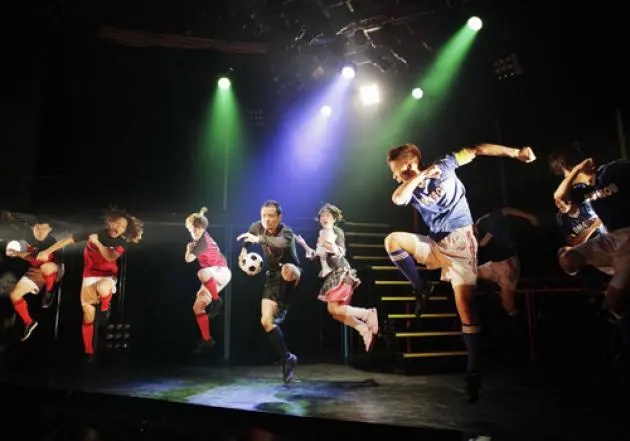
Three troupes, Tokyo Gegegay, Umebou and 90’s, have been specifically chosen for the Bangkok performances and workshops.
“Tokyo Gegegay is a good example of how artists are blurring the definition of dance and theatre genres, and this will surely be developed as a new cultural phenomenon within next five years,” Khun Yo says. “They’re still new, established only in 2012, with young dancers including high-school students. They haven’t yet collaborated with any theatre directors or contemporary artists, but their works show their unique world view, which is somehow grotesque and a bit lonely yet still beautiful.”
After watching them wow the audience in Manila in January, Khun Yo notes, “They can do something beautiful with their choreography, but the choreographer Mikey always tries to collapse it into grotesque movements, and as the balance is excellent, the movements haunt my memory.”
Mikey arrived in Bangkok yesterday and is, thanks to the Sikkha Foundation, now giving workshops to Khlong Toey’s underprivileged kids who will also perform with Tokyo Gegegay this weekend.
As for the 90’s, Khun Yo says, “The dancers were all born in the 1990s, and are now receiving international acclaim. They’ve won in a number of top awards. But some dancers are never satisfied with just getting awards. The more they master fundamental techniques and skills, the more they’re interested in finding their original style and creating new works.”
Having observed their performance in Hanoi, Khun Yo says, “Their performance is more like a battle, showing their excellent skills to the audience, but they’re actually keen on developing something theatrical. We may create a collaborative project in the future for them, inviting a skilled choreographer, either Japanese or foreign, and letting them experience the stage more even while they’re still doing battles on street. They’re very serious in promoting dance and mastering techniques, like athletes. They don’t do dance as a fashion.”
And for Umebou, which will make its international debut in Bangkok, Khun Yo says, “Even though jazz dance tends to be full of cliched movements, Umebou tries to convey a story and to move the audience by their performance. When I watched their performance on YouTube, I felt it was nothing new, but when I saw them recently in a theatre in Tokyo accompanied by J-pop played full blast, I was surprisingly moved. So I hope the Bangkok audience will also purely enjoy their performance as entertainment. I also hope theatre and dance experts will be inspired to learn that over-exaggerated cliches can turn something into an artistic, original piece just as in contemporary art.”
Khun Yo is pleased at the success the initiative has achieved in Manila, Kuala Lumpur and Hanoi. “Getting the audience excited by just dance and movements on stage is tough, especially without any fame or celebrity status in each country’s domestic context. But they’ve done it before and I think they can do it again.
The writer thanks the Japan Foundation’s Kazue Suzuki for all assistance.
SHOWS AND WORKSHOPS
“Dance Dance Asia” is 7.30pm on Saturday and Sunday at M Theatre on New Phetchaburi Road. Tickets are Bt300 (Bt150 for students), at ThaiTicketMajor.
There are six workshops, basic level on Saturday and open on Sunday, from 1 to 6.30pm (90-minute sessions). Admission is Bt110 per session or Bt300 for the whole afternoon. Book at (086) 300 2081.
Find out more at www.DanceDanceAsia.com.
