
Evil queen or a survivor?


Play
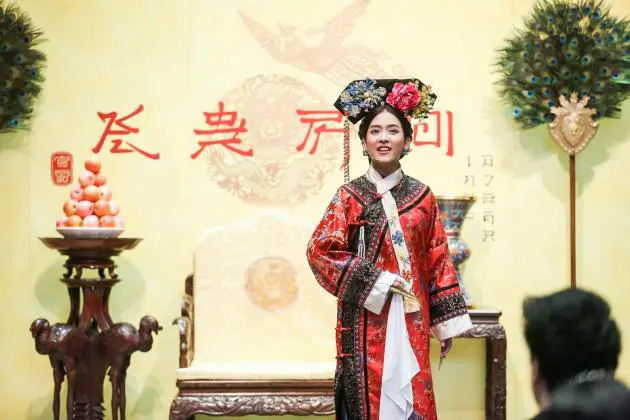
Last year's sold-out musical "Cixi Taihou: The Musical" is set to return to the stage
Female Asian rulers are few and far between. While the Western history boasts a few great queens – Britain’s Queen Elizabeth I and Queen Victoria, Russia’s Catherine the Great to name three – women in many Asian civilisations were barred from ascending to the throne. The four consecutive queens who ruled in the Acehnese sultanate from 1641 to 1699 were among the handful of exceptions.
Throughout the 5,000 years of Chinese history, only two empresses gained prominence in the feudal patriarchy system. Empress Wu Ze Tian was the sole female emperor and reigned for 47 years in the Tang dynasty. The formidable empress made a comeback in the news recently when the Chinese government censored the plunging necklines in “The Empress of China” drama based on her.
The other famous empress, Cixi, was equally as controversial. As the empress dowager from the last Chinese dynasty, Cixi, or rather her notoriety, has been well documented by historians and biographers. Cixi and Queen Victoria were contemporaries, but the former famously remarked that she did not think Queen Victoria’s life was half as interesting and eventful as hers.
Born in 1835, Cixi first entered the court as the concubine of Emperor Xianfeng. She bore Xianfeng a son and was installed as an empress dowager after the early death of the emperor. Although Cixi did not directly ascend to the throne, she maintained a tight grip on the Qing dynasty through various power coups and assassination plots.
The fascinating life and times of Cixi is not lost to people in this part of the world thanks to popular period dramas and the 1957 novel “Susi Thai Hou” (a transliteration of Cixi’s name derived from the Hokkien dialect) by Thai statesman MR Kukrit Pramoj. In the perfect amalgamation of Sino-Thai culture, the Musical Society of Bangkok’s “Cixi Taihou: The Musical” performed with an all-Thai cast last year. The successful 10 full-house shows last year has prompted director Kriengsak “Victor” Silakong to restage the show in May.
Although Cixi was widely abhorred for bringing the Qing dynasty to its knees during her reign, she must be credited for liberating generations of Chinese women as it was she who outlawed the repugnant practice of foot binding in 1902. Unlike the Han Chinese, the Manchus who ruled the Qing dynasty did not impose foot binding on their women.
Nevertheless, history records say that Manchu men still found bound feet to be attractive. Manchu women during that era resorted to wearing shoes elevated on platforms which narrowed at the bottom to give the appearance of the “special walk” of the bound feet.
Kanyapas Srinarong , 32, who plays Cixi in the current production tottered cautiously on stage wearing custom made shoes with raised wooden platforms during last Tuesday’s sneak press preview. The actress says she is honoured to play one of the few powerful women in the Chinese history.
“But I am not like her at all in real life. I laugh easily and I am always in a pleasant mood as I have to work with children a lot,” says the multitalented Kanyapas who is also an accomplished cellist and music teacher.
To get into the character, Kanyapas researched the Chinese history and especially Cixi. “I am very impressed with Cixi, she seemed to be a very clever woman who knew her way around the royal court”, says Kanyapas.
“It’s a challenging role though because I have to portray her from the ages of 16 to 73.
“It’s difficult to play her in her old age, I have to work on the expression of my eyes and breathing in order to appear convincing.
“Playing her younger self is not easy either, I have to embody the spirit of a teenager to portray Cixi when she first entered the court,“ Kanyapas says.
If there is one thing that Kanyapas has mastered during rehearsals, it is perfecting the slight movements of the head to show an alertness to imminent danger. “Cixi faced a lot of poisoning attempts by those around her, her life was constantly in peril due to the power struggles in the court,” she says.
Her Royal Highness Princess Somsawali, who reprises her role as Cixi’s mother, adds the royal element to the musical. Director Victor says the Princess is passionate about her role and participates in the rehearsals like all the other actors. “Her Royal Highness is very gracious and easy to work with, it is a great honour to have her in our show,” he says. The affable director too has a role in the musical: he plays the eunuch.
With a 90-per-cent new cast for the current production, Victor says he hopes to bring a fresh interpretation to the play.
“In every new production, you want to show something different to the audience,” says Victor, adding that the musical is costing Bt12 million and there is only minimal sponsorship. “The production last year was mostly sustained by ticket sales alone. We will be very happy to be able to break even from sales at the box office,” Victor says.
LADY IN WAITING
- “Cixi Thaihou: The Musical” runs from May 1 to 10 at Suriyathep Music Hall at Rangsit University and on May 30 at the Muangthai Rachadalai Theatre.
- Tickets are Bt1,000 to Bt5,000. For details, check www.ThaiTicketMajor.com.
