
A jab in the joint


Play
He is not globally known but a German arthritist expert is trusted implicity by top sportsman and counted the late pope John Paull II among his patients
Peter Wehling's injections are in global demand. Basketball players Kobe Bryant and Tracy McGrady and golfers Vijay Singh and Fred Couples have sought out his services to combat arthritis.
The New York Yankees, Los Angeles Lakers and Dallas Mavericks are numbered among his clients, and even Pope John Paul II was once one of his patients. There are no visible mementoes from these illustrious patients on view in Wehling’s Dusseldorf practice, and he is not particularly well known in Germany, although he has treated footballers from Bundesliga clubs Bayer Leverkusen, Schalke and Borussia Dortmund.
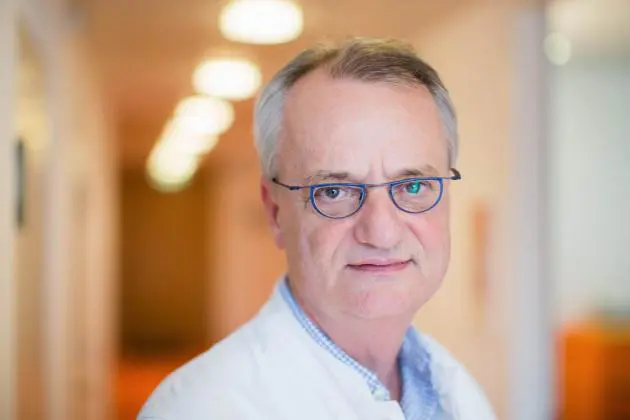
The 59-year-old professor of orthopaedics has developed a procedure to treat knees and backs that has brought a steady stream of celebrity patients to his practices in New York and Los Angeles.
“But some top sportspeople want to see the inventor,” says Wehling. Many US sportspeople make the journey to Europe in the hope that he can extend their sporting careers by two or three years.
Wehling takes blood from his patients with a small syringe containing artificially enriched proteins in the shape of small spheres at one end. The blood is then stored at body temperature in an incubation cabinet.
The components – red blood corpuscles, the body’s natural proteins and artificial proteins – are then separated by a centrifuge into liquids of various colours.
Wehling subsequently injects the orange-yellow serum into the patient’s painful joint. The aim is to reduce inflammation and regenerate the injured tissue, so that the pain rapidly disappears.
“The serum contains substances produced by the body following an injury, but in highly concentrated form. We simulate the human body’s self-healing process – effectively what nature does, but in enhanced form,” the physician says.
Eight out of every 10 patients experience an improvement following treatment. A six-day course of treatments costs around 1,200 euros (Bt44,600).
Syringes, blood, injections are all terms that bring to mind the dark side of professional sport. But Wehling’s patients run no danger of conflict with the anti-doping authorities.
The procedure is permissible, according to a spokeswoman for Germany’s National Anti-Doping Agency (NADA). This has nothing to do with blood manipulation, she says.
Rather, it is similar to platelet-rich plasma therapy (PRP) according to Mario Thevis, a professor of forensic chemistry at the German Sport University in Cologne.
In this procedure the plasma is also extracted by a centrifuge and injected into the affected joint or tendon, but by contrast with Wehling’s method, the blood is not kept warm.
PRP was on the black list of the anti-doping authorities until 2011, but the ban was lifted for lack of evidence that it increased performance.
Philipp Niemeyer, a specialist in the regeneration of cartilage, sees treating joint pain with serum instead of through operations as an “interesting and comprehensible consideration”.
A holistic therapeutic approach – taking in the right diet, weight loss, movement, psychological guidance and adequate sleep – could slow down the encroachment of arthritis, the professor of orthopaedics at the Freiburg University Clinic believes.
A 2008 investigation published in the Osteoarthritis Cartilage journal concluded that the symptoms in patients treated with the serum were significantly reduced, by comparison with two test groups treated either with hyaluronic acid injections or a salt solution placebo.
“This study was a start. It is in line with the quality standards that we expect,” says Niemeyer.
Effective though his therapy evidently is, Wehling declined to take money off John Paul II. “As a Catholic you don’t send the pope a bill,” he says.
