
Fabulous Fermentation
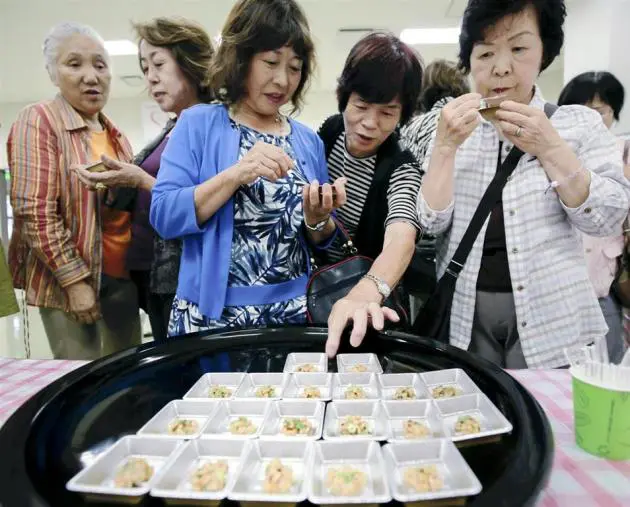


Visitors to Takanofoods Factory are invited to delve into the mysteries of a Japanese food favourite
A VARIETY OF ways to make unique natto products, such as “terrestrial heat natto” – soybeans fermented in subterranean heat – and “kotatsu natto” – soybeans fermented using a kotatsu heater – can be found at the Natto Museum on the grounds of the Mito factory of Takanofoods in Omitama, Ibaraki Prefecture.
A particularly striking example is “deba natto,” or natto wrapped in a bundle of straw with a broad-bladed “debabocho” kitchen knife stuck through the middle of it.
They say making natto in this fashion was once popular in the Tohoku region. Soybeans wrapped in straw were hung over a kamado, a type of cauldron, to steam and ferment. Drops of water appearing on the blade indicated it was ready.
How is natto’s distinctive taste – and also the stickiness of its long, trailing threads – achieved today? A tour of this cutting-edge factory reveals all.
Inside the facility, visitors can watch small plastic containers flowing along a production line extending more than 120 metres.. Soybeans inoculated with natto bacteria are placed into these containers one after another, after which they are stored in a special “muro” room, whose temperature is kept at 45 Celsius with humidity at about 95 per cent, for fermentation. It usually takes 17 to 20 hours before the natto is ready for consumption – and it is during this period that the peculiar stickiness develops.
The company stocks about 1,500 types of natto bacteria. Different types are used to vary the flavour and stickiness according to destination or desired type of end product. The taste and texture of the sauce included in packs of natto may also vary.
“For the Kanto region, the sauce is made thick. For Kansai, it’s thin but well flavoured, and for Kyushu, it’s rather sweet,” factory guide Hisako Yamada explains.
You can stop by the factory’s food-tasting section to sense the subtle differences. “The wide variety of natto and all the different flavours is just astonishing,” says Yoshik Yamada, 70, a homemaker from Yoshimi, Saitama Prefecture.
The fun of natto is that the taste also changes as you stir the beans with your chopsticks.
It is said that Rosanjin Kitaoji (1883-1959), a renowned gourmet, would put his natto in a deep container and stir it exactly 305 times, and then add soy sauce two or three times as he stirred it another 119 times. To finish, he would add chopped leeks and Japanese mustard.
Natto allows for individuality and peculiarity in the way it is eaten. Finding your own way is the way to go.
- The Natto Museum is administered by Takanofoods Co, the leading producer of natto in the country. Display panels explain a variety of natto-related facts including its history and health benefits. The factory operates 24 hours a day, during which it produces 2 million packs of natto. Reservations are required to join the roughly 90-minute tour, which runs twice daily at 10am and 1.30pm.
