
Seeds of plenty


Healthy Camellia Oleifera tea seed oil is coming to a kitchen near you
MEDICAL EXPERTS have long warned against excessive consumption of oily foods but what if there existed a cooking oil that not only added to the taste of the dish but was actually good for you too?
The good news is that there is such an oil and it’s now becoming readily available all over Thailand. Produced by the Chaipattana Foundation, Camellia oleifera tea-seed oil – not to be confused with tea-tree oil – is of extraordinary high quality and has multiple benefits for the health.
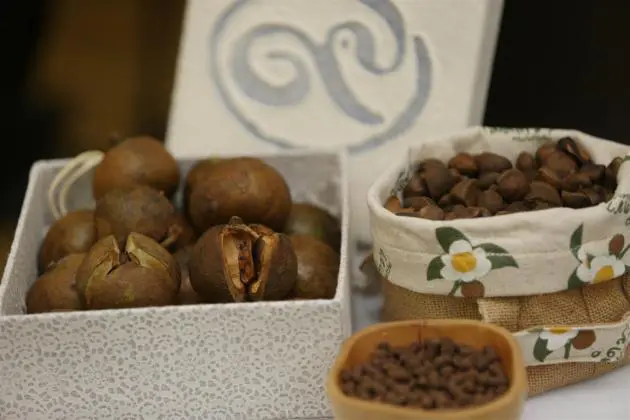
Used extensively in China and East Asia, tea-seed oil was little known in Thailand until Her Royal Highness Princess Maha Chakri Sirindhorn gave an ordinary brown seed that looked a little like a chestnut to Chaipattana’s secretary general Dr Sumet Tantivejkul, and told him it was a ‘magic seed’. That was 11 years ago and the project has been in development ever since.
Touted as the “olive oil of the East”, tea-seed oil boasts no trans fats, very low levels of saturated fats and a high level of unsaturated fats. These unsaturated fats include 81-87 per cent of oleic acids (omega-9 fatty acid), 13-28 per cent of linoleic acids (omega-6 fatty acid), and 1-3 per cent of alpha-linoleic acids (omega-3 fatty acid). With these compositions, tea seed oil can help reduce the level of low-density lipoprotein (LDL) (bad cholesterol) and increase high-density lipoprotein (HLD) (good cholesterol) and prevent vasoconstriction, paralysis, high-blood pressure, diabetes and cardiovascular disease. It is highly recommended for overweight individuals and the elderly
In addition, given its high level of antioxidants such as vitamin E and catechin, which help raise the oil’s boiling point to higher than 250 degrees Celsius, it is suitable for all types of cooking and food preparation.

Apart from being excellent for consumption, tea-seed oil can be used as an ingredient in many skin care and cosmetic products as well as for fragrance (often mixed with other essential oils). In addition, tea seed meal from the oil extraction can be used as pesticide for Pomacea canaliculata (a species of freshwater snail) in rice farms and shrimp farms and is so versatile that it can even been included in household cleaning products.
Camellia oleifera seeds and sprouts were brought to Thailand from China in 2005 and have since been cultivated on more than 4,000 rai at an altitude of 500 metres and higher in the North and Northeast. Operated by the Chaipattana Foundation together with the Mae Fah Luang Foundation under the Royal Patronage, tea-oil plantations can be found in the Doi Tung Development Project, Ban Pang Mahan, and Ban Pu Na in Chiang Rai.
“I first thought we were talking about shrubs, like the usual tea plant,” Sumet explains. “But the Camellia oleifera is actually a very big tree. About 950,000 trees have now been planted and the project is playing a part in forest conservation because the tree’s value is the seed not the trunk. Local residents won’t cut them down but instead treasure them, as the stronger the tree, the more earnings for them.
“The project will lead to improved wellbeing. It’s sustainable and protects water sources so problems with woodcutting, flood and drought will gradually ease. The Camellia oleifera tree is the answer to many of the problems we face today.”
Fortunately, the tree, which is more used to colder climes, has shown it likes our soil and weather.
“It bears fruits within three years and can be cultivated twice a year here while in China it takes about five years to be fruitful and can be cultivated only once a year. Even though Camellia oleifera originates in China, we have also found it on Doi Inthanon. It is very rare though and because we had no idea about its benefits, the trees were mostly felled,” he explains.
Different types of food and desserts made with Camellia tea oil were introduced at the recent press conference to introduce the product. They included the cooking oil as well as whole-wheat bread, carrot cakes and brownies whipped up by the owners of Coffee Beans by Dao and Verasu.
Thais interested in the story of how Camelia oleifera travelled from China and how it is now playing an important role in helping local people make a living can discover this and much more at the upcoming Camelia Tea Oil Festival being hosted by Siam Paragon.
TEA OIL FEST
- The Camelia Tea Oil Festival is set for October 31 to November 2 at Siam Paragon.
- Her Royal Highness Princess Maha Chakri Sirindhorn will preside over the opening on October 31 at 2.30pm. She will prepare a nutritious dish and a new royal recipe will be granted.
- Celebrity chefs ML Kwantip Devakula and Phol Tantasathien will serve tea-seed oil dishes. Participating restaurants will include Nuer Koo, Taling Pling, Cafe Chilli, Vanilla Cafe and Coffee Beans by Dao.
- The oil and skin-care products are available Chaipattana Foundation’s PatPat at Sanam Suepha and Rama VIII bridge, MCOT on Rama IX Road, King Chulalongkorn Memorial hospital and Paseo Town in Ramkhamhaeng.
The products are also sold at Big C, Golden Place, Phufa, Doi Kham, S&P bakeries in hospitals and Verasu.
- Find out more at www.chaipat.or.th.
